
Turn Education Into Competition: A Complete Strategic Guide
Can educators successfully turn education into competition without harming student well-being? Modern classrooms must balance individual academic growth with external motivational drivers. When schools design competition carefully, students can develop stronger focus, resilience, discipline, and teamwork. However, poorly managed contests can increase anxiety, damage peer relationships, and place too much emphasis on grades or rankings. Research from the Organisation for Economic Co-operation and Development (OECD) highlights the importance of supporting students’ academic achievement alongside their social and emotional well-being.
A healthy competitive environment should encourage improvement rather than make students feel inadequate. Clear rules, realistic goals, teamwork, and supportive feedback can help students benefit from competition without creating unnecessary pressure. Schools should also consider different learning abilities and personal circumstances when designing academic challenges. The UNESCO education resources provide broader guidance on inclusive and equitable learning environments.
This balance raises an important question: should academic benchmarks resemble competitive sports, or can excessive rivalry weaken curiosity and intrinsic motivation?
This guide explores how competition can support learning, its potential disadvantages, popular student competitions, major challenges in education, current educational trends, and common barriers to learning. These insights can help teachers, parents, and school administrators make more informed decisions about student engagement.
How is competition good for students?
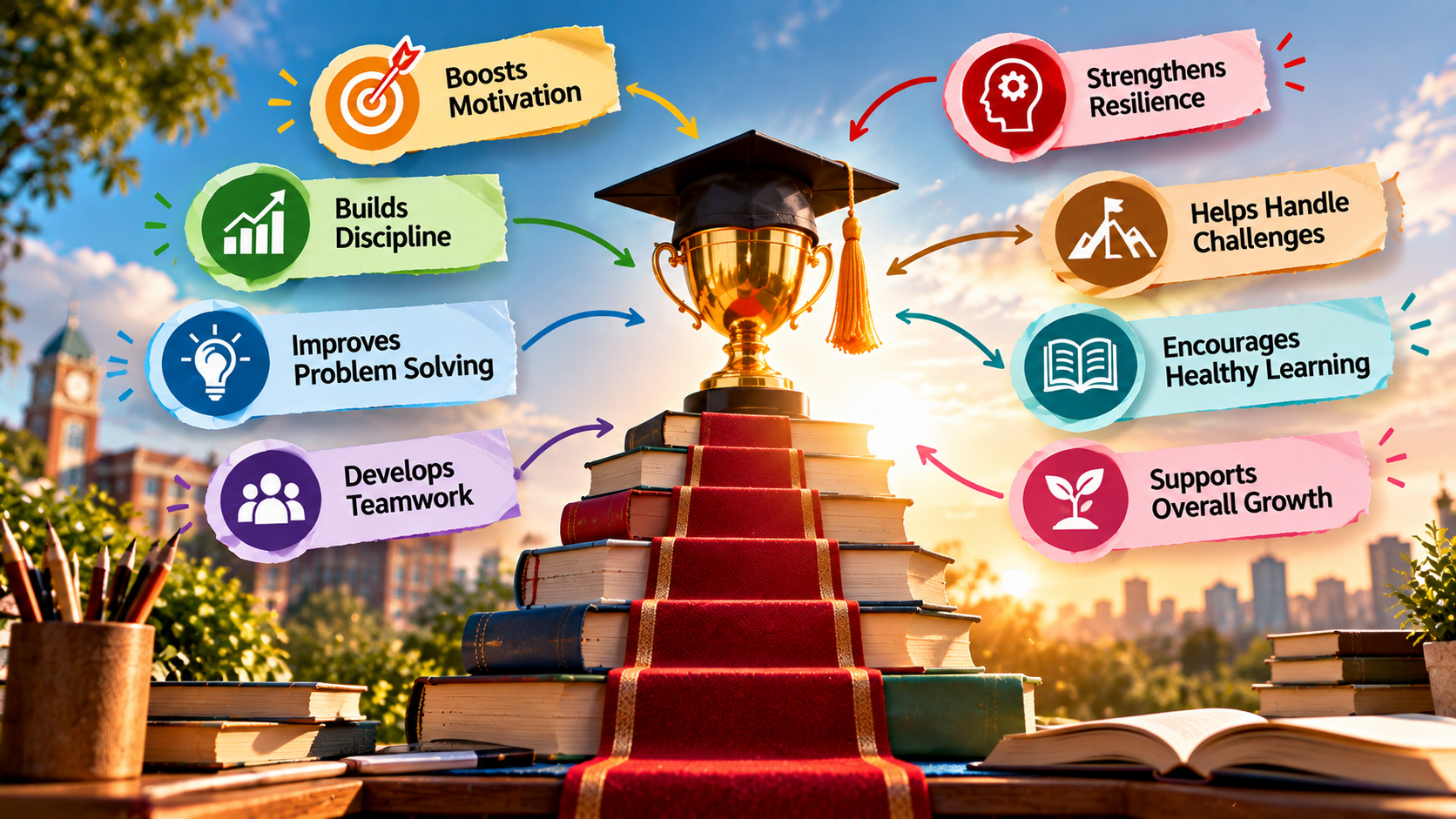
Thoughtfully designed competition can encourage students to become more focused, disciplined, and motivated. A clear goal gives learners something specific to work toward. It can also make academic tasks feel more engaging and measurable. Student engagement strategies can further help teachers create classrooms where learners actively participate.
Healthy competition teaches students how to manage time, respond to setbacks, and work under reasonable pressure. These skills can become useful beyond the classroom. Students may also develop stronger problem-solving and decision-making abilities when challenges require them to apply knowledge rather than simply memorize information. Giving students feedback can help them understand mistakes and improve these skills over time.
Team-based competitions can provide additional benefits. They encourage communication, cooperation, leadership, and shared responsibility. Students learn that individual preparation can affect the success of an entire group.
However, competition works best when improvement matters more than winning. Teachers should avoid creating environments where students feel constantly compared with their classmates. The goal should be to turn education into competition that encourages progress while protecting curiosity, confidence, and student well-being.
Cultivating Lifelong Professional Resilience
Competitive learning environments can introduce students to situations that resemble challenges they may encounter later in professional life. Deadlines, performance standards, teamwork, and constructive criticism are common in many workplaces.
When students participate in structured challenges, they learn to prepare carefully and take responsibility for their results. They also experience failure in a controlled environment. Instead of viewing mistakes as permanent setbacks, students can learn to identify what went wrong and adjust their approach.
This process can strengthen professional resilience, particularly when teachers focus on reflection rather than punishment. Students can review their performance, recognize weaknesses, and develop better strategies for future challenges.
Competition can also teach emotional control. Losing a contest or receiving a lower score can feel disappointing, but learning to respond constructively is an important life skill.
The key is structure. Competition should create manageable challenges, provide useful feedback, and give students opportunities to improve. When handled this way, competitive activities can prepare learners for future academic and professional responsibilities without making winning the only measure of success.
What are the top 10 disadvantages of education?
Traditional education systems can create several challenges when they rely too heavily on standardized structures and performance measurements. Academic pressure is one major concern because constant testing and grading can contribute to stress and anxiety. Rigid curricula can also leave limited room for creativity, exploration, and independent thinking. When students lose their curiosity, they may become less interested in exploring ideas beyond required coursework.
Here are 10 commonly discussed disadvantages of education:
- Academic pressure: Frequent exams, assignments, and grades can increase stress and anxiety among students.
- Limited creativity: Rigid curricula may leave less time for creative thinking, experimentation, and independent exploration.
- Overreliance on memorization: Excessive standardized testing can encourage students to memorize information instead of developing deeper understanding.
- High education costs: Tuition, books, transportation, technology, and other expenses can create financial barriers for families.
- Limited practical skills: Students may receive insufficient preparation for financial decisions, communication, career planning, and everyday life.
- Student demotivation: Repeated low grades or negative feedback can discourage students who struggle with traditional learning methods.
- Systemic inequality: Differences in school funding, technology, teaching resources, and family circumstances can create unequal opportunities.
- Limited physical activity: Long periods of classroom sitting can reduce daily movement and contribute to sedentary habits.
- Conformity: Standardized educational pathways may discourage unconventional interests, learning styles, or career choices.
- Slow adaptation: Educational institutions can sometimes struggle to respond quickly to technological advances and changing workplace requirements.
These disadvantages do not mean education itself is harmful. Instead, they highlight areas where educational systems can improve. A balanced approach can combine academic standards with creativity, practical skills, student support, physical activity, and flexible learning opportunities.
What are some of the best competitions for students?
Academic competitions give students opportunities to apply classroom knowledge in challenging situations. They can also help learners discover interests that traditional lessons may not fully develop. The most suitable competition depends on the student’s age, abilities, interests, and educational goals. Student engagement strategies can also help teachers connect these activities with broader classroom participation.
For students interested in science and research, the Regeneron Science Talent Search provides opportunities to develop and present original scientific work. Mathematics students can explore competitions connected with the American Mathematics Competitions (AMC) and international mathematics contests.
Technology-focused learners can participate in robotics, programming, engineering, and other computer science competitions. Robotics programs such as the FIRST Robotics Competition combine technical knowledge with teamwork and project development.
Students interested in communication and humanities can consider speech, debate, and Model United Nations activities. These competitions can strengthen research, public speaking, persuasion, and collaboration skills.
The value of a competition should not depend only on its prestige. A well-matched contest can be more useful than a famous competition that does not fit the student’s interests. Schools should prioritize learning, participation, and skill development alongside achievement.
What is the biggest challenge in education today?
One major challenge facing education is unequal access to quality learning opportunities. Students do not always have the same access to qualified teachers, reliable technology, educational materials, or supportive learning environments. These differences can strongly influence academic outcomes.
The digital divide is particularly important as schools increasingly use online platforms and digital resources. Students without dependable internet access or suitable devices may struggle to participate fully in technology-supported learning.
Socioeconomic conditions can create additional barriers. Some students may lack quiet places to study, adequate learning materials, or other resources that support consistent academic progress. Schools themselves can also face differences in funding and infrastructure.
Another challenge involves balancing standardized assessment with individual student needs. Test scores can provide useful information, but they cannot capture every aspect of learning, creativity, collaboration, or personal development.
Addressing these challenges requires more than introducing new technology. Schools also need effective teaching, appropriate resources, inclusive practices, and support for students who face additional obstacles. Improving access and learning conditions is essential for creating more equitable educational opportunities.
What is the current trend in education?
One of the most significant trends in education is the growing use of artificial intelligence and personalized learning technologies. Digital platforms can analyze student performance and provide learning materials that match individual needs and progress.
Micro-learning is also becoming more common. Instead of completing long lessons at once, students can study smaller concepts through shorter learning modules. Gamification can add another layer of engagement by using challenges, points, progress indicators, or interactive activities.
Many institutions are also combining online and classroom instruction through hybrid learning. Project-based education is gaining attention because it allows students to apply concepts to practical problems instead of relying entirely on memorization. Best free student software for academic success can also support learners as they work with digital tools and resources.
Modern education increasingly emphasizes skills such as data literacy, collaboration, communication, critical thinking, and technological adaptability. These abilities can help students respond to changing academic and workplace requirements.
However, technology should support teachers rather than replace effective instruction. Digital tools are most useful when they address genuine learning needs. Schools must also consider privacy, accessibility, digital skills, and equal access when adopting new educational technologies.
What are 5 barriers to learning in education?
Learning barriers can result from a combination of personal, social, emotional, and environmental factors. These obstacles can prevent students from fully engaging with lessons, even when they are motivated to learn.
The first major barrier is socioeconomic disadvantage. Limited access to nutritious food, learning materials, technology, or quiet study spaces can make consistent learning more difficult.
The second barrier involves learning differences and neurodivergence. Conditions such as dyslexia or attention-related differences may require teaching approaches that traditional classrooms do not always provide.
Third, emotional difficulties and prolonged stress can affect concentration, motivation, and classroom participation. Students may struggle to focus when they are dealing with significant personal challenges.
Fourth, language barriers can make lessons difficult for multilingual learners who are studying in a language they are still developing.
Finally, poor school infrastructure can affect the learning experience. Limited facilities, outdated equipment, and insufficient educational supplies can reduce engagement. Teaching English at home through fun games can provide an additional learning opportunity for children who face certain classroom or resource limitations.
Recognizing these barriers is the first step toward creating more inclusive learning environments. Teachers and schools can then provide appropriate support, resources, and instructional strategies that help students participate more effectively.
Frequently Asked Questions
Does classroom competition lower student self-esteem?
Classroom competition can lower student self-esteem when schools turn education into competition and repeatedly compare students based on grades, rankings, or test performance. Students who struggle may feel unsuccessful or discouraged.
How can teachers introduce healthy contests?
Teachers can turn education into competition carefully by creating friendly team-based challenges that reward creativity, cooperation, effort, and improvement rather than simply celebrating the highest score or fastest student.
Can gamification replace standard letter grading?
Gamification can make learning more engaging, but it should not completely replace traditional grading. Schools can turn education into competition through points, badges, and challenges while still using grades and teacher feedback to measure academic progress.
Conclusion
Deciding whether to turn education into competition requires a nuanced understanding of human motivation, child psychology, and institutional equity. When schools implement competitive elements responsibly, students gain immense value. They cultivate authentic personal resilience, discover the power of cooperative teamwork, and learn to navigate real-world pressures with emotional poise. However, unchecked institutional rivalry inevitably triggers student burnout, accentuates systemic disadvantages, and sacrifices deep conceptual exploration for superficial numerical marks.
Educators and parents must remember that competitive frameworks should always serve learning, not supersede it. The goal of any contest must be personal growth, shared discovery, and character development rather than mere class ranking. By recognizing persistent institutional barriers, embracing modern personalized learning trends, and selecting inclusive academic challenges, teachers can build dynamic, equitable classrooms. Take time today to audit your educational methods, balance structured challenges with authentic empathy, and build an environment where every student gains the confidence to thrive.