
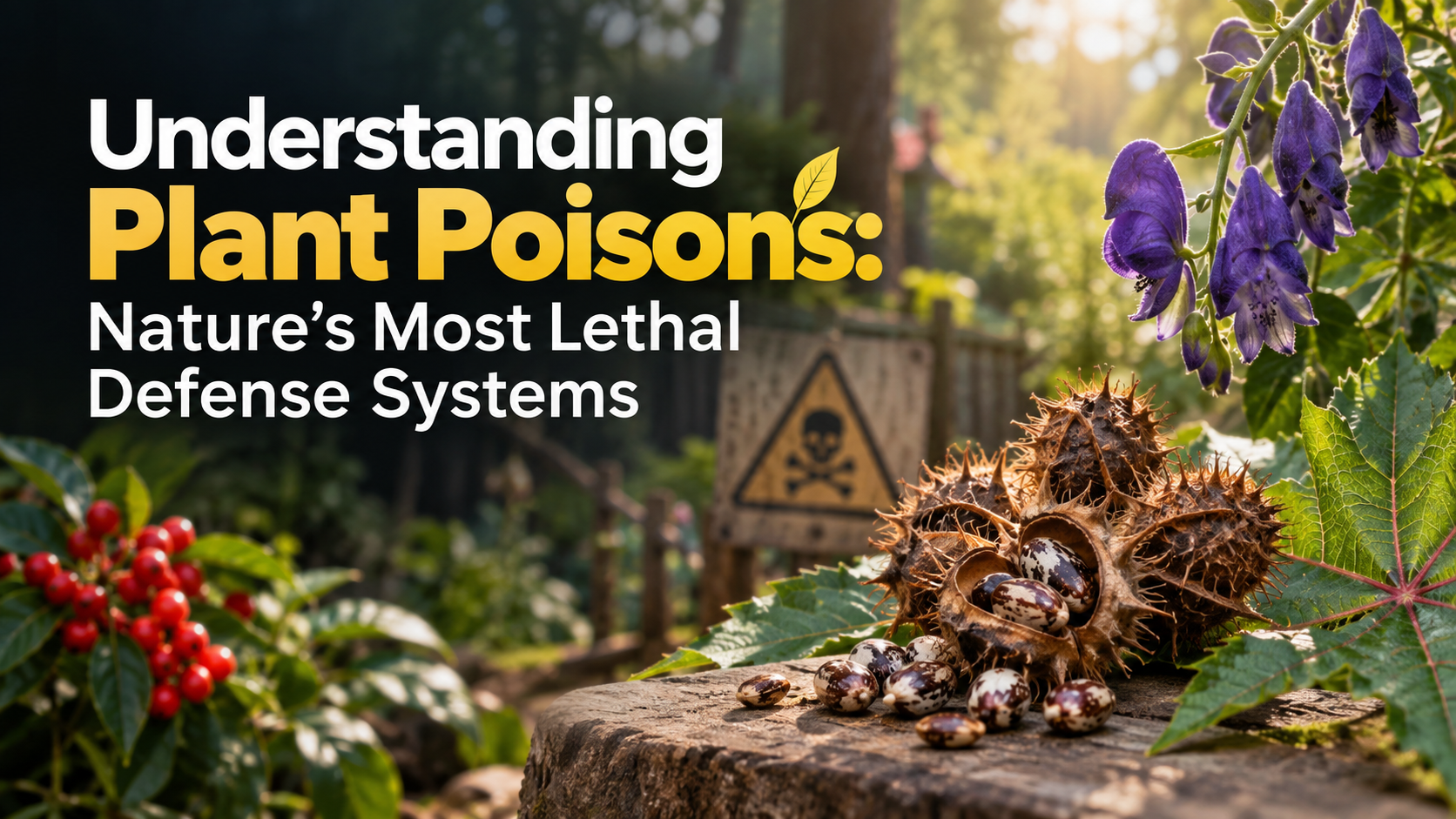
Understanding Plant Poisons: Nature’s Most Lethal Defense Systems
Many backyard gardens, walking trails, and wilderness areas contain plants with dangerous natural toxins. These compounds developed over millions of years to discourage herbivores, insects, and plant pathogens. Understanding plant poisons can help gardeners, hikers, pet owners, and families avoid accidental exposure. Gardeners can also learn about safer approaches to plant care through homemade insecticides for plants. The Poison Control guide to poisonous and non-poisonous plants provides useful information about hazardous species and common exposure risks. The CDC’s guide to poisonous plants also explains common exposure routes, symptoms, identification tips, and ways to reduce contact risks.
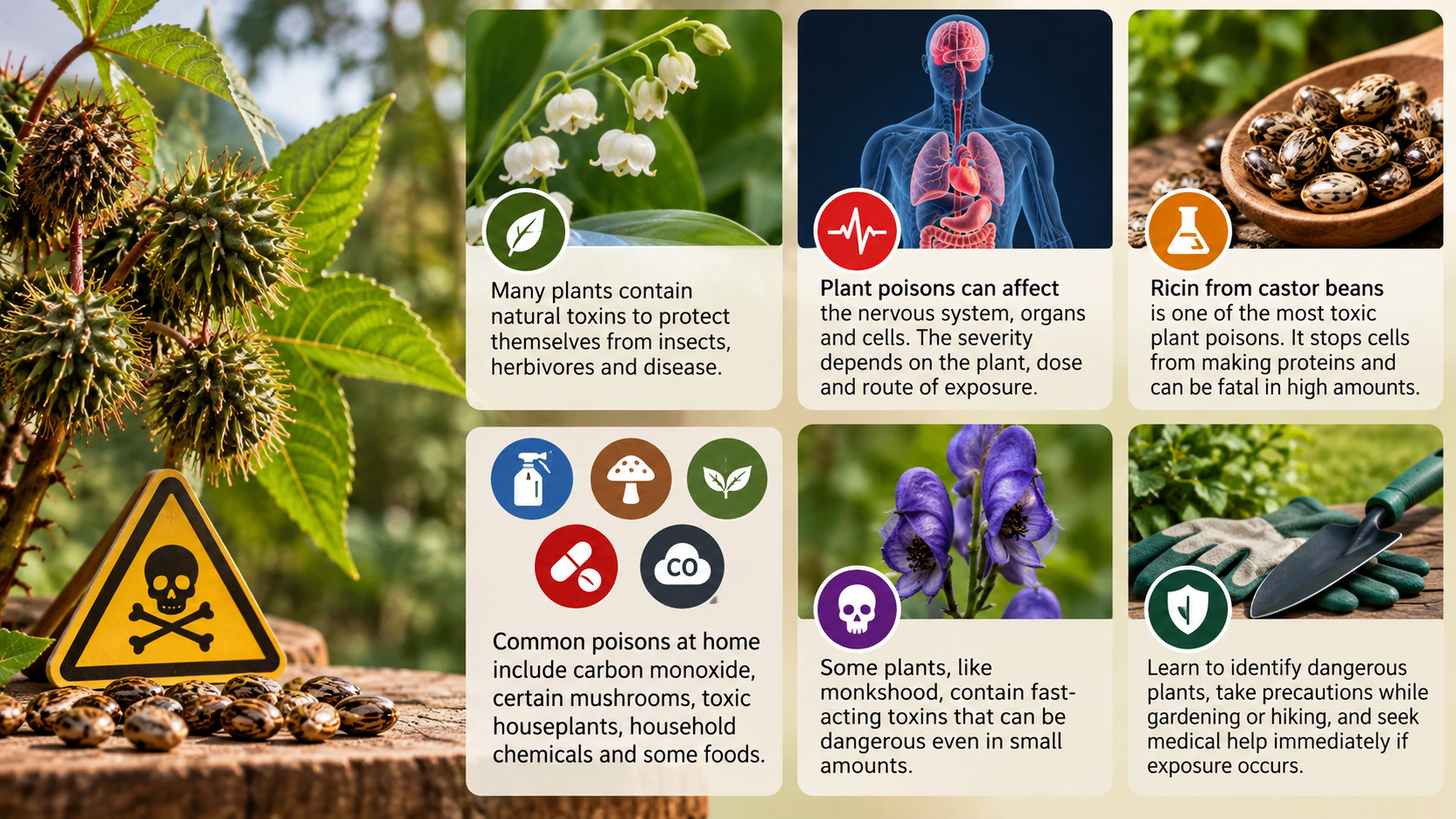
Botanical toxins vary widely in how they affect the body. Some interfere with nerve signals, while others damage cells or disrupt normal heart function. The severity also depends on the plant, the toxin, the amount involved, and the route of exposure.
Learning to recognize hazardous plants can support safer gardening and outdoor activities. It also helps people respond quickly when accidental plant exposure occurs.
This guide answers six common questions about poisonous plants and their toxins. It covers ricin, common household poisons, dangerous plant species, slow-acting toxins, and monkshood. It also explains how some of these compounds affect the human body.
What is the deadliest plant poison?
Ricin is among the most toxic plant-derived substances known to science. It occurs naturally in the seeds of the castor bean plant (Ricinus communis). Ricin enters cells and prevents them from producing proteins needed for normal function. Severe exposure can damage multiple organs and may become fatal.
However, calling one substance the single “deadliest” plant poison can oversimplify toxicology. Toxicity depends on factors such as dose, exposure route, and how the body absorbs the substance. Ricin poisoning can occur after exposure through ingestion, inhalation, or injection.
There is currently no specific cure for ricin poisoning. Medical teams provide supportive treatment based on the symptoms and exposure route. Treatment may include fluids, breathing support, and medicines for complications.
Castor beans themselves also deserve caution. Crushing or chewing the seeds can release ricin and cause serious poisoning.
How Ricin Disables Human Cells
Ricin works by disrupting one of the cell’s most important processes: protein production. The toxin contains two linked protein chains with different roles. One chain helps the toxin enter cells, while the other interferes with ribosomes.
Ribosomes normally build proteins that cells need for structure, repair, and everyday functions. When ricin disables these cellular machines, affected cells can no longer produce essential proteins. The resulting damage can spread across tissues and organs.
Research has shown that a single ricin molecule can inactivate large numbers of ribosomes. This helps explain why very small amounts can cause severe biological effects.
The symptoms depend on how exposure occurs. Swallowed ricin can cause vomiting, diarrhea, dehydration, and organ damage. Inhaled ricin can cause coughing, breathing problems, and fluid buildup in the lungs.
Severe poisoning can eventually lead to organ failure and death. Medical treatment therefore focuses on removing exposure and supporting vital body functions.
What are the top 10 poisons?
There is no scientifically universal ranking of the world’s ten most poisonous substances. Toxicity changes with the dose, exposure route, species, and measurement method. Plant toxins also belong to a much broader group that includes bacterial, animal, mineral, and synthetic poisons.
Frequently discussed highly toxic substances include:
- Ricin — Produced by castor beans.
- Abrin — Associated with rosary peas.
- Botulinum toxin — Produced by certain bacteria.
- Batrachotoxin — Found in some poison dart frogs.
- Maitotoxin — Produced by certain marine microorganisms.
- Cyanide — Interferes with cellular energy production.
- Strychnine — Affects the nervous system.
- Arsenic — A toxic element that can damage multiple organs.
- Certain nerve agents — Can severely disrupt nervous system function.
- Polonium-210 — A highly radioactive substance.
These substances do not all work in the same way. Some interfere with cellular protein production. Others disrupt nerve signals, muscle activity, cellular metabolism, or essential organ functions.
For readers researching plant poisons, it is more useful to understand their biological effects than to rely on a simple ranking. Toxicity also does not mean that casual contact automatically causes poisoning. Exposure conditions matter greatly, and some plant toxins become dangerous mainly when plant material is swallowed or otherwise absorbed.
What are five common poisons?
Several poisonous substances can appear around an ordinary home. Some come from household products, while others occur naturally in foods or ornamental plants. Five common examples include:
- Carbon monoxide — Can accumulate when fuel-burning appliances operate incorrectly or ventilation remains inadequate.
- Ethylene glycol — Found in some automotive antifreeze products and can cause serious poisoning when swallowed.
- Anticoagulant rodenticides — Can interfere with normal blood clotting.
- Solanine — A glycoalkaloid that can occur at increased levels in green or sprouting potatoes.
- Calcium oxalate — Found in some houseplants and can irritate the mouth and digestive tract when plant material is chewed or swallowed.
These substances differ significantly in their effects and exposure risks. Poison Control lists several ornamental plants among known poisonous species.
Safe storage remains one of the simplest ways to reduce household poisoning risks. Keep chemicals, medications, and potentially toxic plants away from children and pets. Seek professional poison-control or medical guidance after suspected exposure.
What are 10 examples of poisonous plants?
Many familiar plants contain natural compounds that can cause serious poisoning. Ten notable examples include:
- Castor bean (Ricinus communis)
- Deadly nightshade (Atropa belladonna)
- Water hemlock (Cicuta maculata)
- Oleander (Nerium oleander)
- Foxglove (Digitalis species)
- Autumn crocus (Colchicum autumnale)
- Lily of the valley (Convallaria majalis)
- White snakeroot (Ageratina altissima)
- Dumb cane (Dieffenbachia species)
- Rosary pea (Abrus precatorius)
These plants differ greatly in appearance and toxicity. Some grow as garden ornamentals, while others occur naturally in fields, woodland areas, or disturbed landscapes. Poison Control’s plant database also identifies several of these species as poisonous plants.
The presence of a toxic compound does not mean that every encounter causes poisoning. Risk depends on factors such as which part of the plant someone contacts, whether it is swallowed, and the amount involved. When choosing plants for challenging growing conditions, drought-tolerant plants for hot climates can also help gardeners select species suited to their environment.
Identification can still prevent many accidents. Avoid eating wild plants unless a qualified expert has confirmed their identity and safety. Children and pets also need supervision around unfamiliar vegetation.
Gardeners should learn the names of plants they grow and understand their potential hazards. For those adding trees to their landscape, how to plant your first tree can provide useful guidance on getting started. Clear labels and safe placement can further reduce accidental exposure at home.
Which plant is slow poison?
White snakeroot (Ageratina altissima) provides a well-known historical example of a plant associated with delayed poisoning. The plant contains tremetol, a toxic mixture that can enter the food chain when livestock consume contaminated vegetation.
Cattle and other grazing animals can ingest white snakeroot while feeding in areas where the plant grows. Toxic compounds can then pass into their milk. People who consumed contaminated dairy products historically developed a condition known as milk sickness.
Symptoms could develop gradually rather than appearing immediately. This delay made the illness especially difficult for early communities to identify. Affected people could experience weakness, gastrointestinal problems, and severe illness.
The historical story demonstrates an important feature of some plant poisons: exposure does not always produce instant symptoms. A toxin can sometimes move through an ecological pathway before reaching humans.
Today, white snakeroot remains an important example in discussions about poisonous plants and historical toxicology. However, modern medical diagnosis and food-safety practices have greatly changed how such exposures are recognized and managed.
Historical Devastation of Milk Sickness
Milk sickness caused serious problems for early settlers in parts of the American Midwest. The illness became especially difficult to understand because people did not initially recognize the connection between livestock, vegetation, milk, and human disease.
Cattle could graze on white snakeroot when other forage became scarce. The plant contains tremetol, and contaminated milk could then expose people to the toxin. Symptoms could appear after repeated consumption, making the original source difficult to identify.
Historical accounts connect milk sickness with numerous deaths during the nineteenth century. Abraham Lincoln’s mother, Nancy Hanks Lincoln, is widely reported to have died from the disease.
The episode shows why some plant poisons can remain hidden within food chains. People did not need to eat the poisonous plant directly. Instead, the toxin could reach them through products from affected animals.
Modern knowledge of plant toxicology has made this pathway easier to understand. Identifying poisonous plants and controlling livestock exposure remain important parts of preventing similar problems.
What plant is the queen of poison?
Monkshood (Aconitum napellus), also called wolfsbane, is often described as the “Queen of Poisons” because of its long history and powerful toxicity. The plant produces aconitine and related compounds that can affect both the nervous system and heart.
Monkshood has distinctive blue to dark-purple, helmet-shaped flowers. Despite its attractive appearance, every part of the plant can contain toxic compounds. The roots can contain particularly high concentrations.
Aconitine poisoning can produce tingling, numbness, nausea, vomiting, weakness, abnormal heart rhythms, and other serious symptoms. Severe cases can become life-threatening because of cardiovascular and neurological effects.
The plant has a long history of use as a poison. Historical accounts describe its use on hunting weapons and in other poisoning incidents.
Modern cases often involve accidental ingestion or confusion with edible plants. For that reason, people should never eat unidentified wild plants.
Monkshood demonstrates why appearance offers no reliable indication of plant safety. A beautiful garden plant can still contain extremely dangerous natural chemicals.
FREQUENTLY ASKED QUESTIONS
How should I handle an accidental poisoning emergency?
Remain calm and call emergency services or your national poison control hotline immediately. Do not attempt to induce vomiting unless directed by a qualified medical professional, as corrosive compounds can burn throat tissues twice. Try to secure a fresh sample or clear photograph of the ingested leaf, berry, or flower to help medical personnel identify the specific botanical toxin quickly and select proper antidotes.
Can toxins absorb through human skin during simple yard work?
Yes, certain species contain potent lipophilic toxins that penetrate unbroken skin upon contact. Species like monkshood and giant hogweed can cause serious systemic poisoning or severe phytophotodermatitis simply from contact with crushed stems or sap during weeding. Always wear thick rubber gloves, long sleeves, and eye protection whenever you prune, handle, or eradicate unfamiliar wild plants from garden borders.
Why do some animals graze on hazardous flora without dying?
Many wildlife species evolved specialized metabolic defenses against common botanical toxins through long evolutionary arms races. Certain birds, deer, and insects produce specialized digestive enzymes that neutralize complex alkaloids before they enter the bloodstream. Other animals boast altered cellular receptors that prevent poisons from binding effectively, allowing them to browse safely on plants that would rapidly kill a human or domestic dog.
Are dry or dead specimens still toxic to humans and pets?
Most botanical toxins remain fully active and hazardous long after foliage dries out, wilts, or dies. Potent cardiac glycosides, complex alkaloids, and cytotoxic proteins persist within dried leaves and stems for months or years. Never burn dried brush piles containing unknown or hazardous vegetation, because hot smoke can carry dangerous toxins directly into human airways, causing serious lung inflammation.
CONCLUSION
The natural world contains an astonishing variety of chemical defenses designed to deter predators and protect plant life. From the ribosome-destroying efficiency of ricin to the slow, agonizing metabolic disruptions caused by white snakeroot, botanical hazards present real dangers in yards, parks, and pastures. Understanding how specific plant poisons operate gives gardeners, hikers, and pet owners the vital knowledge needed to navigate the outdoors safely.
Learning to recognize dangerous species like monkshood, oleander, and foxglove helps prevent tragic accidents before they occur. Always approach unfamiliar wild flora with caution, and supervise children and curious pets around ornamental greenery. If you suspect someone swallowed a toxic stem, seed, or berry, seek immediate medical care from emergency services. By respecting nature’s potent chemical arsenal and practicing landscape strategies for energy efficiency, you can safely enjoy the outdoors while protecting your household from botanical threats.