
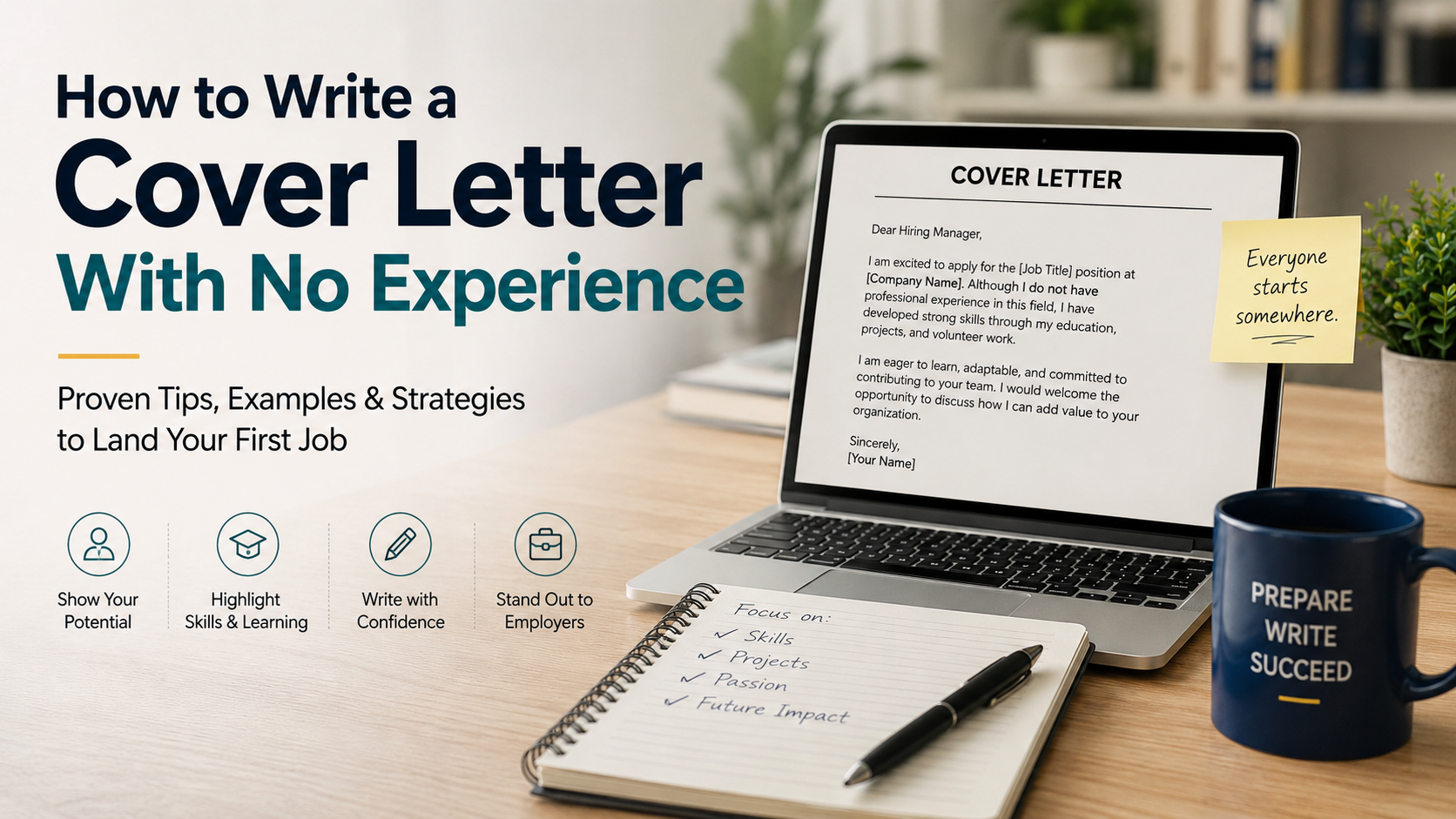
How to Write a Cover Letter With No Experience
Entering the job market without prior experience can feel intimidating. However, learning how to write a cover letter with no experience can help you present your potential more effectively. Employers do not only assess previous employment. They also consider transferable skills, adaptability, communication, and enthusiasm for the role.
A strong cover letter connects your education, projects, volunteer work, and personal achievements to the employer’s needs. It should explain why you are interested in the position and what you can contribute. Career guidance from Harvard Career Services also emphasizes presenting your experiences in ways that connect with workplace expectations.
This guide covers practical questions about writing a cover letter without work experience. It also explains how to make your writing sound natural, address your lack of experience, and create a stronger opening. Whether you are a recent graduate, career changer, or first-time job seeker, these strategies can help strengthen your application.
Can employers tell if you use ChatGPT for cover letter?
Employers may sometimes recognize AI-assisted writing, but there is no reliable way to identify every AI-generated cover letter. Automated writing can sound generic when it relies on predictable phrases, excessive buzzwords, or vague claims. A cover letter that feels impersonal may weaken your application, regardless of how it was written.
Using ChatGPT or another writing tool does not automatically make a cover letter ineffective. The bigger problem is submitting text that does not reflect your experiences, communication style, or understanding of the role. Hiring managers may notice inconsistencies when an application sounds polished but lacks specific examples.
If you use AI while preparing your cover letter, treat it as an editing or brainstorming aid. Add your own experiences, achievements, motivations, and language. Then verify every claim and customize the document for the employer. Your final version should sound like you, not like a generic template designed for hundreds of applicants.
Spotting Robotic Phrasing in Applications
Generic wording can make a cover letter feel artificial, even when a human wrote every sentence. Phrases such as “I am thrilled to leverage my skills” often communicate little without specific evidence. Strong applications use clear language and connect claims to real experiences.
Certain words, including “testament,” “delve,” or “beacon,” can sound unnatural when they do not match your normal vocabulary. However, simply avoiding individual words will not make an application authentic. The overall tone, detail, and specificity matter more.
Read your cover letter aloud before submitting it. Look for sentences that feel overly formal or unlike the way you normally communicate. Replace vague statements with concrete examples from coursework, projects, volunteering, clubs, or personal work.
For example, instead of saying you are “highly motivated,” explain what you accomplished. Specific evidence gives employers something meaningful to evaluate. It also makes your writing more memorable and credible.
How do I say I have no experience but I’m willing to learn?
When writing a cover letter with no experience, avoid making your lack of employment the central theme. You do not need to apologize for being early in your career. Instead, show employers what you have already learned and how those skills can transfer to the position.
Academic assignments, volunteer activities, internships, student organizations, freelance projects, and personal initiatives can all provide useful evidence. Choose examples that demonstrate qualities relevant to the job, such as communication, research, organization, teamwork, or problem-solving. These experiences can also support your personal brand for career growth as you begin building professional credibility.
You can also explain your willingness to learn through specific actions. Mention a course you completed, a tool you taught yourself, or a project that required you to develop a new skill. This approach is stronger than simply saying you are a “fast learner.”
Your goal is to show potential through evidence. A concise statement about your willingness to learn becomes more convincing when a real example supports it. Focus on what you can contribute now while showing that you are prepared to grow.
Highlighting Transferrable Academic Projects
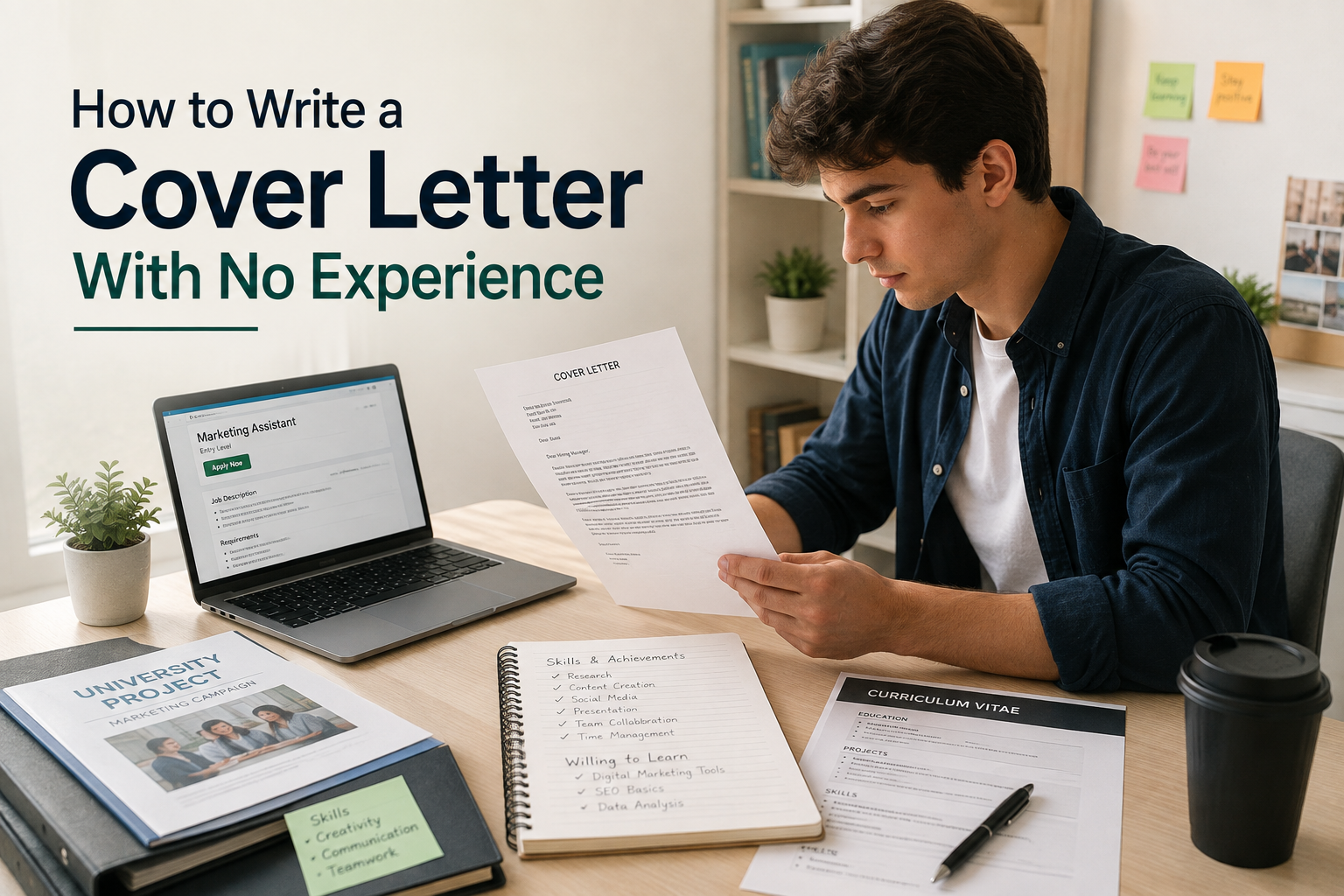
Academic projects can provide strong evidence of transferable skills when you have limited professional experience. Instead of simply listing a project title, explain what you were responsible for and what the project required. You can also learn how to build a portfolio without work experience to present these projects more effectively.
For example, a research assignment may demonstrate information gathering, analysis, writing, and deadline management. A group presentation can show collaboration, communication, preparation, and confidence. A coding project may demonstrate problem-solving and technical learning.
Choose projects that relate closely to the position. A marketing applicant could discuss a campaign created for a university project. A finance applicant could describe a financial analysis assignment. A design applicant could highlight a portfolio project completed independently.
Use a simple structure when describing each example:
- Situation: Briefly explain the project.
- Action: Describe what you personally did.
- Result: Explain what you achieved or learned.
This gives employers tangible evidence of your abilities. It also helps transform academic experience into relevant professional value.
How do I start a cover letter?
The opening of your cover letter should quickly establish why you are interested in the position. Avoid relying on generic introductions that could apply to any company. Instead, connect your interest to the specific employer, role, or problem you want to help solve. For more guidance, follow this step-by-step guide to writing a cover letter.
Start by naming the position and explaining what attracted you to it. You can then introduce one relevant strength, achievement, or area of knowledge. This creates a clearer connection between your background and the employer’s needs.
For example, a recent graduate might mention a relevant academic project before explaining their interest in the company’s work. A career changer could highlight a transferable skill that connects their previous field to the new position.
Research can improve your opening, but avoid forcing company information into the first sentence. A reference to a recent initiative is useful only when it genuinely connects to your motivation.
Keep the introduction concise. The opening should encourage the reader to continue rather than explain your entire background. A focused first paragraph gives the rest of your cover letter a stronger foundation.
Hooking the Reader With Company Alignment
Researching the target company can help you create a more relevant opening. Look at its products, services, recent initiatives, values, or current challenges. Then identify one genuine connection between the organization and your interests or experience.
Do not simply repeat information from the company’s website. Statements such as “I admire your commitment to excellence” are weak unless you explain why. Specificity makes your interest more believable.
For example, you could mention a company project that relates to a university assignment you completed. You could also explain how the organization’s work connects with an area you have studied or explored independently.
The strongest connection usually follows a simple pattern: what interests you, what you have done, and why the role fits. This approach creates a natural transition into your qualifications.
Keep your research relevant and concise. The purpose is not to prove that you visited the company’s website. It is to demonstrate that you understand the opportunity and have a genuine reason for applying.
What is a cover letter for a CV example?
A cover letter is a personalized document that accompanies your CV or resume. It should add context rather than repeat every detail already included in your application. Your CV provides a structured overview of your education, experience, and skills. The cover letter explains why those details matter for the specific role. Understanding the key differences between a cover letter and resume can help you use both documents effectively.
For candidates without professional experience, this distinction becomes especially important. Your cover letter can connect academic projects, volunteer activities, extracurricular responsibilities, and transferable skills to the employer’s requirements.
For example, your CV might list a university research project. Your cover letter can explain how that project strengthened your analytical skills and prepared you for the position.
A useful cover letter usually includes a clear introduction, relevant evidence, and a concise closing. It should remain focused on the employer’s needs rather than becoming a personal autobiography.
Think of the document as a bridge between your CV and the job description. It gives the employer a reason to see your existing abilities as relevant, even when your formal employment history is limited.
Translating Resume Data Into Stories
A CV presents information quickly, while a cover letter gives selected details more context. This difference allows you to turn relevant achievements into short, meaningful examples.
Suppose your CV states that you led a university group project. Your cover letter could explain how you divided responsibilities, handled deadlines, or resolved disagreements. That additional context demonstrates skills that a short CV bullet may not fully communicate.
Do not turn every resume entry into a story. Select one or two experiences that directly support the requirements of the job. Focus on actions and outcomes rather than lengthy background information.
A useful approach is to explain what happened, what you did, and what the experience taught you. This structure keeps your examples focused and relevant.
The goal is not to entertain the hiring manager with a dramatic story. It is to provide evidence of your capabilities. When your examples are specific and connected to the role, your application becomes more persuasive without exaggerating your experience.
What should be avoided in a cover letter?
A strong cover letter should avoid mistakes that distract from your qualifications. Spelling errors, incorrect company names, outdated information, and generic statements can make your application appear careless. Always check the document before submitting it. Reviewing these common cover letter mistakes and how to fix them can help you avoid preventable errors.
Do not apologize repeatedly for having limited experience. A sentence acknowledging that you are entering the field may be appropriate, but the rest of the letter should focus on your strengths and potential.
Avoid copying your CV word for word. The cover letter should explain selected experiences and show how they relate to the position. It should also avoid unsupported claims such as “I am the perfect candidate.”
Length matters too. A concise cover letter is usually easier to read than a long document filled with unrelated details. Prioritize information that helps answer one question: Why should this employer consider you for this role?
Finally, avoid using the same letter for every application. Customizing a few important sections can make the document more relevant. Check the job description carefully and address the skills the employer actually requests.
The Dangers of Copy-Paste Mistakes
Generic templates can save time, but careless customization can create serious problems. One of the most obvious mistakes is leaving another company’s name in the introduction or closing. This can immediately suggest that you did not review your application.
Other errors include using the wrong job title, addressing the wrong department, mentioning an unrelated position, or leaving placeholder text in the document. These mistakes are avoidable with a careful final review.
Before submitting your cover letter, check the following:
- Company name: Make sure it matches the employer.
- Job title: Confirm the exact position.
- Hiring manager: Check the name and spelling when available.
- Examples: Ensure every example relates to the role.
- Attachments: Confirm that the correct CV is included.
Read the letter once for content and again for errors. Reading it aloud can also reveal awkward sentences or missing words. A final review takes only a few minutes but can prevent an otherwise avoidable application mistake.
Does HR read your cover letter?
Some HR professionals and hiring managers read cover letters, while others may give them little attention. The importance of a cover letter depends on the employer, industry, hiring process, and volume of applications. Therefore, you should not assume that every recruiter will carefully read yours.
Many organizations use applicant tracking systems to organize applications and identify candidates who meet basic criteria. Human reviewers may then assess shortlisted applications. In some cases, the cover letter becomes useful when recruiters compare candidates with similar qualifications.
A tailored cover letter can also demonstrate communication skills, attention to detail, and genuine interest. However, it should not replace a strong CV or relevant evidence. Your application needs to work as a complete package.
If an employer specifically requests a cover letter, take the request seriously. Customize the document and address the most relevant requirements from the job description. If the application does not request one, check the employer’s instructions before adding an unnecessary document.
How Recruiters Screen Initial Submissions
Recruiters often review large numbers of applications, so relevance and clarity matter. They may first check whether the candidate meets essential requirements before deciding whether to examine the application more closely.
Your opening should therefore communicate the role you are targeting and your most relevant strengths quickly. Avoid lengthy personal introductions that delay the main point. Use specific examples that demonstrate skills requested in the job description.
Recruiters may also look for inconsistencies between your CV and cover letter. Make sure your education, dates, projects, and responsibilities match across both documents. Unsupported claims can also weaken credibility.
Applicant tracking systems may help employers organize and filter applications, although their use varies between organizations. This makes it useful to include relevant terminology naturally when it accurately describes your skills.
Ultimately, your cover letter should make the recruiter’s job easier. Keep it concise, relevant, and easy to scan. Show how your existing abilities connect with the position rather than focusing heavily on what you have not yet experienced.
FAQ SECTION
Can I use the same cover letter for multiple jobs?
You can reuse the basic structure of a cover letter, but you should not submit the exact same version for every application. When learning how to write a cover letter with no experience, customization is especially important because your relevant skills need to match each position. Change the company name, job title, opening paragraph, and examples to reflect the specific employer. Highlight at least one requirement from the job description and explain how your education, projects, or transferable skills relate to it. A customized letter shows genuine interest and makes your application more relevant.
How long should my application letter be?
A cover letter should usually fit on one page and remain concise. For most entry-level applications, around 250 to 400 words is enough to explain your background without overwhelming the reader. If you are learning how to write a cover letter with no experience, avoid adding unnecessary details simply to make the document longer. Focus on your strongest transferable skills, relevant academic projects, and reasons for applying. Keep paragraphs short and make every section support your application. A focused letter is easier for recruiters to scan and gives your most relevant qualifications greater impact.
Should I address the letter to a specific person?
Yes, address your cover letter to a specific person when you can identify the appropriate hiring manager or recruiter. When researching how to write a cover letter with no experience, personalization should be part of the process. Check the job advertisement, company website, or professional networking profiles for the relevant contact. If you cannot find a name, use a professional greeting such as Dear Hiring Manager rather than guessing. Avoid outdated greetings such as “To whom it may concern” when a more direct option is available. Correctly addressing your letter demonstrates care and attention to detail.
What if the job posting does not ask for one?
If a cover letter is optional, submitting one can still be useful when the application system allows it. However, do not assume that every employer expects one. When deciding how to write a cover letter with no experience, consider whether the document adds information that your CV cannot communicate. Use the letter to explain your motivation, transferable skills, relevant projects, or interest in the company. If the employer specifically says not to submit one, follow those instructions. Otherwise, a concise and well-tailored letter can provide additional context and strengthen an entry-level application.
Conclusion
Learning how to write a cover letter with no experience does not require pretending to have professional experience you lack. Instead, focus on transferable skills, academic projects, volunteer work, personal achievements, and your willingness to learn. Keep your writing specific, natural, and tailored to each employer. Avoid generic templates, unsupported claims, and unnecessary repetition. A focused cover letter can help employers see your potential and understand why your existing abilities fit the position. Use the strategies in this guide to create a professional application that gives your early career a stronger start while supporting your continuous learning for career success.