
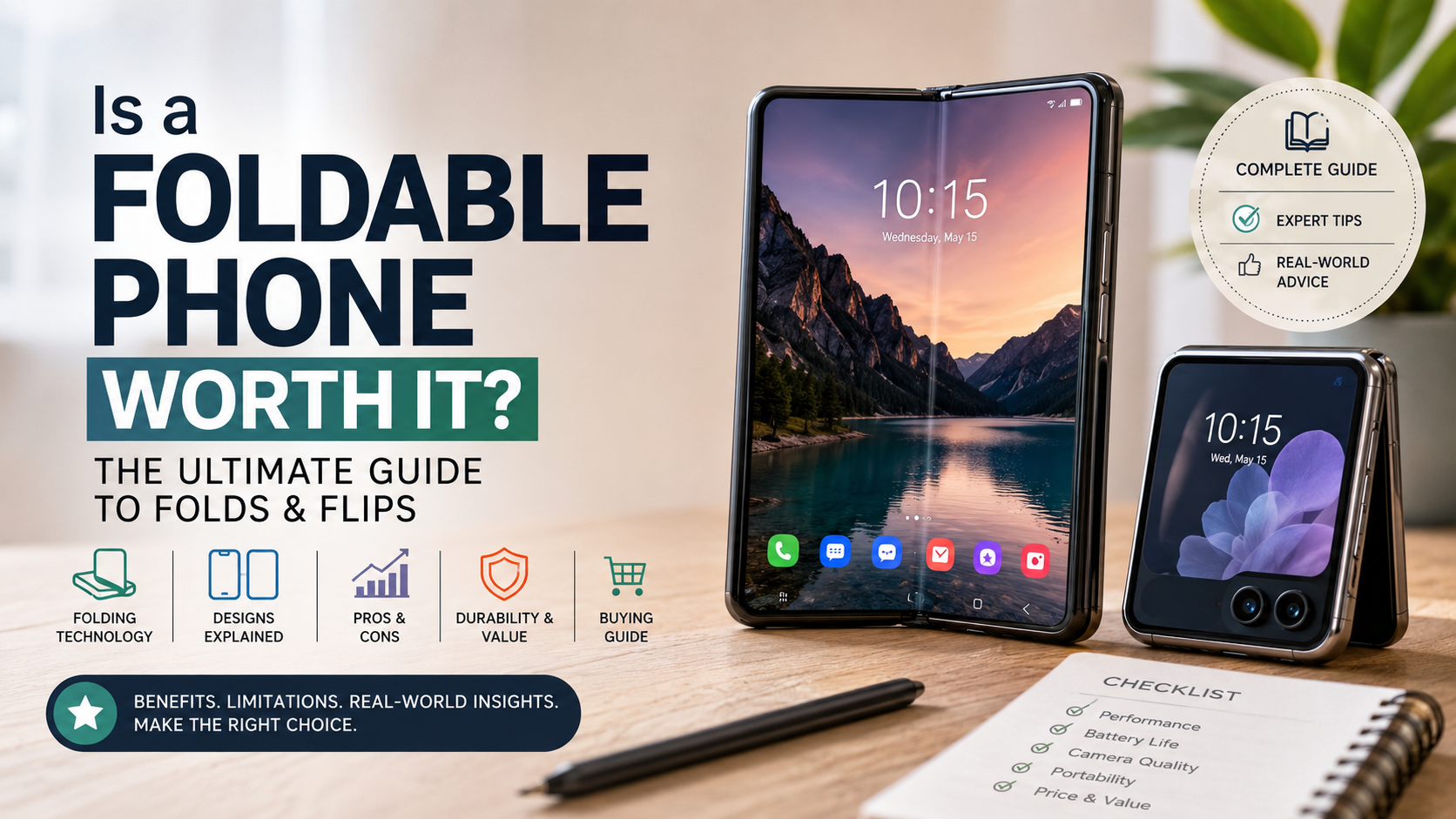
Is a Foldable Phone Worth It? The Ultimate Guide to Folds and Flips
The smartphone market remained largely unchanged for years. Most devices followed the same glass rectangle design with only minor upgrades. The arrival of the foldable phone changed that pattern by introducing flexible displays and new ways to use mobile technology.
These innovative devices combine smartphone portability with tablet-sized screens. Users can unfold a compact device into a larger workspace within seconds. Early foldable models faced concerns about durability, high prices, and limited software support. However, recent generations have improved significantly.
Companies such as Samsung and other leading smartphone manufacturers have refined hinge designs, display materials, and software features. These improvements have helped foldable devices move beyond being experimental gadgets. Today, they are becoming practical tools for productivity, entertainment, and creative work.
Choosing a foldable smartphone still requires careful consideration. These devices offer unique advantages, but they also come with trade-offs. Buyers must evaluate factors such as screen durability, pricing, battery life, camera performance, and everyday usability.
This complete foldable phone buying guide explains how flexible displays work, explores different foldable designs, and examines their real-world benefits and limitations. By the end, you will understand whether a foldable device matches your needs or if a traditional smartphone remains the better choice.
Understanding Foldable Phone Technology and Designs
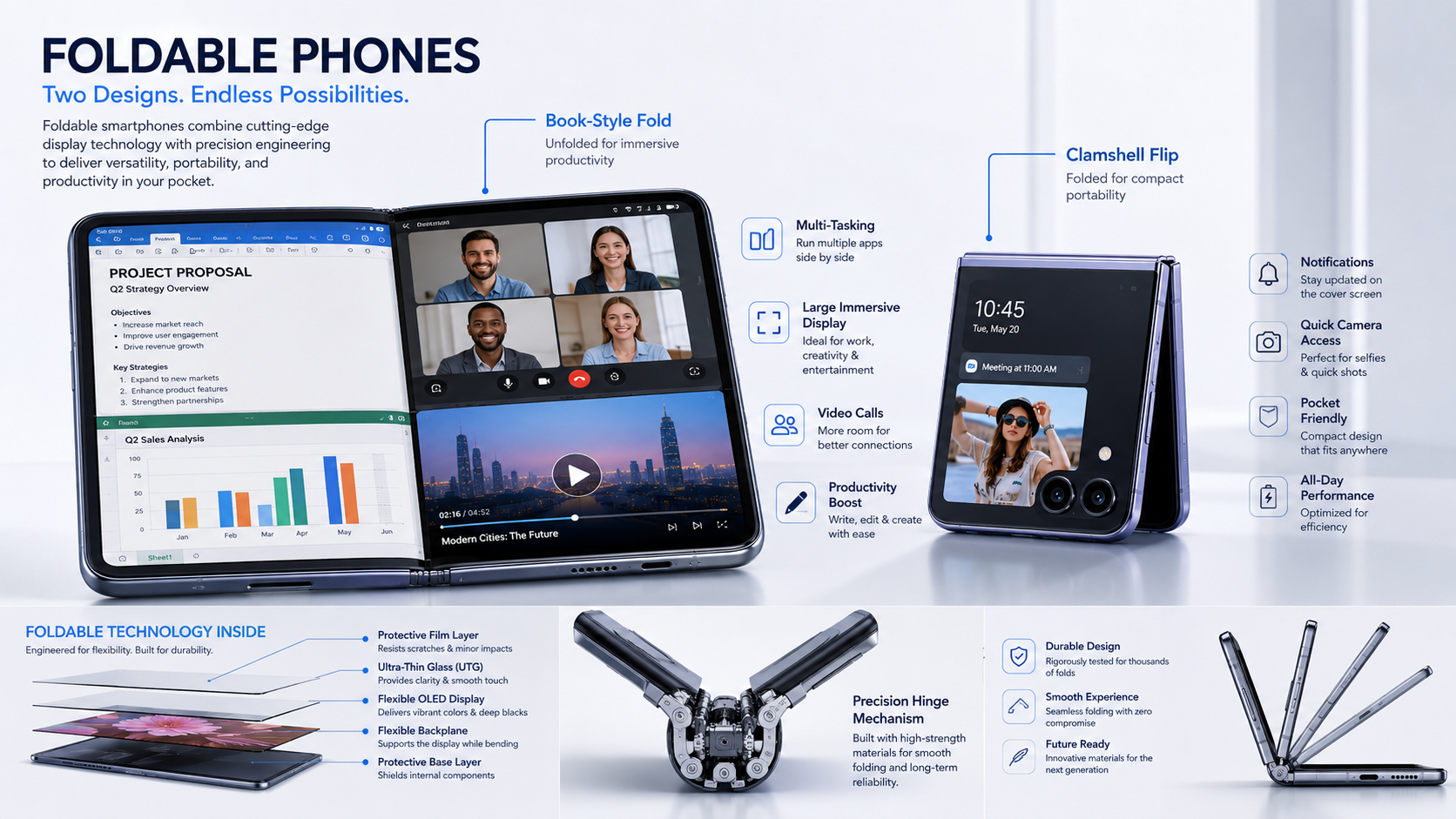
A foldable phone uses advanced display technology that allows the screen to bend without breaking. Unlike traditional smartphones with rigid glass panels, these devices rely on flexible OLED displays, ultra-thin glass layers, and specially designed hinge systems.
Manufacturers have developed different folding styles to meet different user preferences. The market has mainly settled around two popular designs: book-style foldable phones and clamshell flip phones. Each design offers a different balance between screen size, portability, and everyday convenience.
Book-style models focus on productivity and larger displays. They open like a small tablet and provide more space for multitasking, reading, gaming, and professional work. These devices are ideal for users who want a phone that can replace both a smartphone and a tablet.
Clamshell flip models focus on compactness and style. They fold vertically and become smaller when closed. This makes them easier to carry while still providing a full smartphone experience when opened.
Understanding these two designs helps buyers choose the right foldable device based on their lifestyle, usage habits, and priorities.
The Book-Style Fold
Book-style foldable phones are designed for users who want maximum screen space without carrying a separate tablet. These devices look like regular smartphones when closed but expand into a large, tablet-like display when opened.
The biggest advantage of this design is productivity. The wider internal screen makes activities such as multitasking, document editing, video calls, and content creation much easier. Users can often run multiple applications side by side, creating a more desktop-like experience.
These devices are especially useful for professionals, students, and anyone who frequently works from their phone. Reading ebooks, reviewing presentations, managing emails, and browsing detailed websites become more comfortable on the larger display.
However, book-style models are usually thicker and heavier than standard smartphones. Their larger size also makes them more expensive. Buyers should consider whether the extra screen space justifies the higher cost and reduced portability.
The Clamshell Flip
Clamshell foldable phones offer a different approach by prioritizing portability over screen expansion. Inspired by classic flip phones, these devices fold vertically into a compact square shape that easily fits into smaller pockets or bags.
When opened, they provide a familiar smartphone experience with a tall display. Many models also include an external cover screen for checking notifications, controlling music, viewing widgets, or taking quick selfies without opening the phone.
The main benefit of this design is convenience. Users get a full-sized smartphone that becomes significantly smaller when not in use. This makes flip-style foldables attractive for people who value fashion, portability, and simple everyday handling.
The trade-off is a smaller internal display compared with book-style devices. They are better suited for communication, social media, and casual use rather than heavy multitasking.
| Feature | Book-Style Fold | Clamshell Flip |
|---|---|---|
| Primary Benefit | Large productivity-focused screen | Compact portability |
| Best Used For | Multitasking, work, media consumption | Travel, communication, everyday use |
| Closed Profile | Thicker and heavier | Smaller and easier to carry |
Everyday Benefits of Owning a Foldable Phone
A flexible smartphone changes how users interact with digital content. The biggest advantage is the ability to enjoy a larger workspace without carrying a separate tablet or laptop.
Book-style foldable phones are especially powerful for multitasking. Users can open several applications at the same time, making tasks faster and more convenient. For example, you can join a video meeting while taking notes or compare information between two apps.
Another major feature is Flex Mode, which uses the hinge as a built-in stand. By partially folding the phone, users can place it on a flat surface without needing extra accessories.
This feature is useful for many situations, including:
- Watching videos hands-free
- Following cooking instructions
- Taking group photos
- Joining video conferences
- Recording content
Foldable devices also improve entertainment experiences. Larger screens provide more space for movies, games, reading, and browsing. The ability to switch between compact and expanded modes gives users more flexibility throughout the day.
For people who rely heavily on mobile technology, these advantages can make a foldable phone feel more like a portable computer than a traditional handset.
Addressing the Durability Question
Durability is one of the biggest concerns for anyone considering a foldable phone. Traditional smartphones use rigid glass screens, but foldable devices require flexible materials that can bend thousands of times.
Most modern foldable displays use Ultra Thin Glass (UTG) combined with protective layers. This technology allows the screen to fold repeatedly while maintaining image quality. However, the inner display remains softer than standard smartphone glass.
Because of this difference, foldable screens require more careful handling. Sharp objects, excessive pressure, or rough use can damage the surface more easily than a traditional phone display.
Manufacturers have improved hinge technology significantly. Modern hinge systems are designed with precision components that reduce stress on the display. Many premium foldable models also include internal mechanisms that help prevent dust and debris from entering the hinge area.
Water resistance has also improved. Several high-end foldable smartphones now offer IPX8 water resistance, allowing protection against accidental water exposure. However, the “X” rating means they are not officially tested for dust protection.
Users should still avoid exposing foldable devices to sand, dirt, and small particles. Proper care remains important because the folding mechanism contains complex moving parts.
Overall, modern foldables are much more reliable than early models. They can handle normal daily use, but they still require more attention than conventional smartphones.
Software Optimization: The Key to a Great Foldable Experience
Hardware alone does not define the quality of a foldable smartphone. Software optimization plays an equally important role in making the flexible design useful.
Modern operating systems are designed to take advantage of larger foldable displays. Features such as app continuity allow applications to move smoothly between the cover screen and the main internal display.
For example, you can start reading a message on the outside screen and open the device to continue using the larger display. The transition happens automatically without interrupting your activity.
Important foldable software features include:
- App Continuity: Moves apps smoothly between different screens.
- Taskbars: Provides faster access to frequently used applications.
- Split-Screen Multitasking: Allows multiple apps to run together.
- Flex Mode: Adjusts layouts when the phone is partially folded.
These features make foldable phones more productive than traditional smartphones. They allow users to work, communicate, and consume content in more flexible ways.
However, app support still affects the overall experience. Some applications are not fully optimized for large foldable displays. As adoption increases, developers continue improving compatibility.
A well-designed software experience can transform a foldable phone from an expensive novelty into a practical daily device.
Weighing the Major Disadvantages of Foldable Phones
Despite their advantages, foldable smartphones still have several limitations. Buyers should understand these drawbacks before making a premium purchase.
The most noticeable issue is the display crease. The folding area creates a visible line across the screen, especially under certain lighting conditions. While the crease becomes less distracting over time, users can still feel it when touching the display.
Another challenge is battery capacity. Foldable designs require complex internal layouts, leaving less space for large batteries. Some models may offer shorter battery life compared with similarly priced traditional flagship phones.
Camera performance can also be a compromise. Manufacturers must fit camera sensors into thinner folding sections, which can limit hardware choices. Some foldable models still cannot match the best camera phones available.
Other disadvantages include:
- Higher purchase prices
- More delicate internal displays
- Heavier designs compared with standard phones
- Limited repair options in some regions
For many users, these drawbacks are acceptable because of the unique benefits foldables provide. However, people who prioritize maximum durability, long battery life, or the best possible camera system may prefer traditional flagship smartphones.
Frequently Asked Questions About Foldable Phones
Is the screen crease noticeable on a foldable phone during daily use?
The foldable phone crease is one of the most discussed aspects of flexible displays. It can be visible at certain angles, especially under bright overhead lighting or when viewing dark content.
However, most users find that the crease becomes less noticeable after regular use. When viewing the display directly, especially with colorful or bright content, the line often blends into the screen experience.
You may still feel a slight dip when moving your finger across the folding area. This is noticeable during scrolling or typing but rarely affects normal daily activities.
Display technology continues to improve with each generation. Manufacturers are reducing crease visibility through better hinge designs and improved flexible materials. For most users, the crease becomes a minor detail rather than a major problem.
Do foldable phones last as long as traditional smartphones?
Modern foldable phones are designed to handle thousands of folding cycles. Many premium models are tested for around 200,000 folds, which can represent several years of regular use.
The hinge is usually one of the most durable parts of the device. However, the flexible inner display requires more careful handling than traditional smartphone screens.
Over time, some users may experience issues such as protective layer wear near the folding area. Manufacturers often provide replacement services for these components.
With normal care, a high-quality foldable phone can easily last through a typical two-to-three-year upgrade cycle. However, users should handle the device carefully to maintain long-term reliability.
Are flexible smartphones waterproof or dustproof?
Many premium foldable smartphones offer IPX8 water resistance, which provides protection against accidental water exposure. This rating means the device can survive limited water immersion under controlled conditions.
However, the “X” in the rating indicates that dust resistance has not been officially tested. Small particles such as sand, dirt, and debris can still create problems for folding mechanisms.
Users should avoid using foldable devices in environments with heavy dust or loose particles. Beaches, construction areas, and outdoor locations with sand require extra caution.
While water protection has improved significantly, dust resistance remains one of the biggest challenges in foldable phone design.
Why are foldable phones more expensive than regular flagship smartphones?
The higher price of foldable devices comes from advanced engineering and specialized manufacturing. Creating a display that bends repeatedly requires expensive materials and complex production methods.
Foldable screens use advanced OLED technology and ultra-thin glass layers. The hinge system also contains many precision components designed to support thousands of folding movements.
Research and development costs are another major factor. Companies invest heavily in improving durability, reducing thickness, and creating better software experiences.
As manufacturing improves and production increases, prices are expected to become more competitive. However, foldable phones currently remain premium devices because of their specialized technology.
Can I use a stylus on a foldable phone?
Some book-style foldable phones support stylus input, but users must use compatible pens designed specifically for flexible displays.
Standard hard-tip styluses can damage the softer inner screen. Applying too much pressure may leave marks or affect the display layers.
Compatible foldable styluses are designed with safer materials and pressure control. They provide a smoother writing experience while protecting the flexible panel.
For professionals, students, and creative users, stylus support can make a foldable phone even more useful. It allows easier note-taking, document editing, and creative work on a larger mobile screen.
Conclusion: Is a Foldable Phone Worth Buying?
The modern foldable phone has evolved from an experimental concept into a practical smartphone category. Today’s models combine advanced engineering, flexible displays, and powerful software to provide experiences that traditional phones cannot match.
The biggest advantage is versatility. A foldable device can work as a compact smartphone while offering a larger workspace when needed. This makes it valuable for multitasking, entertainment, productivity, and creative tasks.
However, foldable phones are not perfect. Buyers must consider the higher cost, softer internal screens, display crease, and possible compromises in battery life or camera performance.
For professionals, early adopters, and users who rely heavily on mobile productivity, a foldable phone can be an excellent investment. The extra screen space and flexible design provide meaningful benefits.
For users who want maximum durability, the best cameras, or the lowest price, traditional flagship smartphones may still be the better option.
Before purchasing, consider how you use your phone every day. If a larger display and flexible design can improve your workflow, exploring current foldable models may be worthwhile. The right choice depends on your priorities, budget, and expectations from your next smartphone.
If you are still comparing smartphone options and want to understand the differences between major mobile platforms, check out our detailed guide on iPhone vs Android for students to help you choose the right device for your needs.