
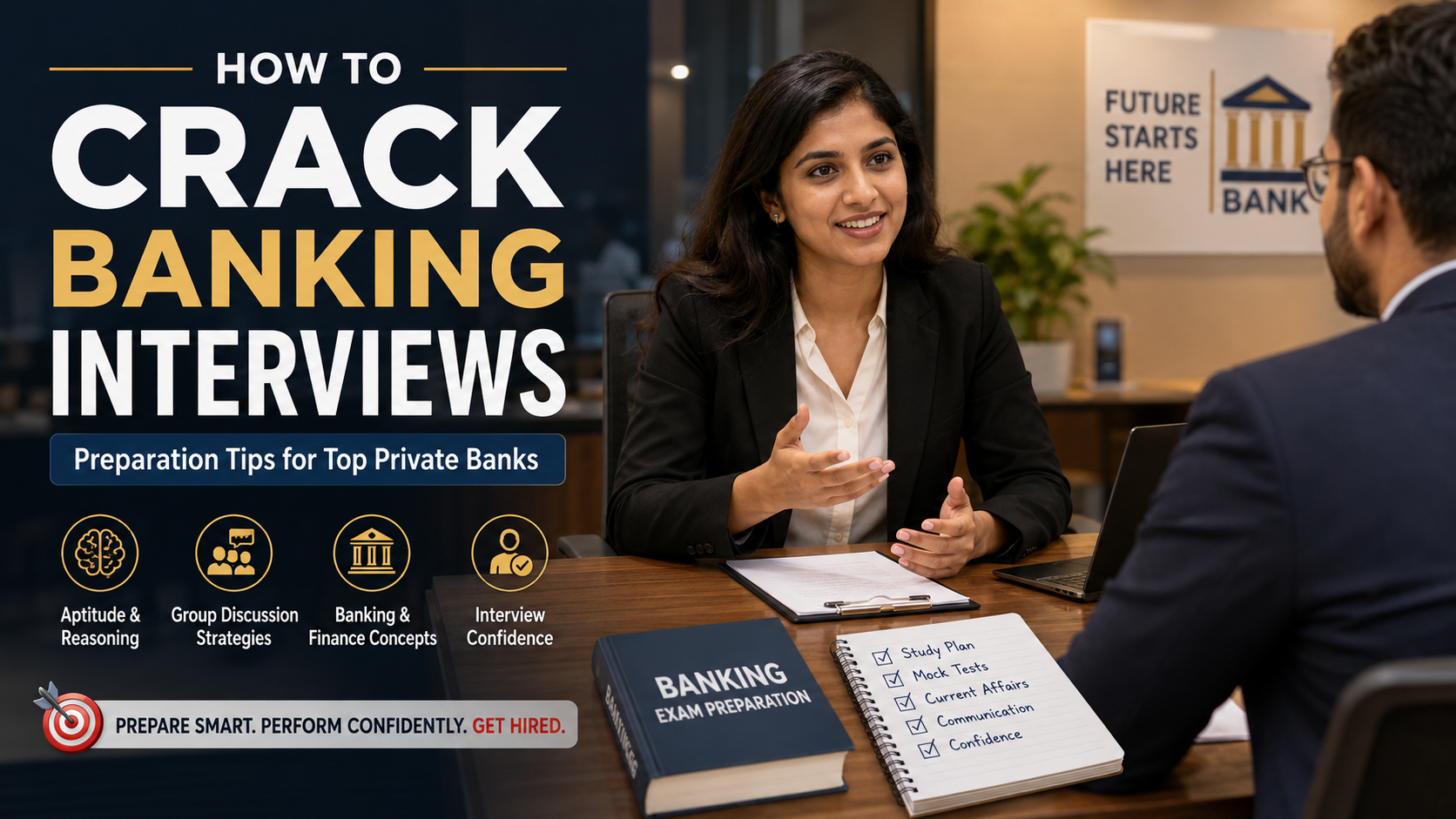
How to Crack Banking Interviews: Preparation Tips for Top Private Banks
Securing a job in the private financial sector requires strategy, confidence, and technical knowledge. Understanding the best preparation tips for top private banks will help you stand out among thousands of ambitious applicants. Top institutions like HDFC Bank seek candidates who understand modern financial products, digital tools, and relationship dynamics. Navigating these competitive selection processes demands a structured study plan and strong communication skills. Consequently, in this comprehensive guide, you will discover practical interview techniques, essential financial concepts, and proven methods to land your dream role.
Landing an entry-level or mid-level position in a premier financial institution can transform your professional trajectory dramatically. The private financial industry offers immense opportunities for rapid career advancement and global exposure. However, because these corporate roles are highly sought after, hiring panels maintain strict screening standards. Furthermore, evaluators look far beyond academic marks to assess real-world problem-solving, emotional intelligence, and technical readiness. As a result, candidate evaluation focuses heavily on practical execution and client management skills. By following systematic preparation tips for top private banks across every assessment stage, you position yourself as a high-value candidate ready to contribute from day one.
Preparation Tips for Top Private Banks: Understanding the Selection Process
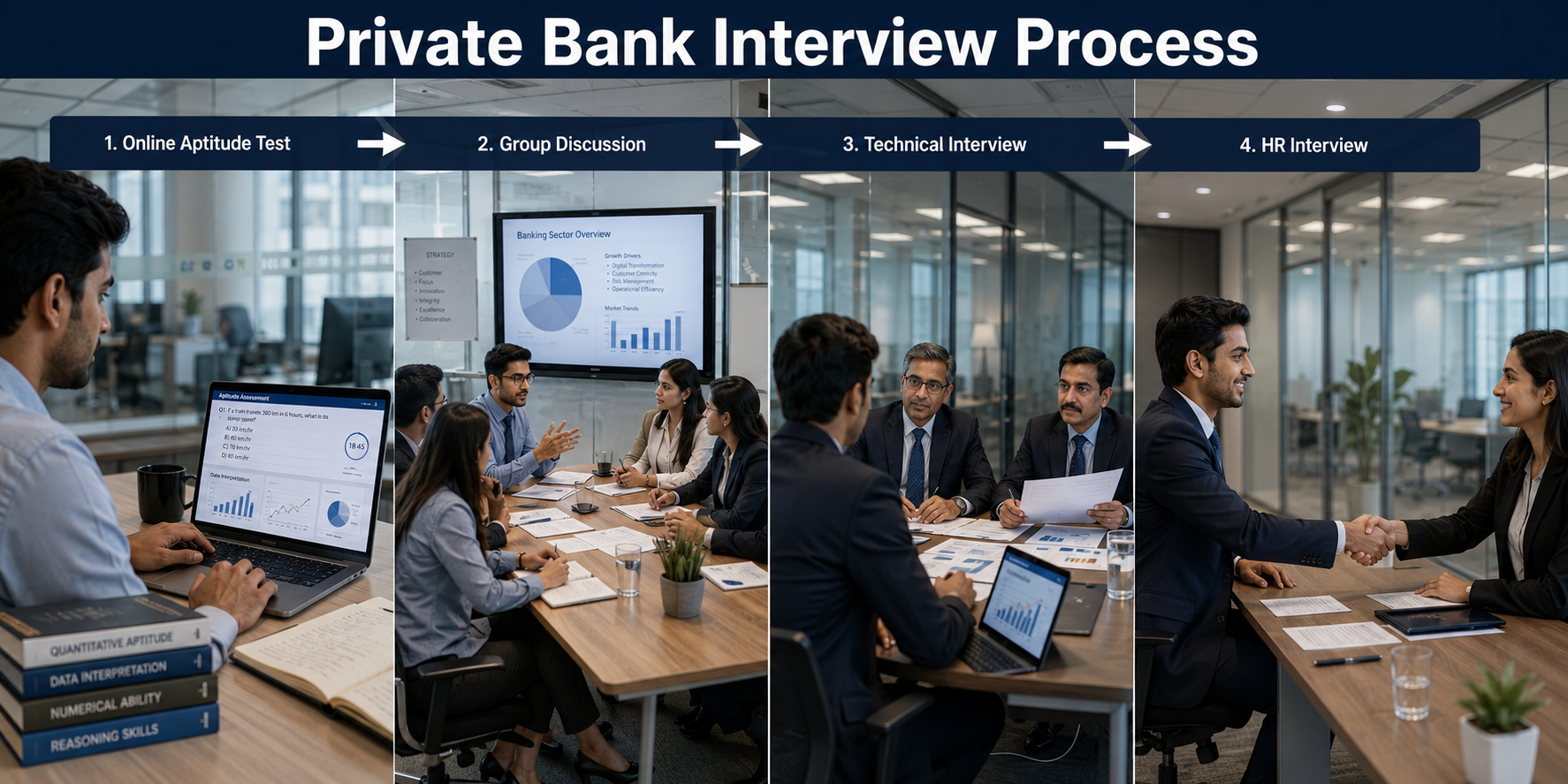
Navigating the recruitment pipeline of a premier financial institution requires a clear understanding of each assessment stage. Unlike public sector recruitment, private financial institutions place significant emphasis on interpersonal communication and cultural alignment. The selection journey usually moves quickly through multiple distinct phases designed to filter out underprepared applicants efficiently. Consequently, recruiters evaluate how effectively you absorb information, process numerical data, and communicate solutions under pressure.
Furthermore, each assessment phase tests a distinct set of professional capabilities. For instance, early screening checks technical aptitude, while later rounds evaluate emotional composure and business acumen. Therefore, knowing what each round entails allows you to tailor your practice routine specifically toward key evaluation criteria. Applying structured preparation tips for top private banks ensures you remain calm, composed, and articulate throughout the hiring process.
Essential Screening Exam Advice for Commercial Banking Success
The recruitment process almost universally begins with timed online screening examinations. These assessments evaluate your quantitative agility, logical reasoning, numerical accuracy, and verbal clarity under tight time constraints. You will face questions covering profit calculations, interest rate mechanics, data charts, and logical puzzles. Additionally, situational judgment tests present realistic workplace scenarios to measure your decision-making style and client priorities.
To clear this initial filter confidently, you must commit to daily practice with timed mock tests. For example, focus on improving both your calculation speed and your accuracy under time pressure. Moreover, familiarize yourself with standard problem-solving shortcuts and basic mental arithmetic. Consequently, successfully clearing this automated screening round proves your baseline cognitive capability, granting you direct access to face-to-face evaluation rounds with senior hiring panels.
Group Discussion Guidance for Prospective Corporate Bankers
Candidate evaluation frequently transitions into interactive group discussions and collaborative case study sessions. In these competitive rounds, recruiters assess how effectively you express complex ideas, listen to peers, and analyze commercial challenges. You might receive a business scenario regarding declining deposit growth, changing customer demographics, or digital adoption hurdles. Evaluators track your ability to structure thoughts logically and offer practical solutions.
Succeeding in a group evaluation requires a delicate balance between active leadership and constructive teamwork. Therefore, state your points clearly using relevant economic facts and logical reasoning. Furthermore, frame your contributions positively, validate reasonable ideas proposed by fellow candidates, and help guide the group toward consensus. Demonstrating diplomatic persuasion and commercial awareness in these exercises signals to interviewers that you possess mature professional skills.
Critical Knowledge Areas for Private Financial Interviews
Excellence in banking interviews stems directly from a solid grasp of fundamental commercial principles and industry trends. Hiring panels expect candidates to demonstrate genuine domain knowledge rather than memorized definitions. Moreover, you must articulate how macroeconomic shifts, central bank policies, and regulatory updates directly influence day-to-day operations and retail product offerings.
Investing quality study time into understanding financial terminology, accounting basics, and credit frameworks builds essential confidence. Panels quickly identify applicants who truly comprehend the mechanics of financial services compared to those relying on superficial familiarity. Therefore, adopting comprehensive preparation tips for top private banks during your technical revision remains a mandatory step for every serious applicant.
Fundamental Financial Concepts for Private Bank Candidates
To impress senior banking panels, you must demonstrate comfortable clarity regarding foundational accounting mechanics and banking operations. Be fully prepared to explain key interest metrics, liquidity ratios, asset classification standards, and balance sheet structure. For instance, interviewers regularly test candidate understanding on core concepts like:
-
Non-Performing Assets (NPAs), restructuring mechanisms, and recovery protocols
-
Central bank monetary tools, including reserve ratios and benchmark repo rates
-
Distinct operating structures of retail, corporate, commercial, and investment divisions
-
Capital adequacy metrics, liquidity guidelines, and risk-weighted asset balances
Beyond defining these technical terms, practice explaining their real-world commercial implications clearly. For example, be ready to discuss how rising interest rates affect retail mortgage demand. Similarly, explain how central bank reserve requirements influence overall lending profitability. Consequently, demonstrating this analytical perspective reassures interviewers that you possess the technical capability necessary to manage risks competently.
Modern Fintech Frameworks and Digital Sector Trends
Modern financial institutions operate at the dynamic intersection of finance and cutting-edge technology. Recruiters naturally seek candidates who understand how digital architecture enhances operational efficiency and customer engagement. Therefore, you should thoroughly familiarize yourself with modern financial infrastructure, including unified instant payment networks, central bank digital currencies, mobile banking apps, and core systems.
Furthermore, be ready to discuss how artificial intelligence and machine learning transform risk management, credit scoring, and anti-fraud monitoring. Understand how algorithm-driven underwriting speeds up loan approvals while reducing default risks significantly. As a result, demonstrating strong digital literacy signals to the hiring panel that you are adaptable, future-focused, and ready to navigate ongoing technological evolution.
Actionable Preparation Tips for Top Private Banks
Surpassing competing applicants requires structured preparation tailored specifically toward your target financial institution. Rather than relying on generic interview advice, successful candidates build custom preparation roadmaps based on thorough corporate research and deliberate behavioral rehearsal. Taking a proactive approach allows you to present well-structured arguments and share compelling professional anecdotes.
Furthermore, aligning your personal career goals with the bank’s mission demonstrates genuine alignment. Implementing targeted preparation tips for top private banks turns an intimidating panel interaction into a constructive professional conversation. Consequently, detailed preparation builds the poise needed to highlight your accomplishments effectively.
Corporate Research Strategies for Prospective Lenders
Deep institutional knowledge immediately separates top-tier candidates from average applicants. Before stepping into the interview room, conduct detailed research on the bank’s recent financial performance, quarterly profit trends, market share growth, and asset quality reports. Review the company’s official website, executive statements, and recent press releases to understand its core growth drivers.
Additionally, evaluate the bank’s signature retail and commercial offerings, including credit cards, savings accounts, mortgage packages, and wealth services. Note recent digital initiatives, major industry awards, or community development projects. Consequently, referencing these specific details during your interview conversation proves genuine enthusiasm, professional initiative, and serious dedication to joining that exact institution.
Behavioral Interview Hacks using the STAR Method
Technical expertise alone will not secure a job offer. Hiring managers also evaluate your communication, leadership style, and interpersonal effectiveness through behavioral questions. Therefore, prepare impactful anecdotes using the structured STAR framework (Situation, Task, Action, Result). Outline specific experiences where you successfully overcame adversity or achieved ambitious goals.
Draft stories highlighting key traits like conflict resolution, ethical judgment, leadership, and resilience under pressure. For example, detail how you handled an unsatisfied customer, met strict sales targets, or corrected an operational mistake. Focus heavily on the concrete actions you executed and quantify your final outcomes. Consequently, presenting structured stories reassures recruiters that you possess strong emotional intelligence.
Handling Tricky Scenario Questions and Technical Rounds
During final interview rounds, panel members combine technical inquiries with high-pressure situational scenarios to test your composure. Expect rapid shifts between technical finance topics and hypothetical workplace challenges. Mastering this dynamic interaction requires maintaining composure, listening attentively, and structuring your answers logically before speaking.
Furthermore, taking a thoughtful pause before answering demonstrates emotional self-control and maturity. Evaluators value candidates who stay calm when challenged on complex technical topics. Consequently, utilizing proven preparation tips for top private banks and showing confidence under scrutiny reassures interviewers that you can represent their corporate brand professionally in high-stakes environments.
Stress Management Techniques for Challenging Panel Round Scenarios
Interviewers deliberately create stressful hypothetical scenarios to test your emotional self-control, patience, and customer handling instincts. For instance, you may be asked how you would react to an irate client confronting you over a failed wire transfer. Similarly, panels test how you plan to manage demanding sales targets alongside routine compliance tasks.
When answering these scenario questions, center your responses around calm analysis, active empathy, regulatory adherence, and systematic problem-solving steps. Explain how you de-escalate tension through active listening and collaborate with back-office teams to resolve issues. Consequently, highlighting your commitment to composure and compliance proves that you can thrive in demanding operational atmospheres.
Communication Tactics to Demystify Complex Offerings
A key responsibility in client-facing financial roles is translating complicated financial structures into clear language for everyday consumers. Panels frequently ask candidates to explain intricate products—such as mutual funds, structured trade finance, derivative hedges, or reverse mortgages—as if speaking directly to a non-financial client.
Therefore, practice stripping away dense jargon and using relatable analogies to explain financial mechanisms cleanly. Focus on highlighting practical user benefits, underlying risk factors, and basic operational rules in straightforward terms. Consequently, demonstrating an ability to demystify complex concepts proves you have mastered key technical topics and possess strong communication capabilities.
Frequently Asked Questions
What are the most important preparation tips for top private banks?
The most important preparation tips for top private banks revolve around combining thorough technical knowledge with structured behavioral rehearsal and detailed corporate research. Begin by mastering fundamental commercial concepts, such as credit analysis, asset classification standards, and central bank monetary tools. Simultaneously, conduct in-depth research on your target bank’s quarterly performance reports, popular retail products, and digital technology initiatives. Rehearse behavioral interview responses using the structured STAR method (Situation, Task, Action, Result) to clearly demonstrate your problem-solving capabilities, customer orientation, and emotional resilience under high pressure. Furthermore, participate in timed mock interviews to refine your verbal articulation, maintain steady eye contact, and build confident body language. Consequently, this balanced preparation strategy ensures you present a complete professional package to prospective hiring panels.
How should I prepare for technical questions in a private bank interview?
Preparing effectively for technical questions requires establishing absolute clarity on core economic, accounting, and banking operational frameworks. Focus your revision on key concepts like Non-Performing Assets (NPAs), capital adequacy ratios, interest rate mechanics, liquidity guidelines, and basic balance sheet dynamics. Additionally, study popular retail offerings including fixed deposits, mutual fund distributions, home loans, credit card tiers, and commercial working capital facilities. Stay updated on modern digital payment rails, core banking systems, and regulatory guidelines issued by national monetary authorities. Read reputable financial daily newspapers regularly to analyze current market developments and economic updates. When answering technical questions during the interview, explain concepts concisely, ground your logic in practical commercial realities, and cite real-world industry examples whenever appropriate to showcase genuine subject authority.
What soft skills do private bank interviewers value most?
Private financial institutions prioritize candidates who possess a balanced blend of strong oral communication, persuasive negotiation capabilities, high emotional intelligence, and proactive problem-solving skills. Interviewers pay close attention to active listening habits, professional body language, and the ability to articulate complex financial ideas in clear, accessible terms. Adaptability, dynamic team collaboration, stress tolerance, and an unyielding customer-first orientation are highly prized across both retail and corporate banking divisions. Showing genuine empathy when addressing client difficulties, maintaining composure during high-pressure scenarios, and demonstrating ethical integrity under sales quota pressure reassures recruiters that you can protect the bank’s brand reputation while building long-term, profitable relationships with diverse clients.
How can fresh graduates prepare for banking group discussions?
Fresh graduates can prepare for group discussions by consistently tracking business news, studying macroeconomic trends, and practicing structured debate exercises with peers. During the evaluation session, focus on contributing well-researched, logical points rather than attempting to dominate speaking time aggressively. Formulate your arguments clearly using facts, statistical data, and recognized economic principles. Practice active listening by attentively digesting contributions made by other candidates, validating sound insights, and smoothly integrating your perspective into the ongoing dialogue. If the discussion strays off topic, gently steer the group back toward the main problem statement. Leaders in group discussions win approval by fostering collaboration, organizing unstructured thoughts effectively, and helping synthesize diverse viewpoints into a coherent final consensus.
How do I highlight sales orientation during an entry-level interview?
To effectively highlight a strong sales orientation during an interview, focus on framing your past experiences around client service, goal attainment, and proactive relationship building. Detail specific instances from academic projects, internships, or extracurricular activities where you successfully persuaded others, closed targets, or managed client relationships. Express an enthusiastic, structured approach to identifying client needs, cross-selling suitable financial products, and overcoming customer objections ethically. Reassure the panel that you view sales as a consultative process focused on solving consumer problems rather than aggressively pushing unnecessary services. Demonstrating high energy, resilience in the face of rejection, and a commitment to achieving metrics signals to hiring managers that you have the drive required for quota-driven roles.
Conclusion
Cracking a competitive hiring process requires equal parts subject mastery, business awareness, and polished presentation. By reviewing our detailed career roadmap guide, you can confidently demonstrate your strategic value to potential employers. Focus on building a clear understanding of financial concepts, staying updated on modern digital developments, and practicing structured responses to behavioral questions. Stay proactive in your learning, research target institutions thoroughly, and highlight your personal commitment to delivering exceptional customer value. With persistent effort and structured study, you can secure a rewarding position and build a successful long-term career in the fast-paced financial industry.
Navigating private selection drives successfully demands ongoing commitment, self-reflection, and structured rehearsal. Each interview attempt offers valuable feedback to refine your communication clarity, sharpen technical knowledge, and boost personal confidence under scrutiny. Treat every interaction as an opportunity to showcase your dedication to professional excellence and customer-centric problem solving. As the financial sector continues to evolve through technological innovation and changing consumer demands, well-prepared professionals remain in high demand. Stay resilient, maintain a disciplined study routine, and approach your upcoming assessments with poise and determination to achieve your career ambitions.