Teaching Career Opportunities: A Guide to Modern Education
The modern education landscape is shifting rapidly, opening up a diverse array of professional pathways for passionate educators. Navigating these new teaching career opportunities requires a clear understanding of where your skills can make the biggest impact. Whether you are a recent graduate looking for your first classroom position or a seasoned instructor looking to pivot into an administrative or digital role, the education sector offers massive room for professional advancement. According to the U.S. Department of Education, investing in educator growth and addressing resource gaps remain critical priorities for building a sustainable, future-ready workforce.
Understanding your options allows you to align your personal passions with market demands. Today, education goes far beyond the traditional brick-and-mortar classroom model. Innovations in learning models, instructional design, and specialized support systems have created new roles that did not exist a decade ago.
This comprehensive guide breaks down the most viable pathways in education today. We will explore traditional classroom settings, specialized instruction niches, digital platforms, and administrative tracks. Additionally, you will discover actionable strategies to enhance your professional profile and build a long-term, fulfilling career that truly shapes the future of learning.

Understanding the Landscape of Teaching Career Opportunities
The field of education is expanding in response to technological advancements and changing student demographics. Consequently, the demand for adaptable, skilled educators remains high across various learning environments. When you look at the job market, you quickly realize that teaching is no longer a one-size-fits-all profession. Modern school districts and private educational corporations are actively searching for talent that can navigate the complexities of modern student needs. This shift means that professionals who stay informed about emerging educational trends will find themselves at a distinct advantage during the hiring process.
Traditional K-12 Classrooms
Public and private schools remain the largest employers of educational professionals. Within this space, teachers design daily lesson plans, manage classroom behavior, and assess student performance over the academic year. Private institutions often offer more curriculum flexibility and smaller class sizes, while public schools generally provide structured salary scales, robust union protections, and comprehensive retirement benefits. Both paths offer vital foundational experience for anyone looking to advance in the educational sector, as classroom management and parent-teacher communication are universally valued skills that form the bedrock of any successful long-term career in education.
Specialized Education Niches
Special education teachers, English as a Second Language (ESL) instructors, and STEM specialists are in exceptionally high demand globally. Schools frequently face critical shortages in these areas, which means professionals with specialized certifications often enjoy greater job security and competitive compensation packages. These roles require additional training, diagnostic capabilities, and patience, but they provide the chance to make a profound difference for students with unique learning requirements. By focusing on a niche, you differentiate yourself from the general applicant pool and build highly specialized expertise that schools are eager to retain.
Alternative Instruction Pathways and Digital Environments
The digital transformation has permanently altered how knowledge is distributed across the globe. As a result, many educators are finding immense professional success outside the walls of conventional brick-and-mortar schools.
-
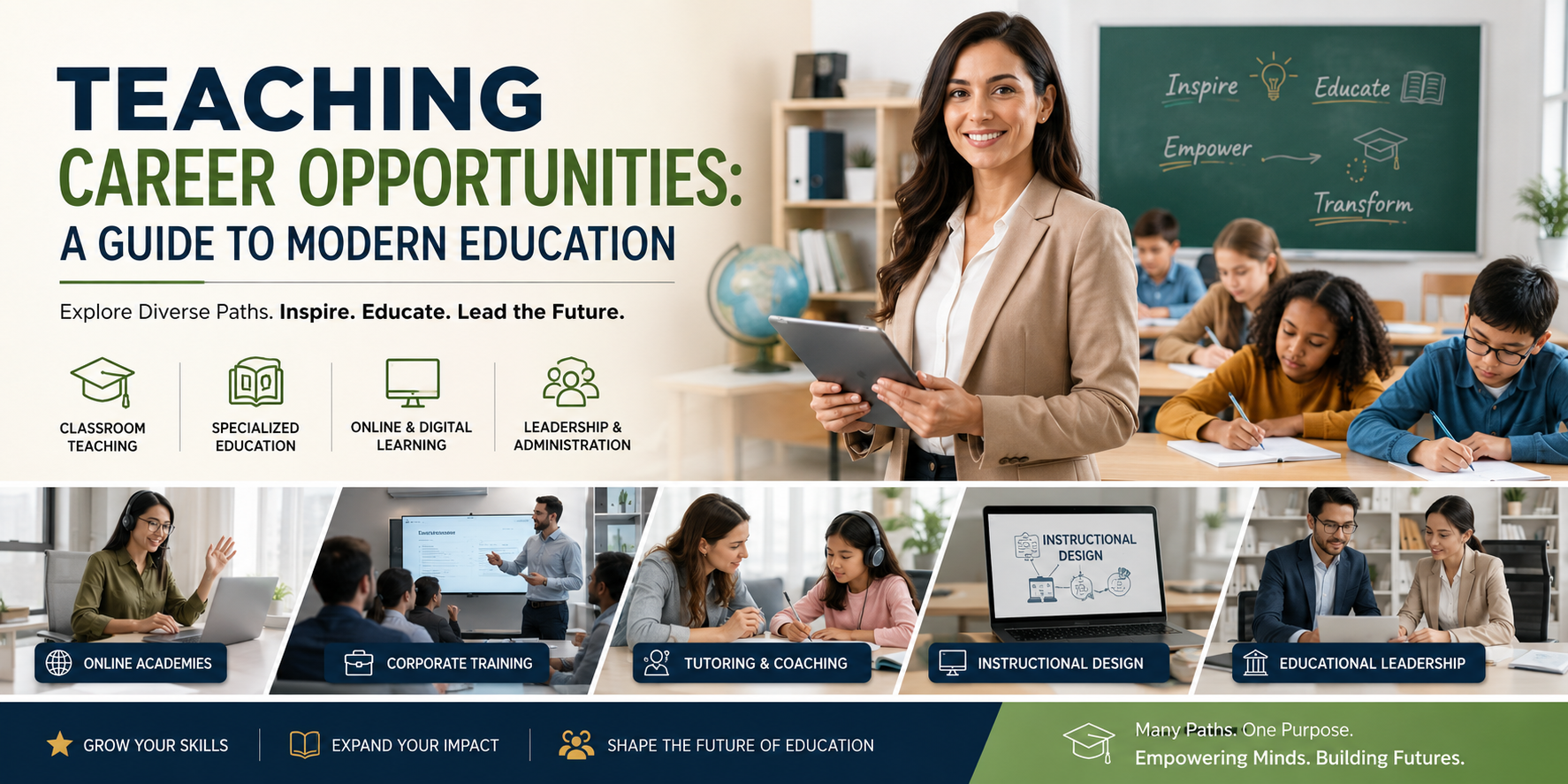
Online Academies and Virtual Schools: Full-time virtual learning platforms employ remote teachers to host live interactive sessions, design multimedia modules, and grade student assignments from the comfort of a home office.
-
Corporate Training Programs: Large companies hire instructional designers and corporate educators to develop professional development modules, lead employee onboarding seminars, and improve workforce productivity through targeted learning initiatives.
-
Freelance Tutoring and Coaching: Independent educational platforms allow teachers to offer targeted, one-on-one assistance to students globally, setting their own hours and targeting specific standardized tests or language goals.
Moreover, instructional design has become a major destination for former classroom teachers seeking a career change. This analytical field focuses entirely on creating educational curricula, textbooks, and interactive digital learning tools for publishers, universities, and corporate entities. If you enjoy building the structural framework of a lesson more than delivering it live to a room of students, this path offers incredible career longevity and remote flexibility.
Strategies for Professional Growth in the Education Sector
Securing the best teaching career opportunities requires intentional professional development and proactive career management. You cannot rely solely on your initial teaching degrees if you want to move into high-impact, lucrative roles within the industry. Higher compensation and leadership positions are directly tied to your willingness to keep learning, adapt to new methodologies, and take on additional responsibilities outside your comfort zone.
Pursuing Advanced Degrees and Certifications
Earning a Master’s in Education (M.Ed.) or an educational leadership certification opens doors to higher-paying administrative brackets and specialist titles. Similarly, adding micro-credentials in educational technology, trauma-informed teaching, or bilingual education makes your resume stand out to hiring managers. School boards look favorably upon educators who actively invest in their own knowledge, often rewarding them with automatic salary step increases and leadership invitations.
Expanding Your Professional Network
Attending regional education conferences and joining subject-specific professional associations helps you stay informed about hidden job openings and industry shifts. Often, the hidden job market in education relies heavily on word-of-mouth recommendations among principals, superintendents, and department heads looking for reliable talent. Therefore, building active relationships with peers, participating in mentorship programs, and maintaining an updated professional profile are just as important as your daily classroom performance.
FAQ SECTION
1. What are the most in-demand teaching career opportunities right now?
The education sector is currently experiencing strong demand for qualified professionals across several specialized fields. As a result, teaching career opportunities are expanding in both traditional schools and modern learning environments. Among the most sought-after positions are Special Education teachers, STEM (Science, Technology, Engineering, and Mathematics) educators, and ESL (English as a Second Language) instructors. Many school districts face ongoing shortages of qualified candidates because of increasing student enrollment, changing educational requirements, and a limited supply of certified professionals. These shortages have created excellent teaching career opportunities for qualified educators. Schools often offer competitive salaries, signing bonuses, relocation assistance, and alternative certification pathways to attract skilled teachers.
In addition to classroom roles, teaching career opportunities are growing rapidly in the educational technology sector. Corporate instructional designers, online curriculum developers, educational content creators, and learning experience designers are increasingly in demand as businesses invest in digital training platforms. Teachers with strong communication skills, technology proficiency, and curriculum development experience are especially attractive to these employers. The expansion of online education has also created more teaching career opportunities for virtual teachers, online tutors, and educational consultants who can design and deliver engaging remote learning experiences. Overall, professionals who combine subject expertise with digital skills and adaptability will continue to find excellent teaching career opportunities in today’s evolving education and training industry. The future of teaching career opportunities remains promising as schools, universities, and organizations continue to invest in high-quality education and workforce development.
2. Can I transition from classroom teaching to a corporate career?
Yes, transitioning from classroom teaching to a corporate career is both possible and increasingly common. Teachers develop many transferable skills during their careers. These skills are valuable in a wide range of industries. They include communication, leadership, project management, curriculum development, problem-solving, data analysis, and presentation skills. Teachers also know how to train, motivate, and support diverse groups of people. These abilities make them strong candidates for corporate positions in learning, development, and employee engagement.
A successful transition usually begins with updating your resume and professional profile. Use business-focused language instead of classroom terminology. Highlight measurable achievements, such as designing training programs, managing projects, improving learning outcomes, and using technology to support instruction. Many former teachers move into careers as instructional designers, corporate trainers, learning and development specialists, human resources coordinators, customer success managers, educational consultants, or employee onboarding specialists. Companies in technology, healthcare, finance, and education actively seek professionals who can explain complex information clearly. They also value people who can design effective training programs. Additional certifications in instructional design or project management can strengthen your qualifications. These credentials can improve job opportunities and support long-term career growth.
3. Do private schools require the same state certifications as public schools?
The certification requirements for teachers differ between public and private schools. Public schools are regulated by state education departments. They usually require teachers to hold a valid state-issued teaching license. Candidates must also complete an approved teacher preparation program. In many cases, they must pass subject-specific examinations, complete student teaching requirements, and undergo criminal background checks. These standards help maintain consistent educational quality. They also ensure that teachers meet professional requirements established by the state.
Private schools usually have greater flexibility in their hiring practices. Many institutions create their own employment criteria. They may hire candidates based on academic qualifications, professional expertise, or specialized experience instead of formal teaching certification. For example, a private school may employ an engineer to teach mathematics or a professional musician to teach performing arts. This is possible even if the candidate does not hold a teaching license. However, state certification still provides an important advantage. It demonstrates professional competence and increases credibility. Certified teachers often receive better salary offers and have stronger promotion prospects. Many prestigious private schools also prefer licensed teachers because certification strengthens their academic reputation. Therefore, certification is not always required, but it remains a valuable professional credential.
4. How does instructional design differ from traditional classroom teaching?
Instructional design and classroom teaching both aim to improve learning outcomes. However, the two careers differ in their focus and daily responsibilities. Classroom teachers work directly with students every day. They deliver lessons, manage classroom behavior, assess student progress, and provide regular feedback. Teachers also adapt their instruction to meet different learning needs. In addition, they motivate students and build positive classroom relationships. They respond to questions and challenges as they occur during lessons.
Instructional designers work mainly behind the scenes. Their primary responsibility is to create effective learning experiences rather than teach them directly. They analyze learning needs, identify performance gaps, and write clear learning objectives. They also develop digital courses, multimedia resources, assessments, and training materials. Many instructional designers use learning management systems and specialized software to build online courses. They often collaborate with subject matter experts, graphic designers, and technology specialists. Their goal is to produce engaging and effective educational content for schools, universities, corporations, or government organizations. Both careers require strong knowledge of learning theories and educational principles. However, classroom teachers focus on delivering instruction, while instructional designers focus on planning, designing, and improving learning experiences.
5. What administrative roles can an experienced teacher move into?
Experienced teachers have many opportunities to move into educational leadership and administration. After gaining classroom experience, they may become instructional coaches, department chairs, academic coordinators, assistant principals, or principals. These positions involve supervising teachers, supporting curriculum implementation, monitoring student achievement, and managing school operations. Administrators also help develop policies that improve teaching quality and student success. Many leadership roles include mentoring new teachers and supporting professional development across the school.
Experienced educators can also pursue leadership positions beyond individual schools. These include curriculum director, instructional coordinator, education consultant, policy analyst, assessment specialist, textbook editor, and professional development coordinator. Such roles focus on curriculum planning, teacher training, educational research, and program evaluation. They also involve making decisions that influence schools at the district or organizational level. Government agencies, nonprofit organizations, educational publishers, and educational technology companies frequently hire experienced teachers for these positions. Many administrative careers require a master’s degree in educational leadership or administration. Public school leadership roles may also require additional state certification. Despite these requirements, administrative careers offer greater responsibility, higher earning potential, and broader opportunities to improve education beyond a single classroom.
CONCLUSION
Navigating the wide variety of modern teaching career opportunities reveals that the field of education is richer, more dynamic, and more versatile than ever before. From traditional elementary classrooms to innovative corporate training rooms and virtual learning spaces, your skills as an educator are highly valuable across multiple sectors. The secret to long-term career satisfaction and financial sustainability lies in matching your unique teaching strengths with the right structural environment.
By actively pursuing continuous professional development, building strategic networks, and adapting to modern educational technologies, you position yourself at the forefront of the education industry. Strengthening your communication skills is equally important, especially for educators who teach language learners or work in diverse classrooms. You can also explore our guide on the best platforms for learning English to discover useful resources that support both teachers and students. The education sector will always need dedicated professionals who can communicate complex ideas clearly, motivate learners, and inspire lifelong growth. Take charge of your professional journey today by evaluating which educational pathway best aligns with your career goals, interests, and personal strengths.