

Hostel vs Day Scholar: Choosing the Perfect College Lifestyle
Choosing where you will live during your university years is a massive decision that heavily impacts your future. The classic Hostel vs Day Scholar debate is something almost every student faces when transitioning to higher education. Should you pack your bags and move into a campus residence, or should you commute from the comfort of your own home? Both choices offer completely different environments, social circles, and daily routines that will shape your academic journey and personal growth. Your living situation plays a massive role in your overall university experience, affecting your mental health, grades, and social skills. Deciding on the right path requires balancing your academic goals, financial situation, and personal independence over several years.
To help you weigh your options, you can explore student insights on standard educational life choices via the U.S. Department of Education resources. This article will break down the core differences, pros, and cons of each lifestyle to help you make an informed choice. Understanding these factors early allows you to prepare for the unique challenges of either path, ensuring you maximize your higher education opportunities.
Understanding the Core Differences
To make the right choice, you first need to look at what sets these two lifestyles apart on a foundational level. A hosteler lives inside or right next to the campus, sharing spaces with peers and participating in night activities. Conversely, a day scholar travels to college every day from home, maintaining a clear separation between academic life and family life. This structural difference affects everything from your sleep schedule to your budget and your daily level of personal freedom.
While one lifestyle prioritizes complete immersion in campus culture, the other focuses on stability, safety, and comfort. The daily timeline of a hosteler is highly flexible, allowing them to jump from a nap straight into a club meeting. Meanwhile, a day scholar must carefully plan their day around transit timetables, traffic rushes, and family obligations. Recognizing these core operational differences is the first step in identifying which environment aligns with your current habits.
The Pros and Cons of Hostel Life
Living in a hostel is an adventure that completely transforms your daily routine and worldview. It forces you out of your comfort zone and throws you into a vibrant, fast-paced community of peers from diverse backgrounds.
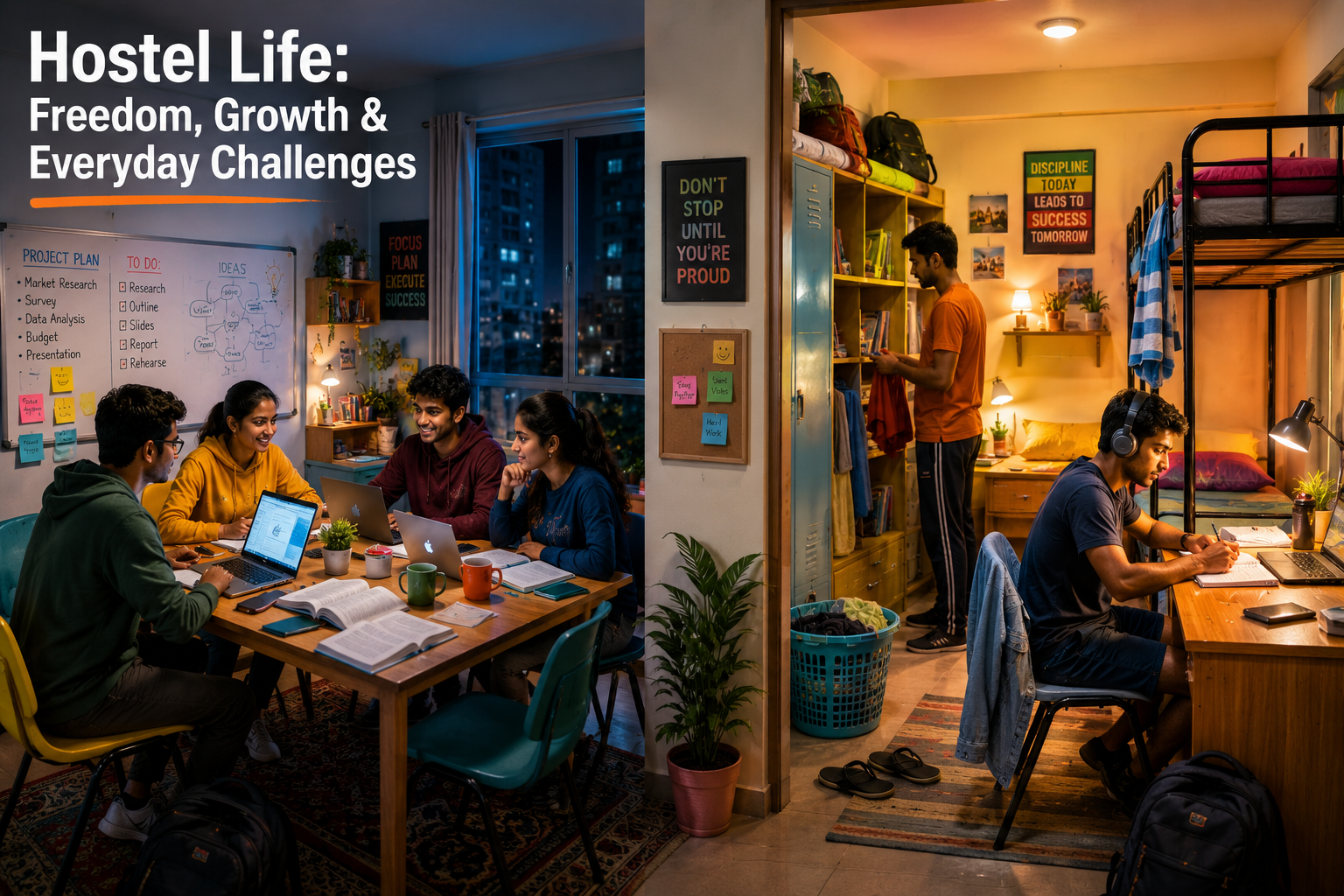
Advantages of Staying in a Hostel
The biggest benefit of hostel life is the immediate access to independent living and personal freedom. You quickly learn how to manage your own budget, handle your laundry, and organize your daily schedule without parental supervision. Consequently, this environment fosters rapid personal growth, emotional resilience, and critical problem-solving skills that prepare you for adulthood. Moreover, proximity to campus means you never have to worry about a long morning commute or missing early lectures. You can wake up fifteen minutes before a class and still arrive on time without stress. This closeness also makes it incredibly easy to participate in late-night study groups, college festivals, and spontaneous social gatherings.
Disadvantages of Staying in a Hostel
However, hostel life is not always perfect and comes with distinct challenges. The most common complaint among residents is the complete lack of privacy in their daily routines. Sharing a room with one or more roommates means your personal space is constantly compromised, which can lead to friction. Similarly, hostel food is notoriously hit-or-miss and rarely matches the quality of home cooking. Relying on a mess hall for three meals a day can quickly become tiring, leading to extra spending on outside food. Additionally, the constant social activity can sometimes make it difficult to find a quiet space for deep focus or studying when finals arrive.
The Pros and Cons of a Day Scholar Life
Being a day scholar offers a sense of stability that campus housing rarely provides over the semesters. It allows you to pursue your degree while remaining deeply anchored in your familiar home environment and community.

Advantages of Being a Day Scholar
The most significant advantage of being a day scholar is comfort and emotional support. Nothing beats a home-cooked meal, a private bedroom, and the unconditional support of your family after a stressful day of difficult classes. Furthermore, choosing to commute is highly cost-effective and saves your family a significant amount of money. You save a substantial amount on room rent, mess fees, electricity bills, and laundry services. Therefore, it is often the preferred choice for students looking to minimize their educational expenses, avoid heavy student debt, and maintain an organized lifestyle.
Disadvantages of Being a Day Scholar
On the flip side, the daily commute can be physically draining and time-consuming. Spending hours on public buses or trains leaves you with less energy for studying, exercising, or relaxing at home. Furthermore, day scholars often feel disconnected from the campus community and struggle to form deep peer bonds. When classes end, you must head home immediately due to transit schedules, which means missing out on evening events, clubs, and casual hangout sessions. This can sometimes lead to a frustrating feeling of missing out on the full, authentic college experience.
Key Factors to Consider Before Deciding
When weighing Hostel vs Day Scholar options, you must analyze your unique personality traits and logistical constraints carefully. Do not simply copy what your friends are doing, as their needs might be completely different from yours. First, calculate the exact cost of campus housing versus a monthly transit pass to see what makes financial sense. Second, consider the distance; a commute longer than an hour each way can severely impact your sleep and academic performance over time. Third, evaluate your readiness for independence and whether you can handle daily chores alongside heavy coursework without falling behind.
Finally, think about your study environment preferences and distraction triggers before finalizing your living arrangements. If you need absolute silence to absorb information, a noisy hostel wing might hinder your grades. Ultimately, there is no single right answer for everyone. An introverted student who values quiet study time might thrive as a day scholar, whereas an extroverted student looking to build a massive network might flourish in a hostel setting.
FAQs
Which option is better for academic performance?
Neither option guarantees better grades, as success depends entirely on your personal discipline and study habits. Hosteliers benefit from instant access to campus libraries, professors, and peer study groups, which can boost collaborative learning. However, hostels also come with constant social distractions that can derail your focus if you lack self-control. Day scholars enjoy a quiet, structured home environment that is ideal for concentrated study without interruptions, but they must combat the physical fatigue caused by daily travel. Therefore, both paths require strong time management skills to achieve academic excellence. To truly maximize your GPA in a hostel, you must establish clear boundaries with roommates and utilize silent zones like the library. Conversely, day scholars must actively combat the mental exhaustion of travel by reviewing notes during their commute or establishing strict study blocks immediately upon arriving home.
Is hostel life more expensive than being a day scholar?
Yes, living in a hostel is usually more expensive than commuting from your parents’ home. Hostel students pay for accommodation, meal plans, utilities, and maintenance fees. These expenses increase the overall cost of a degree. They can also put pressure on a student’s budget.
Day scholars mainly spend money on transportation, such as fuel or public transit. They may also buy occasional meals on campus. As a result, this option is generally more affordable for families.
Hostel students may also face hidden costs. These include dining out when they dislike the mess food, paying for laundry, and traveling home during holidays. Day scholars avoid many of these expenses. They can use the savings for textbooks, educational resources, or professional certification courses.
How do hostelers handle homesickness?
Homesickness is a normal part of moving away from home for college. Most students adjust by following a daily routine and staying connected with family through regular video calls. Building friendships and joining campus clubs also make the transition easier.
With time, the hostel begins to feel like a second home. Busy schedules and campus activities gradually reduce feelings of loneliness. It also helps to accept your emotions instead of ignoring them. Decorating your room with familiar photos can provide comfort. Taking part in sports or recreational activities also improves well-being. Talking openly with roommates often creates a stronger sense of belonging because many students share similar experiences.
Do day scholars miss out on networking opportunities?
Day scholars may miss some late-night networking opportunities. However, they can close the gap with careful planning. Staying on campus during free hours helps them meet more people. Joining student societies and leading group projects also strengthens professional connections.
Networking depends more on meaningful relationships than your place of residence. Students who stay active during the day can build networks that are just as valuable as those of hostel residents.
Commuters can also attend guest lectures, hackathons, and alumni events by planning their schedules in advance. They should stay connected through LinkedIn, Discord communities, and WhatsApp study groups. These platforms help maintain visibility and strengthen relationships even when students travel home after classes.
Can I switch from being a day scholar to a hosteler later?
Yes, most universities allow students to change their residential status between semesters or academic years, depending on room availability. This flexibility is one reason the Hostel vs Day Scholar decision does not have to be permanent.
Many students begin as day scholars to adjust to university life without the added responsibilities of hostel living. As they become more comfortable with their studies and finances, they choose to move into a campus hostel or a nearby shared apartment. The Hostel vs Day Scholar choice often changes as students gain confidence and better time management skills. Older students usually have a clearer understanding of campus life and academic demands.
A flexible Hostel vs Day Scholar approach lets you enjoy lower living costs during the early years while experiencing independent living before graduation. It also provides opportunities to build stronger friendships and expand your professional network. Ultimately, the best Hostel vs Day Scholar decision depends on your financial situation, academic priorities, and personal goals. Since many universities permit changes later, you can revisit your Hostel vs Day Scholar choice as your needs evolve.
Conclusion
Choosing between the Hostel vs Day Scholar lifestyle is a pivotal decision that sets the tone for your entire university journey and long-term personal development. Hostel life offers unparalleled independence, deep lifelong friendships, and total immersion into the vibrant culture of campus activities. Conversely, living as a day scholar provides invaluable emotional comfort, substantial financial savings, and a quiet, predictable space to focus entirely on your academic studies without social distractions. Each pathway presents a distinct set of trade-offs regarding time, finances, and lifestyle freedom that require realistic self-assessment.
To make the right choice, carefully weigh your financial budget against your personal growth goals and personality type. If improving your communication skills is one of your priorities during college, explore our best platforms for learning English guide to build confidence in academics, interviews, and everyday conversations. Do not let societal pressure or peer decisions dictate your environment, as a mismatched living situation can cause academic burnout or social isolation. Remember that your ultimate college success is determined by your personal dedication, deep focus, and consistent work ethic, rather than the specific room where you choose to sleep at night. Choose the environment that best aligns with your holistic well-being, mental health, and future career ambitions.