
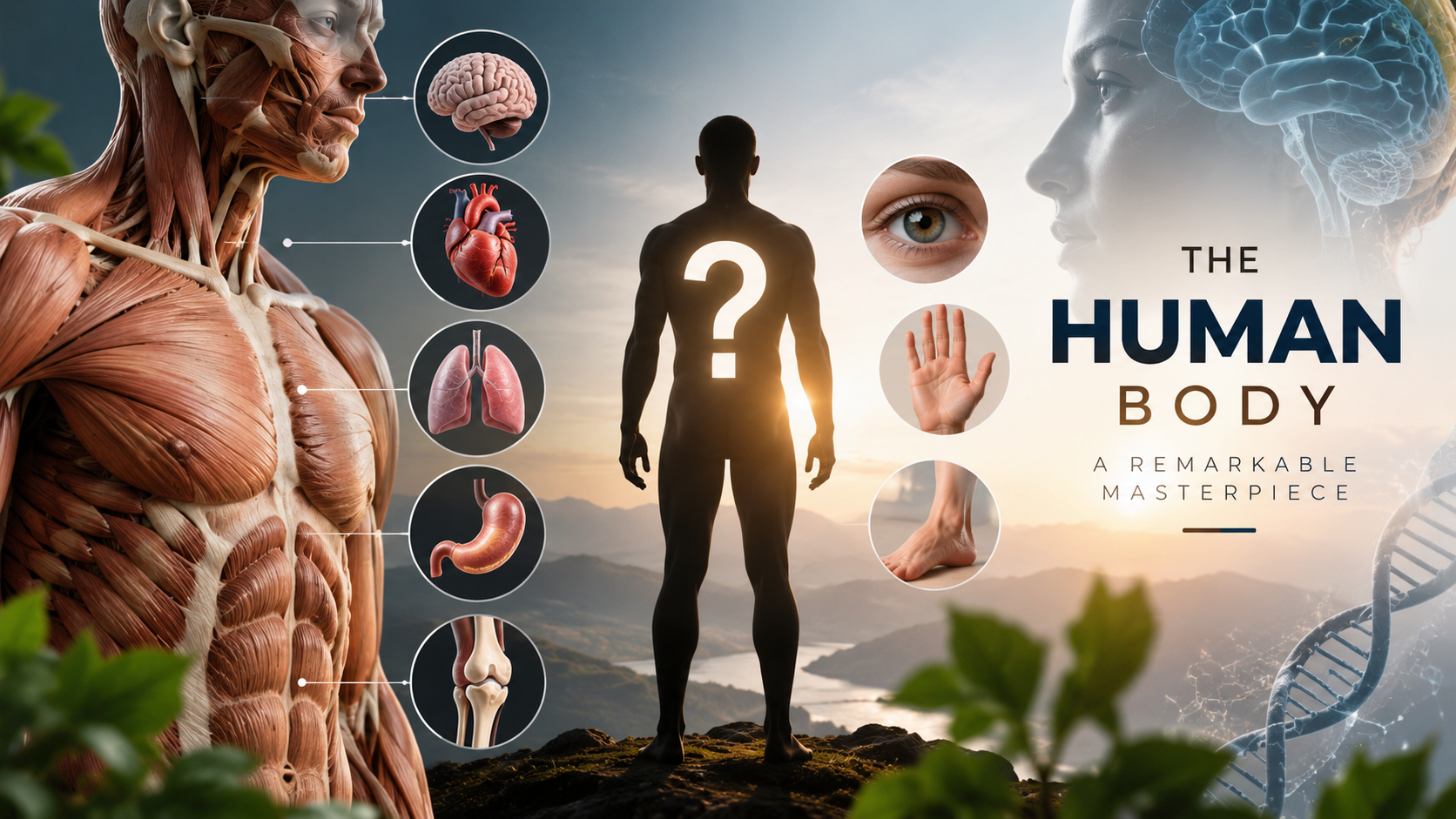
Understanding the Complexity and Wonder of the Human Body Parts
The human body parts form an extraordinary biological system made of trillions of cells. Together, these cells work to support movement, growth, protection, and survival. Therefore, understanding the Human body parts is useful for students, health professionals, and anyone interested in human anatomy.
The body includes major organs, bones, muscles, tissues, nerves, blood vessels, and other structures. Importantly, each part has a specific role, yet no structure works completely alone. Instead, body parts operate through closely connected organ systems that maintain balance and support life.
For example, from the heart and lungs to the skin, hands, and feet, every structure contributes to daily function. Furthermore, modern medicine depends on detailed knowledge of these anatomical structures. As a result, this knowledge helps healthcare professionals identify injuries, understand diseases, and develop effective treatments via reputable clinical resources like the National Institutes of Health.
Finally, this guide explores common ways of organizing human anatomy. In addition, it examines frequently asked questions about body parts, organs, body systems, and anatomical regions.

What are the 20 body parts’ names?
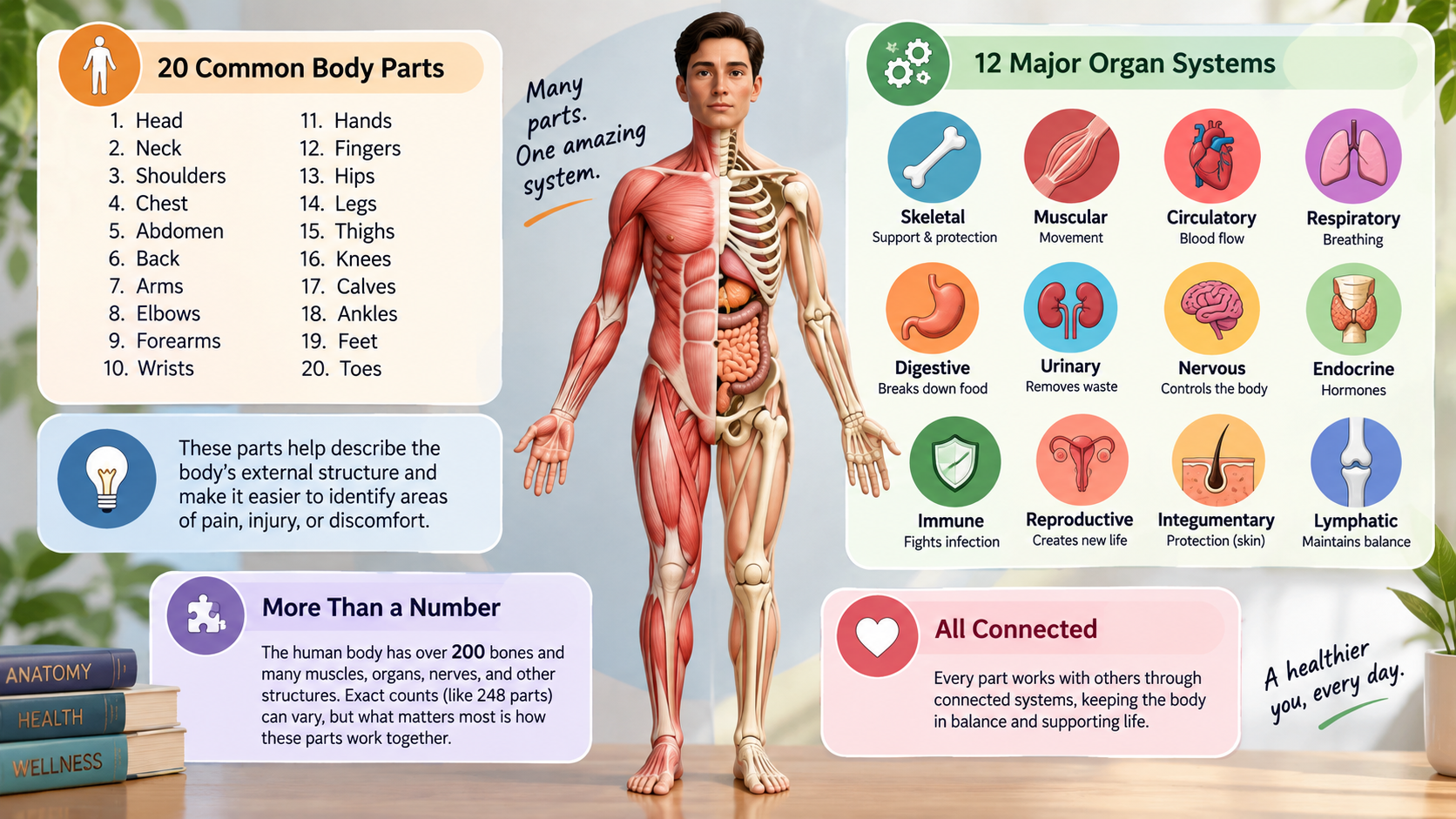
When learning basic human anatomy, it is helpful to begin with recognizable external body regions. Here are 20 common human body parts:
- Head
- Neck
- Shoulders
- Chest
- Abdomen
- Back
- Arms
- Elbows
- Forearms
- Wrists
- Hands
- Fingers
- Hips
- Legs
- Thighs
- Knees
- Calves
- Ankles
- Feet
- Toes
These regions help describe the body’s external structure and make anatomical terms easier to understand. In addition, they can help identify areas affected by pain, injury, or physical discomfort.
However, this list is a basic educational grouping rather than a formal medical classification. Instead, anatomists divide the body into regions and structures using more precise terminology.
For example, the arm technically refers to the region between the shoulder and elbow. Similarly, the forearm extends from the elbow to the wrist. Therefore, understanding these distinctions provides a stronger foundation for studying human anatomy and medical terminology.
What are the 248 parts of the body?
The idea that the human body has exactly 248 parts is not a universal anatomical standard. Body-part counts vary depending on what is being counted and how individual structures are defined.
For example, an adult human skeleton normally contains 206 bones. Anatomists can then identify numerous muscles, joints, organs, glands, blood vessels, nerves, and other structures. If smaller anatomical components are counted separately, the total increases substantially.
Some educational resources use specific numbers, such as 248, to group major structural or functional components. Such counts can be useful for learning, but they should not be treated as an official total for the entire human body.
The body’s complexity comes from more than the number of individual parts. Tissues and organs constantly communicate through the nervous, circulatory, endocrine, and other systems.
This organization allows oxygen, nutrients, hormones, and signals to reach cells throughout the body. It also helps maintain stable internal conditions.
Breaking Down Skeletal and Functional Components
The skeletal system provides the body’s primary structural framework. In most adults, it contains 206 bones that support the body, protect internal organs, and provide attachment points for muscles. As a result, the skeletal system plays an essential role in maintaining the body’s structure and stability.
However, bones are only one part of the body’s structural organization. For instance, joints connect bones and allow controlled movement, while cartilage provides support and reduces friction in several areas, including joints. Together, these structures help the body move smoothly and maintain proper support.
Similarly, muscles work with bones to produce movement and maintain posture. In addition, tendons connect muscles to bones, while ligaments connect bones to other bones. Therefore, these structures work together to form an integrated musculoskeletal system.
Beyond these structures, other functional components include glands, sensory organs, nerves, blood vessels, and connective tissues. Moreover, each component has a specific role in maintaining normal body function. At the same time, these components interact with one another to support the body’s overall organization.
Because of this, anatomical counting methods differ, and there is no single accepted number for all structural and functional body parts. Instead, medical anatomy focuses on accurately identifying individual structures and understanding how they interact.
Ultimately, this approach gives healthcare professionals a clearer picture of the body’s organization and function. Furthermore, it provides a systematic way to understand how different structures contribute to the body’s overall operation.
What are the 12 main parts of the human body?
The human body is commonly studied through 12 major organ systems. Together, these systems contain different organs and structures that work to maintain life and overall health. In addition, each system has a specific role, while also depending on other systems to function properly.
- Skeletal System – Primarily, supports the body, protects internal organs, and provides a framework for movement.
- Muscular System – Similarly, helps the body move, maintain posture, and produce heat.
- Circulatory System – Meanwhile, transports blood, oxygen, nutrients, hormones, and waste throughout the body.
- Nervous System – At the same time, controls body functions and processes information from the environment.
- Respiratory System – Furthermore, brings oxygen into the body and removes carbon dioxide.
- Digestive System – In turn, breaks down food and absorbs essential nutrients.
- Endocrine System – Additionally, produces hormones that regulate growth, metabolism, reproduction, and other functions.
- Urinary System – Likewise, removes waste and helps maintain proper fluid and chemical balance.
- Integumentary System – Moreover, includes the skin, hair, and nails and protects the body from external threats.
- Lymphatic System – Along with the immune system, helps maintain fluid balance and supports immune function.
- Immune System – More importantly, defends the body against harmful pathogens and other foreign substances.
- Reproductive System – Finally, supports reproduction and produces reproductive cells and hormones.
Importantly, these systems do not work independently. Instead, they constantly communicate and depend on one another. For example, the respiratory system supplies oxygen, while the circulatory system delivers it to body tissues. As a result, the coordinated activity of these systems helps maintain normal body function.
Overall, understanding these 12 major systems provides a useful foundation for learning human anatomy and the Human body parts. Furthermore, this foundation can help readers understand the different ways the brain is organized and classified in human brain anatomy.
What Are the 30 Parts of the Human Body?
There is no universally accepted medical classification that defines exactly 30 parts of the human body. However, for educational purposes, the body can be divided into 30 common anatomical regions:
- Head
- Face
- Eyes
- Ears
- Nose
- Mouth
- Neck
- Shoulders
- Chest
- Abdomen
- Back
- Pelvis
- Upper arm
- Elbow
- Forearm
- Wrist
- Hand
- Fingers
- Thigh
- Knee
- Lower leg
- Ankle
- Foot
- Toes
- Heart
- Lungs
- Brain
- Stomach
- Liver
- Kidneys
This 30-part list is useful as a learning tool, but it is not a standardized medical classification. Healthcare professionals generally use established anatomical terminology and regional descriptions to identify the precise location of symptoms, injuries, and physical findings. For students studying anatomy, understanding the classification of the human brain can provide additional context.
Clinical Relevance of Regional Body Zones
Importantly, dividing the body into recognizable anatomical regions has important clinical value. For this reason, healthcare professionals use regional terminology to describe symptoms, injuries, swelling, tenderness, and other physical findings accurately.
During a medical examination, location can provide important clues about a possible problem. For example, pain in the chest may require a different assessment from pain in the abdomen or lower back. Therefore, identifying the affected anatomical region can help professionals assess physical findings more precisely.
Additionally, standard anatomical terms improve communication between doctors, nurses, therapists, emergency responders, and other healthcare professionals. As a result, clear descriptions reduce confusion and help ensure that the correct area receives attention.
Furthermore, regional anatomy is especially useful during physical examinations and injury assessments. By using this approach, professionals can systematically examine different areas rather than relying on general descriptions.
For this reason, common regional categories include:
- Head and neck: structures involved in the brain, senses, breathing, and communication.
- Thorax: the chest region containing the heart and lungs.
- Abdomen: an area containing many digestive and metabolic organs.
- Pelvis: a region supporting several reproductive and urinary structures.
- Upper and lower limbs: structures responsible for movement and interaction.
Overall, this organized approach makes anatomical assessment more precise. Consequently, using clearly defined regional categories helps healthcare professionals describe and evaluate different areas of the body more effectively.
What are the 79 human organs?
The human body contains many organs that perform specialized functions. The exact number can vary because anatomical classification methods differ. However, the following list provides 79 commonly recognized human organs and organ structures:
- Brain
- Heart
- Lungs
- Liver
- Stomach
- Small intestine
- Large intestine
- Esophagus
- Gallbladder
- Pancreas
- Spleen
- Kidney
- Urinary bladder
- Urethra
- Appendix
- Rectum
- Anus
- Thymus
- Thyroid gland
- Parathyroid glands
- Pituitary gland
- Pineal gland
- Adrenal glands
- Salivary glands
- Tear glands
- Skin
- Hair follicles
- Nails
- Tongue
- Teeth
- Nasal cavity
- Pharynx
- Larynx
- Trachea
- Bronchi
- Diaphragm
- Pericardium
- Mesentery
- Omentum
- Blood vessels
- Lymph nodes
- Bone marrow
- Tonsils
- Thymic tissue
- Prostate gland
- Testes
- Epididymis
- Vas deferens
- Seminal vesicles
- Penis
- Scrotum
- Ovaries
- Fallopian tubes
- Uterus
- Cervix
- Vagina
- Clitoris
- Mammary glands
- Placenta
- Vulva
- Cerebellum
- Spinal cord
- Hypothalamus
- Spleen
- Duodenum
- Jejunum
- Ileum
- Cecum
- Sigmoid colon
- Rectal glands
- Bile ducts
- Pancreatic ducts
- Parotid glands
- Submandibular glands
- Sublingual glands
- Cornea
- Iris
- Retina
- Middle ear
An organ is generally made of multiple tissues that work together to perform a specific function. For example, major organs include the brain, heart, lungs, liver, kidneys, and digestive organs. Together, these organs perform different roles that support the body’s overall function.
However, the exact total can differ between sources because some structures are grouped together, while others are counted separately. Therefore, 79 organs is not a universally fixed medical count. Instead, the number may vary depending on how individual anatomical structures are classified.
Furthermore, understanding the functions of these organs provides a clearer picture of how human body parts and organ systems work together to maintain life and health. In addition, learning how these structures interact can make the overall organization of the human body easier to understand.
Frequently Asked Questions
How many bones are in the adult human body?
An adult human body typically contains 206 bones. At birth, babies are born with around 270 bones, but many of these fuse together during growth and development throughout childhood and adolescence to provide greater structural strength and stability.
What is the largest organ in the human body?
The skin is the largest organ of the human body. Furthermore, it serves as a protective barrier against pathogens, helps regulate body temperature, and houses millions of sensory receptors. As a result, these receptors allow us to feel touch, heat, and cold.
Which human body system fights off infections?
The immune system, working closely with the lymphatic system, is responsible for defending the body against harmful pathogens like bacteria, viruses, and fungi. In addition, it utilizes white blood cells and antibodies to identify and neutralize foreign invaders. Therefore, these systems play an essential role in protecting the body from infections.
Can humans live without certain internal organs?
Yes, humans can live without several organs, such as the spleen, gallbladder, appendix, and one of the two kidneys or lungs. The body is remarkably resilient and can often adapt or have remaining organs take over the workload.
Conclusion
Exploring the wonders of the human body reveals an astonishing level of organization, from the 20 main external parts to the 79 specialized organs working tirelessly inside us. Moreover, understanding the Human body parts helps us make informed choices about our health, nutrition, and lifestyle habits. In addition, by respecting the intricate balance of our 12 main systems and appreciating the complexity of our biological framework, we can better care for our physical well-being. Therefore, take time to listen to your body, nourish it properly, and apply what you have learned to support a healthier, more vibrant lifestyle every day.