

Mastering the Replacement Skills Approach for Lasting Change
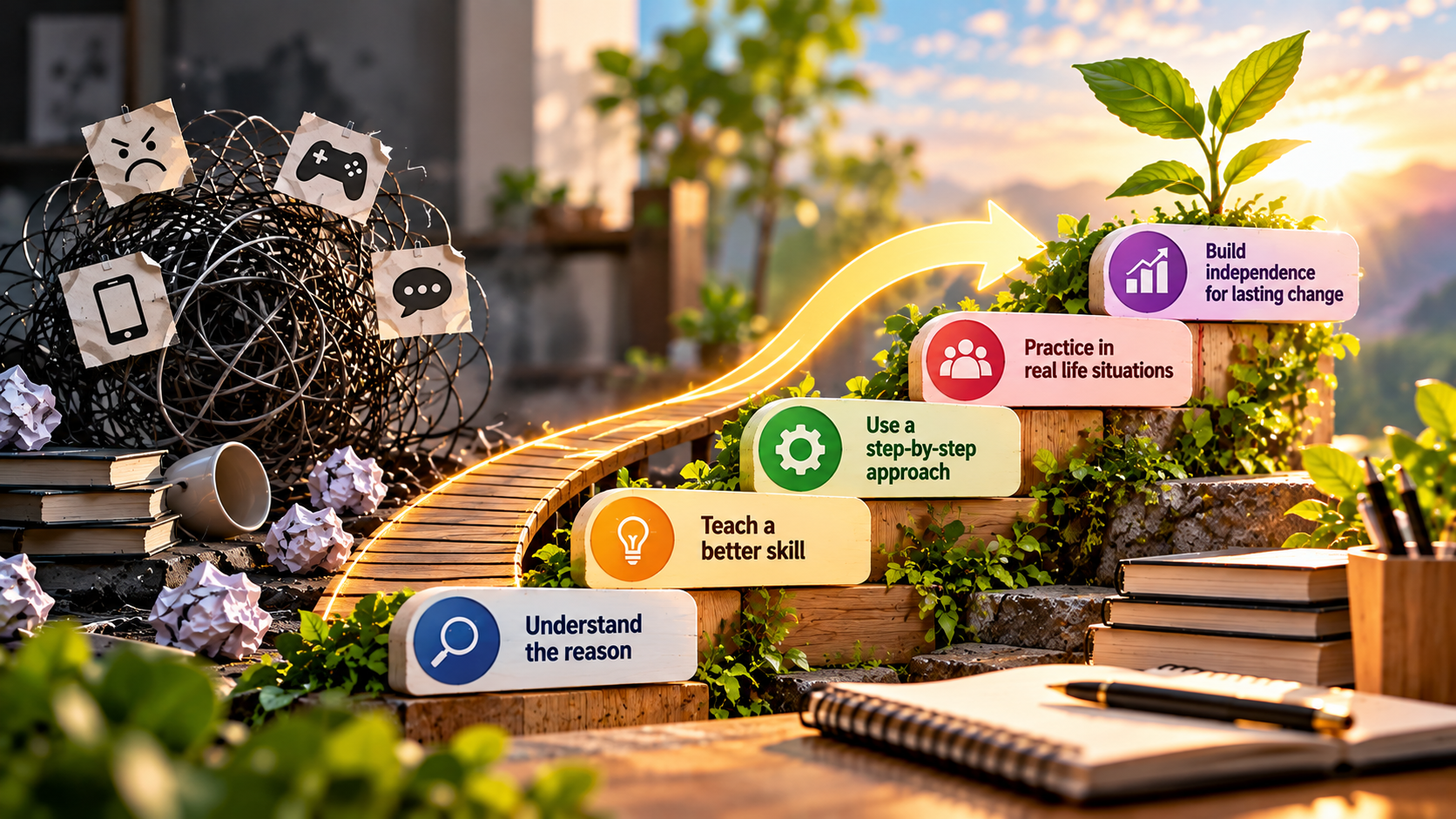
When challenging habits disrupt progress at home, in classrooms, or at work, simply suppressing them rarely leads to lasting change. The replacement skills approach offers a practical, evidence-informed way to encourage healthier behaviors. Grounded in Applied Behavior Analysis (ABA), this approach focuses on teaching constructive alternatives that serve the same purpose as unwanted behaviors.
Every behavior can serve a specific function. Someone might seek attention, access a preferred item, escape an overwhelming task, or meet a sensory need. Removing a coping mechanism without teaching an alternative can increase frustration. Instead, identifying the underlying need helps practitioners introduce more effective responses. Research available through the National Center for Biotechnology Information provides a starting point for exploring behavioral science and evidence-based interventions.
Understanding how meaningful behavioral change works can help parents, educators, caregivers, and workplace leaders respond more effectively. The key is to understand why a behavior occurs before deciding how to address it.
This guide explores the essential principles of the replacement skills approach, including:
- What replacement skills are and how they work
- How to develop and teach new skills systematically
- The five R’s of proactive behavior management
- How replacement behavior strategies work in practice
- Practical examples across different environments
- The essential components of a sustainable replacement strategy
By understanding these principles, you can support positive behavioral change through practical, consistent, and compassionate interventions.

What are replacement skills?
Replacement skills are constructive actions that meet the same underlying need as an unwanted behavior. Rather than focusing only on stopping a disruptive response, practitioners identify its purpose and teach a more appropriate alternative. This principle is central to the replacement skills approach, particularly in Applied Behavior Analysis (ABA).
For example, a student might shout during a difficult math assignment to escape the task or obtain help. Instead of simply reprimanding the student, a teacher can teach them to raise an assistance card or request a short break. The alternative should provide a practical way to communicate the same need.
Effective replacement skills are specific, achievable, and appropriate for the individual’s abilities. They should also work in the environment where the behavior occurs. A replacement that requires too much effort or provides no meaningful benefit may be difficult to maintain.
The objective is not merely to eliminate disruption. It is to improve communication, build independence, and reduce frustration. When individuals learn effective alternatives, they gain practical tools for managing everyday challenges.
What is your approach to learning new skills?
A reliable approach to learning new skills starts with clear goals and manageable steps. Instead of expecting someone to master a complicated behavior immediately, break the process into smaller actions. This method, often called task analysis, makes learning easier to understand, practise, and evaluate.
First, define the skill and observe the individual’s current abilities. Identify environmental barriers that might make the skill difficult. Next, demonstrate the desired action and provide opportunities for guided practice. Give specific, constructive feedback so learners understand what they did well and what needs improvement.
Consistent practice helps strengthen the new skill. Repeating it in different situations also makes it easier to use outside the original learning environment. For example, someone learning to request assistance can practise at home, in a classroom, or during workplace tasks. Exploring curiosity and how to develop it can also help encourage continued learning and practice.
Progress may vary, so adjust the teaching method when necessary. Short practice sessions, achievable goals, and meaningful encouragement can help maintain motivation. This systematic approach supports both behavioral development and professional learning without creating unnecessary pressure.
Scaffolding Independence Through Gradual Release
Gradual release of responsibility helps learners move from supported practice to independent performance. Initially, a teacher, caregiver, or coach demonstrates the skill and provides clear instructions. The learner then practises with assistance before gradually taking greater responsibility.
For example, a child learning to request a break might first use a visual card with adult guidance. Once the child understands the process, the adult can reduce reminders and allow independent requests. The same principle applies to workplace training, where employees progress from demonstrations to supervised tasks and independent decisions.
Support should decrease according to the learner’s progress, not an arbitrary timetable. If difficulties return, temporary guidance can be reintroduced without treating the setback as failure.
The goal is independence and generalization. Independence means using the skill without constant prompting. Generalization means applying it across different people, environments, and situations. Together, these outcomes make a replacement skill more useful in everyday life.
What are the 5 R’s of behaviour management?
The five R’s of behaviour management are commonly described as Relationship, Respect, Routine, Redirection, and Repair. This framework emphasizes supportive relationships, predictable expectations, and constructive responses to challenging situations. However, the five R’s are not a universally standardized clinical model. Their precise definitions can vary across educational and behavioral settings.
Relationship involves building trust so individuals feel safe asking for help. Respect means protecting dignity and avoiding humiliation, threats, or unnecessary confrontation. Routine creates predictable schedules and clear expectations, reducing uncertainty that may contribute to frustration.
Redirection guides attention toward a more productive action before a situation escalates. For example, a teacher might prompt a student to request assistance rather than continue arguing over a difficult task. Repair focuses on addressing harm, rebuilding trust, and restoring relationships after a conflict.
These principles can complement the replacement skills approach by creating an environment where new behaviors are easier to learn. However, supportive management alone may not address every behavior’s underlying function. In educational settings, inclusive library practices can also contribute to a more welcoming and supportive learning environment.
Practitioners should also consider individual needs, environmental triggers, and the consequences maintaining a behavior. Combining predictable routines with explicit skill instruction and appropriate reinforcement creates a more consistent approach to behavioral change.
What is a replacement behavior strategy?
A replacement behavior strategy is a structured plan for reducing an unwanted behavior by teaching and reinforcing a more appropriate alternative. It focuses on why a behavior occurs rather than treating every disruptive action as the same problem.
In Applied Behavior Analysis, practitioners may begin with a Functional Behavior Assessment (FBA). This assessment helps identify patterns between environmental events and behavior. Common behavioral functions include gaining attention, obtaining preferred items or activities, escaping demands, and accessing sensory stimulation. These functions are possibilities to investigate, not conclusions to assume without evidence.
Once the likely function is understood, practitioners select an alternative that meets the same need. For instance, someone who struggles with a demanding task might learn to request help, ask for clarification, or communicate the need for a break.
The environment should also support success. Clear instructions, accessible communication tools, and predictable responses can make the replacement behavior easier to use. In classrooms, STEM tools for modern learning can provide additional ways to support hands-on learning and engagement. When appropriate, practitioners reinforce the new response and avoid unintentionally strengthening the unwanted behavior.
A successful replacement behavior strategy requires ongoing observation and adjustment. If the alternative does not work reliably, the teaching plan may need revision. The aim is to build a practical skill that improves communication, safety, and everyday functioning.
Delivering Immediate and Meaningful Reinforcement
Reinforcement helps increase the likelihood that a replacement behavior will occur again. For it to be effective, the consequence must be meaningful to the individual and connected to the behavior. In many situations, providing the expected outcome promptly helps the person understand the relationship between their action and its result.
For example, when a student appropriately requests help, the teacher can respond by offering assistance. When someone requests a break appropriately, providing a suitable break may reinforce that communication skill. The response should match the behavior’s underlying function whenever possible.
Reinforcement does not always mean giving a prize. It can include access to assistance, a preferred activity, a brief break, or positive social interaction. What matters is whether the consequence actually increases the desired behavior.
As the skill becomes more consistent, practitioners can gradually adjust reinforcement. Natural outcomes, appropriate feedback, and ordinary social interactions may help maintain progress. Changes should be individualized rather than automatic.
Importantly, reinforcement should never depend on withholding essential needs or ignoring genuine distress. A well-designed plan supports communication, autonomy, and safety while encouraging more effective responses.
What are some examples of replacement behaviors?
Practical examples of replacement behaviors show how the same underlying need can be addressed through a more constructive action. The right alternative depends on the behavior’s function, the person’s abilities, and the surrounding environment. A replacement skills approach therefore begins with understanding the situation rather than choosing a solution based only on appearances. For students experiencing loss, creative tools for grieving students may offer additional ways to express emotions and cope with difficult experiences.
Consider these examples:
- Seeking attention: A child who throws toys to attract an adult’s attention can learn to tap the adult’s shoulder or say their name.
- Escaping difficult tasks: A student who tears worksheets when overwhelmed can learn to request help, clarification, or a short break.
- Managing workplace stress: An employee who withdraws during tense meetings can practise requesting a pause or communicating concerns respectfully.
- Meeting sensory needs: Someone who chews clothing for sensory input may benefit from an appropriate sensory alternative selected with professional guidance.
- Requesting preferred items: A child who grabs objects can learn to ask for the item using words, gestures, or a communication aid.
These examples illustrate an important principle: the alternative must serve the same function as the original behavior. A break request may help someone escape an overwhelming task, but it will not necessarily meet a need for attention.
Practitioners should monitor whether the replacement works in real situations. If it does not, they may need to adjust the teaching method, environment, or selected skill.
What is a replacement strategy?
A replacement strategy is a broader plan for changing an established behavior or process by introducing a more effective alternative. In behavioral settings, it combines skill instruction, environmental adjustments, reinforcement, and consistent responses. In workplaces, the term can also describe replacing an inefficient process with a better one. The exact meaning depends on the context.
Within the replacement skills approach, a strategy goes beyond teaching one isolated action. It considers the conditions that trigger behavior, the support available, and the consequences that influence future responses. For example, teaching a student to request help may not be enough if instructions remain confusing or assistance is consistently unavailable.
A practical strategy may include:
- Identifying the behavior and its likely function
- Selecting a suitable replacement skill
- Teaching and practising the skill
- Adjusting environmental triggers where possible
- Reinforcing appropriate responses consistently
- Tracking progress and reviewing outcomes
Caregivers, educators, or managers may need guidance to respond consistently. Progress should be assessed using observable measures, such as how often the replacement skill occurs or how frequently the target behavior disrupts daily activities.
The goal is to create conditions that make constructive behavior easier and more effective. Regular reviews help determine whether the strategy is working or needs adjustment. This flexible, function-focused approach supports lasting change across home, educational, and professional environments.
Conclusion
Sustainable behavioral growth begins when we stop treating challenging reactions as personal failures and start recognizing them as functional communication. The replacement skills approach provides a structured, dignified path forward by identifying the core purpose behind distress and teaching constructive alternatives. When individuals discover reliable ways to voice their needs, maladaptive reactions naturally lose their power.
Applying this framework requires patience, intentional environmental scaffolding, and active adherence to the 5 R’s of behavior management. Punitive tactics may suppress friction temporarily, but functional alternatives cultivate long-term self-regulation and mutual trust. Whether you are guiding a frustrated student in a classroom, managing workplace dynamics, or refining personal routines, proactive coaching always outperforms reactive discipline. For educators exploring additional classroom approaches, robotics education in modern schools offers another perspective on supporting student engagement and practical skill development.
Start by observing daily triggers and pinpointing what each behavior actually achieves. Model simple, low-effort substitutes, reinforce small wins immediately, and build an environment where constructive choices thrive. As you put the replacement skills approach into practice today, you empower individuals with lifelong tools for emotional resilience, connection, and lasting personal success.