
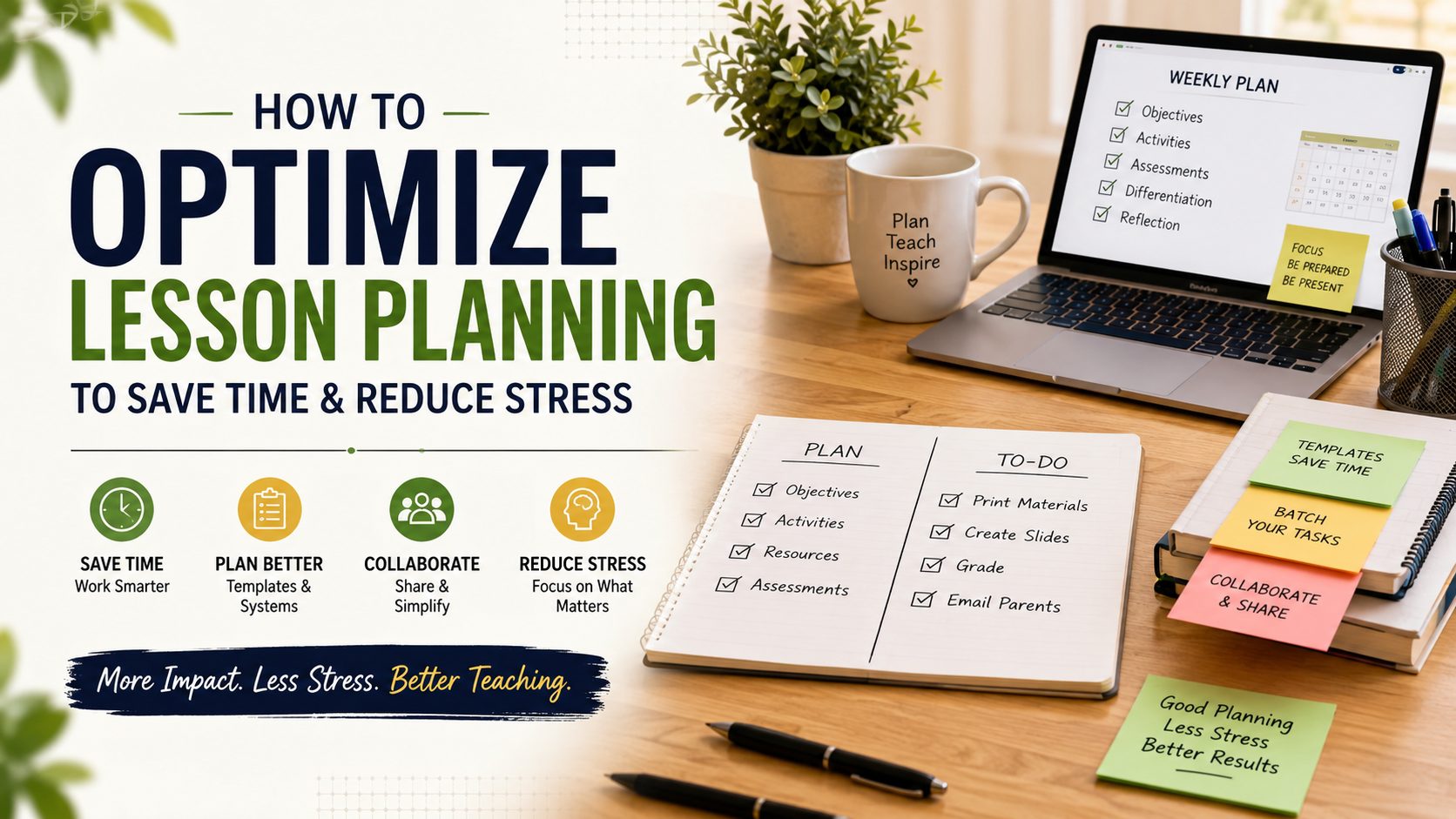
How to Optimize Lesson Planning to Save Time and Reduce Stress
Every teacher knows that the workday rarely ends when the final school bell rings. Indeed, between grading assignments, attending mandatory meetings, and communicating with parents, finding the energy to prepare for the next day often feels impossible. Consequently, learning how to optimize lesson planning is crucial for both your professional success and your personal well-being. When you streamline your preparation process, you can finally reclaim your evenings and weekends. According to extensive research on educator well-being from Edutopia, implementing effective time management strategies directly improves teacher retention and boosts overall classroom quality.
Furthermore, many educators fall into the trap of reinventing the wheel every single week. Specifically, they spend countless hours searching the internet for the perfect worksheets. Meanwhile, others build complex slide decks completely from scratch for every unit. Unfortunately, this perfectionist approach quickly leads to severe burnout. Instead, you need a sustainable, repeatable system. Ultimately, building a reliable framework allows you to focus your energy on what truly matters: engaging with your students and facilitating deep, meaningful learning.
In this comprehensive guide, we will explore practical, proven strategies to help you work smarter, not harder. For instance, you will discover how to use standardized templates, batch your weekly tasks, and leverage modern technology to speed up your workflow. Additionally, we will cover highly effective ways to collaborate with your colleagues to share the daily workload. By the end of this article, you will possess a clear roadmap to significantly reduce your stress levels and take back your much-needed free time.

What Are the 5 P’s of Lesson Planning?
The 5 P’s of lesson planning provide a practical framework that helps teachers organize effective lessons while reducing preparation time. Traditionally, the phrase stands for Proper Planning Prevents Poor Performance. In modern education, however, it commonly refers to Purpose, Preparation, Presentation, Practice, and Personalization. Together, these five stages create a clear roadmap for designing engaging and well-structured lessons.
Starting with a defined purpose keeps learning objectives focused from the beginning. Careful preparation ensures all materials and resources are ready before class starts. A well-planned presentation introduces concepts clearly, while guided practice gives students opportunities to apply new knowledge. Finally, personalization allows teachers to adapt activities for different learning styles and abilities.
Following this structured process removes unnecessary guesswork and creates a consistent planning routine. Instead of building every lesson from scratch, teachers can rely on a repeatable system that improves efficiency. The result is better classroom organization, stronger student engagement, and more time to focus on meaningful instruction rather than last-minute preparation.
Mastering the Five Core Instructional Phases
Applying the 5 P’s becomes much easier when each phase serves a clear purpose. Begin by defining the lesson objective so students know exactly what they are expected to learn. Next, gather all teaching materials, digital resources, and assessment tools before class begins to avoid interruptions.
During the presentation stage, explain key concepts using concise instruction and relevant examples. Follow this with guided and independent practice so students can strengthen their understanding through active participation. Finally, personalize learning by adjusting activities, support, or assessments to meet individual student needs.
Breaking lesson preparation into these manageable stages saves valuable planning time. It also creates a predictable workflow that improves consistency across lessons. Over time, teachers spend less energy organizing content and more time monitoring student progress, providing feedback, and improving learning outcomes.
What Is the 70 30 Rule in Teaching?
The 70 30 rule in teaching suggests that students should complete approximately 70% of the thinking and learning activities, while teachers contribute about 30% through guidance and facilitation. This student-centered approach shifts classrooms away from long lectures and encourages active participation instead. Rather than delivering information throughout an entire lesson, teachers create opportunities for students to investigate, discuss, solve problems, and collaborate.
This approach also makes lesson planning more efficient. Teachers no longer need to prepare lengthy presentations or detailed scripts for every class. Instead, they design meaningful learning experiences that encourage exploration and critical thinking. Activities such as group discussions, project-based learning, case studies, and inquiry tasks naturally promote deeper engagement while reducing preparation time.
The 70 30 rule benefits both educators and students. Teachers spend less time creating lecture-heavy content, while students develop stronger problem-solving, communication, and independent learning skills through active participation.
Shifting Cognitive Load to the Students
When students take greater responsibility for learning, teachers move from being primary presenters to effective facilitators. Instead of explaining every concept in detail, educators guide discussions, ask thoughtful questions, and provide support when needed.
Student-centered activities such as collaborative projects, peer instruction, debates, and inquiry-based learning require less preparation than traditional lectures. At the same time, they encourage learners to think critically and engage more deeply with the material.
This shift allows teachers to dedicate more time to assessment, feedback, and individualized support. Rather than spending hours creating extensive presentations, educators can focus on improving learning outcomes through observation and meaningful classroom interactions.
What Are the 5 C’s of Lesson Plans?
The 5 C’s of lesson plans represent the essential skills students need for success in today’s world. These competencies are Critical Thinking, Communication, Collaboration, Creativity, and Character (or Citizenship). Incorporating these elements into daily instruction helps teachers create engaging lessons that prepare students for real-world challenges while meeting modern educational standards.
Instead of viewing each lesson as an isolated activity, the 5 C’s encourage educators to build meaningful connections across an entire unit. Students learn to solve problems, communicate ideas effectively, work with others, and develop creative solutions. Character and citizenship further promote responsibility, ethical decision-making, and respectful participation inside and outside the classroom.
Using this framework also simplifies long-term planning. Teachers can align activities, assessments, and learning objectives around these core competencies, making lesson planning more organized, purposeful, and easier to manage throughout the school year.
Integrating Modern Competencies Into Daily Design
The easiest way to implement the 5 C’s is to focus on one or two competencies during each lesson. Trying to include all five in every activity often creates unnecessary complexity and increases planning time.
For example, a collaborative group project naturally develops teamwork and communication skills. Pairing that activity with an open-ended problem also strengthens creativity and critical thinking without requiring additional materials.
Rotating the competencies across different lessons keeps instruction balanced and manageable. This approach helps teachers design engaging learning experiences while maintaining a sustainable lesson planning routine that supports long-term curriculum goals.
What are the 4 C’s of a lesson plan?
The 4 C’s framework provides a structured blueprint that helps educators design comprehensive and engaging lessons without overcomplicating the preparation process. This model focuses on connection, conceptualization, consolidation, and closure, ensuring every segment of class time serves a distinct purpose. Connection hooks student interest and activates prior knowledge, while conceptualization delivers the core learning material through guided instruction and discussion. Consolidation allows students to practice new skills collaboratively or independently, and closure wraps up the session with a quick review. When you structure your daily materials around these four pillars, you stop second-guessing your sequence. This clarity allows you to draft units much faster and keeps your students actively focused throughout the entire duration of the class period.
Integrating the 4 C’s for Seamless Flow
Using this framework systematically ensures your lessons transition smoothly from one phase to the next. Start your preparation by outlining these four segments before filling in minor details. This top-down approach prevents you from wasting hours on trivial components that do not directly support your main instructional goals.
How to spend less time lesson planning?
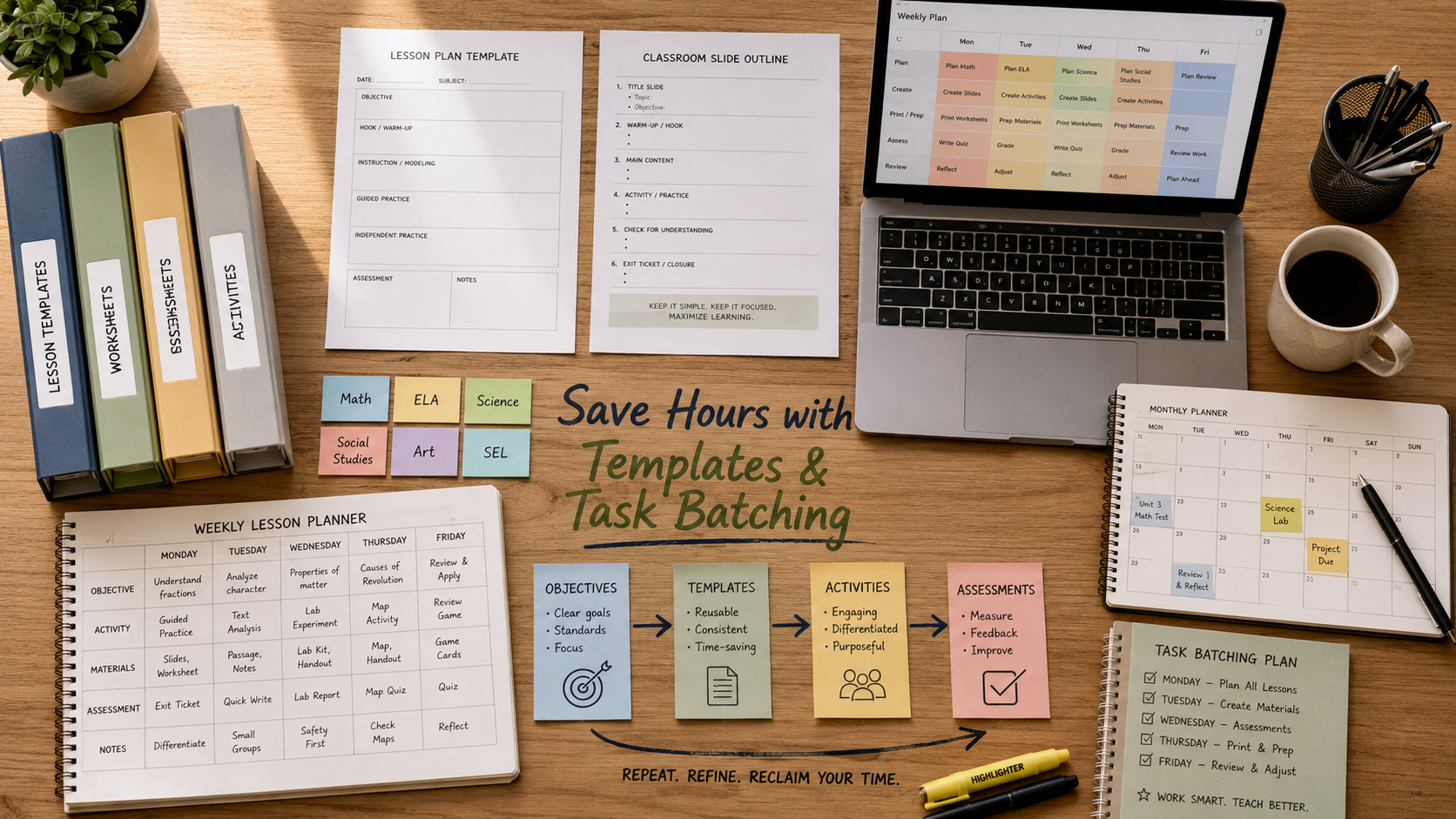
Cutting down your preparation hours requires shifting from creating every activity from scratch to curating, adapting, and reusing high-quality existing resources. Teachers often fall into the trap of over-customizing every handout, which drains energy and inflates preparation time. To optimize lesson planning to save time, embrace modular templates that let you swap out content while keeping the structural format identical week after week. Batching your weekly preparation tasks during focused blocks also prevents constant context switching. Furthermore, collaborating with grade-level peers to share workload responsibilities cuts your individual burden in half. By prioritizing efficiency over perfection, you protect your personal time and arrive in the classroom feeling refreshed, energized, and fully prepared to inspire your students.
Utilizing Templates and Reusable Frameworks
Mastering preparation efficiency relies heavily on dependable templates that standardize your instructional layout. Design a few master templates for common activities like reading comprehension or math practice. Reusing these structural frameworks allows you to plug in new weekly content in minutes instead of spending hours staring at a blank document.
FAQ
How many hours should teachers spend to optimize lesson planning?
Teachers should aim to keep weekly lesson planning within two to four hours by using reusable templates, planning multiple lessons together, and adapting existing resources. Spending excessive time perfecting every detail often leads to burnout without significantly improving student learning. Setting clear time limits helps maintain productivity while helping teachers optimize lesson planning and achieve a healthier work-life balance.
Can I reuse lesson plans from previous years to optimize lesson planning?
Yes. Reusing previous lesson plans is one of the most effective ways to optimize lesson planning and reduce preparation time. Although every class has unique needs, most lessons require only small updates rather than complete redesigns. Maintaining a well-organized digital archive allows teachers to quickly revise and improve existing materials instead of starting from scratch each year.
How do I stop spending too much time searching for resources to optimize lesson planning?
Create a collection of trusted educational websites, lesson templates, and teaching resources instead of searching the internet every time you plan. Set a time limit, such as ten minutes, when looking for additional materials. If nothing suitable appears, adapt a resource you already have instead of continuing to search indefinitely. This approach helps optimize lesson planning while keeping preparation efficient.
What is the best way to organize lesson planning materials digitally to optimize lesson planning?
Store lesson planning materials in cloud-based folders organized by subject, unit, topic, and week. Use consistent file names so worksheets, presentations, assessments, and teaching notes are easy to locate. A well-structured digital system saves time, simplifies lesson updates, makes sharing resources with colleagues more efficient, and helps optimize lesson planning over the long term.
CONCLUSION
In conclusion, teaching is undeniably one of the most rewarding professions in the world, but it should not consume your entire life. By taking deliberate, proactive steps to optimize lesson planning, you can significantly reduce your daily stress and reclaim your personal time. Throughout this guide, we have explored several powerful, expert-backed strategies to help you achieve this essential work-life balance.
First, using standardized templates ensures you never have to start your preparation from a blank page. Second, task batching keeps your mind highly focused and completely eliminates the friction of context switching. Furthermore, leaning on your trusted colleagues for shared resources actively cuts your weekly workload in half. Additionally, technology and digital platforms offer incredible shortcuts for generating fresh ideas, organizing your teaching materials, and even watching your teaching on replay to efficiently refine your instructional methods.
However, the most important shift you can make is internal. Specifically, you must permanently let go of the need for absolute perfection. Indeed, good, solid lessons delivered by a well-rested teacher will always outperform flawless lessons delivered by an exhausted, burnt-out educator. Therefore, start small this week. For instance, choose just one new strategy, like creating a universal slide template or batching your copy-machine tasks. As you build these positive habits, you will quickly notice a profound difference in your energy levels. Ultimately, reclaim your weekends, reduce your anxiety, and return to the classroom feeling refreshed.