
How to Stay Motivated While Studying? Complete Beginner’s Guide


We have all been there. You sit down at your desk, open your textbook, and suddenly, cleaning your room feels like the most urgent task in the world. Learning how to stay motivated while studying is one of the biggest hurdles students face today. With endless digital distractions and heavy academic workloads, maintaining your focus can feel like an uphill battle. However, academic persistence is deeply tied to emotional well-being, as researchers at Harvard University have frequently noted in studies regarding student success and mental stamina.
Understanding motivation is not about forcing yourself to study through sheer willpower. Instead, it is about creating a sustainable system that supports consistent learning. When you improve your study habits, you reduce anxiety and achieve better grades with less stress.
This guide explains how to stay motivated while studying using practical, science-backed strategies. You will learn how to beat procrastination, improve focus, and maintain steady energy levels. These techniques can help you stay productive throughout your academic journey. Developing strong routines is essential, and adopting productive habits for a successful and complete life can make it easier to stay consistent with your studies.
Small changes to your environment can make studying easier. Adjusting your mindset can also improve concentration and consistency. Together, these strategies can transform ordinary study sessions into productive and rewarding habits.
The Psychology of Study Motivation
Before looking at practical strategies, we must understand why motivation drops in the first place. Motivation generally falls into two distinct categories: intrinsic and extrinsic drive. Intrinsic motivation comes entirely from within, such as a genuine curiosity about a subject or the personal satisfaction of mastering a new skill. Extrinsic motivation, on the other hand, comes from external rewards, like getting a high grade, earning a degree, or avoiding negative parental disapproval.
Relying solely on external rewards often leads to severe academic burnout because the immediate satisfaction is too far in the future. To build a lasting drive to study, you need to cultivate intrinsic interest. When you find a personal connection to the material, studying transforms from a boring chore into an engaging puzzle. Behavioral scientists note that linking an assignment to real-world applications instantly shifts how the brain prioritizes that task. Therefore, your goal should be to find purpose in the material, which creates a natural pool of mental energy that keeps you focused even when the topics become increasingly complex.
Practical Strategies to Find Inspiration to Learn
1. Build a Dedicated Study Sanctuary
Your physical environment heavily influences your brain’s ability to focus and process information. If you try to study in bed, your brain naturally associates that space with sleep and relaxation, which makes you feel drowsy within minutes. Designing a specific workstation tells your mind that it is time to work, streamlining your transition into deep focus.
-
Clear the clutter: A messy desk leads directly to a cluttered, distracted mind. Keep only your absolute essentials within arm’s reach.
-
Optimize your lighting: Use natural light where possible, or invest in a bright desk lamp to keep your eyes fresh and alert.
-
Ditch the phone: Keep your smartphone in another room or completely powered down to prevent mindless social media scrolling.
Creating this boundary protects your mental energy. When you step away from this dedicated space, your brain can fully relax. This balance ensures you do not feel constant guilt when taking time off. Over time, sitting at this desk will automatically trigger an internal signal that helps you dive straight into your coursework with minimal resistance.
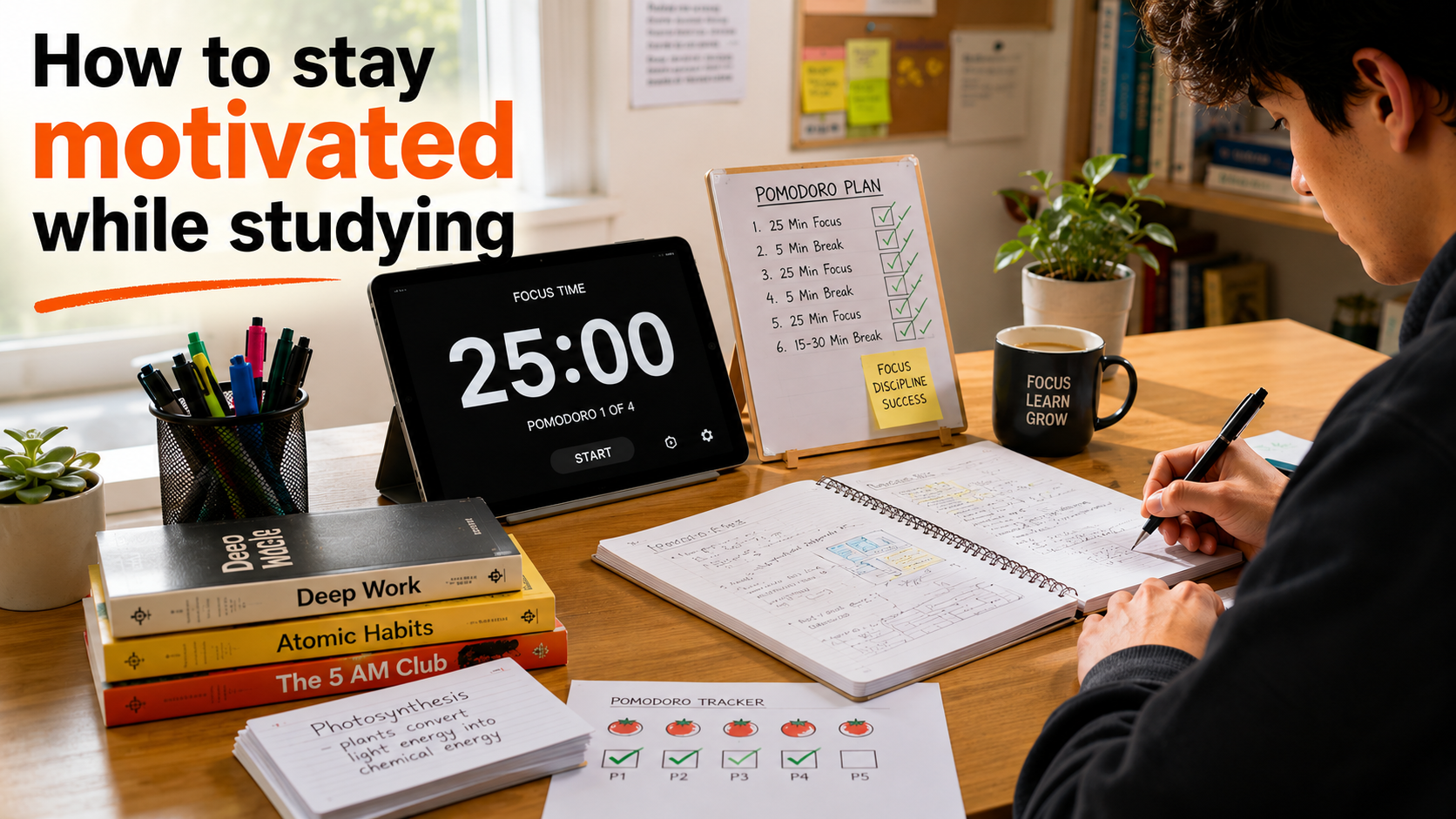
2. Leverage the Pomodoro Technique
Staring at a massive, complicated textbook for hours on end is incredibly daunting and often triggers immediate procrastination. Instead of forcing yourself to focus indefinitely, you should break your time into manageable intervals. The Pomodoro Technique suggests studying intensely for 25 minutes, followed immediately by a short 5-minute break to rest your mind.
After completing four of these cycles, you treat yourself to a longer break of 20 to 30 minutes. This structured rhythm keeps your mind remarkably fresh and prevents the onset of mental fatigue. During the 25-minute work block, you must promise yourself to focus exclusively on one task. Knowing that a break is just a few minutes away makes it much easier to resist temptations. It changes your perception of time, turning a grueling study session into a series of small, easily winnable sprints that protect your daily productivity.
3. Set Micro-Goals Instead of Macro-Targets
Saying “I am going to study biology all day today” is far too vague for your brain to comprehend. Your mind does not know where to start, which creates friction and triggers avoidant behaviors. Instead of setting massive, intimidating goals, you need to break your syllabus down into tiny, highly actionable micro-goals.
For example, reframe your task as: “I will read exactly three pages of chapter four and write down a bulleted summary.” Achieving these tiny milestones triggers small dopamine releases in your brain, which naturally boosts your mood and increases your drive to continue working. These small victories accumulate quickly over a single afternoon. By focusing entirely on the immediate step right in front of you, you remove the emotional weight of a massive workload. This progressive momentum is the secret to sustaining high levels of academic motivation over long periods.
How to Overcome Procrastination and Mental Fatigue
Reward Yourself Strategically to Stay Motivated
One of the best ways to learn how to stay motivated while studying is to create a system of meaningful rewards. Human brains are naturally drawn to immediate gratification, which is why long study sessions can feel difficult. To overcome this challenge, reward yourself with a favorite snack, a short walk, or a brief entertainment break after completing a major study block.
If you’re wondering how to stay motivated while studying during demanding courses, connecting study sessions with positive rewards can make a significant difference. By linking effort to enjoyment, you train your brain to associate studying with achievement rather than stress. This positive reinforcement reduces resistance and makes it easier to start difficult tasks.
Over time, this simple habit can transform your mindset and teach you how to stay motivated while studying consistently, even when your workload increases.
Practice Active Recall
Another effective strategy for anyone searching for how to stay motivated while studying is active recall. Passive reading and endless highlighting often lead to boredom, distraction, and poor retention. Instead of simply reviewing information, challenge yourself to retrieve it from memory.
Effective active recall techniques include creating flashcards, taking practice quizzes, and explaining concepts aloud in your own words. These methods keep your brain actively engaged and help strengthen long-term memory.
Understanding how to stay motivated while studying becomes much easier when learning feels interactive rather than repetitive. Active recall turns studying into a problem-solving activity, which naturally increases focus and reduces mental fatigue.
By regularly using active recall, you’ll discover how to stay motivated while studying while also improving comprehension, confidence, and academic performance.
Expert Insight: According to educational frameworks analyzed by the World Bank in global learning assessments, active engagement with material significantly improves long-term retention and student confidence compared to passive memorization.
Creating a Sustainable Study Routine
Consistency will always beat intensity every single time. Cramming for ten hours straight right before an exam causes immense mental stress, elevates cortisol levels, and leads to incredibly poor information retention. Developing a sustainable daily routine trains your brain to enter a state of deep focus automatically at specific times of the day, reducing the need for willpower.
| Strategy | Actionable Step | Benefit |
| Time Blocking | Assign specific hours for studying every single day. | Removes the decision fatigue of figuring out when to start working. |
| Healthy Snacking | Eat raw nuts, fresh berries, and complex whole grains. | Maintains stable blood sugar levels to prevent afternoon energy crashes. |
| Sleep Schedule | Aim for 7 to 8 hours of high-quality sleep nightly. | Consolidates your memories and restores total cognitive clarity. |
When you treat studying as a regular, non-negotiable part of your daily schedule, the emotional debate about whether you feel like working completely disappears. You simply show up because it is the designated time to do so. This systematic approach preserves your limited energy for actual learning, making your academic journey far more predictable, balanced, and deeply successful.
FAQs About Staying Motivated to Study
Why do I lose motivation to study so quickly?
You likely lose motivation quickly because your goals are too vague or your study environment is filled with friction and digital distractions. When you face a massive, poorly defined task, your brain naturally views it as an overwhelming threat and immediately seeks easy dopamine sources like social media to escape the discomfort. Furthermore, relying purely on raw willpower instead of a structured routine quickly drains your limited mental energy reserves.
To fix this common issue, break your academic work down into tiny, bite-sized tasks and remove all immediate distractions from your sight before you open your books. Setting explicit mini-deadlines for each small task also builds momentum. When your brain recognizes a clear path forward without distractions, it naturally releases dopamine upon completion, which builds positive reinforcement and naturally keeps you locked into your learning session without feeling a sudden urge to quit.
How can I study when I am feeling completely exhausted?
If you are experiencing severe physical exhaustion, the best approach is to rest, as forcing yourself to study yields incredibly poor information retention and deepens burnout. However, if your exhaustion is actually mental boredom or resistance, you can jumpstart your brain by changing your physical environment or shifting tasks. Try moving your workspace to a quiet library, a lively coffee shop, or even an outdoor park bench.
Alternatively, lower the barrier to entry by committing to study for just five minutes. Often, simply starting is the hardest part. Once you clear that initial psychological hurdle, momentum takes over and helps you finish the task. You can also mix up your study formats by watching educational videos or listening to a textbook audio track instead of trying to read heavy blocks of text when your eyes feel tired.
Does listening to music help maintain focus while learning?
Yes, listening to music can certainly help maintain focus, but it depends entirely on the specific type of music you choose to play. Songs with lyrics tend to interfere directly with the language-processing parts of your brain, making reading comprehension or essay writing significantly more difficult. Therefore, you should opt for instrumental tracks, video game soundtracks, classical compositions, or lo-fi beats.
These specific genres provide a steady acoustic background that effectively masks disruptive ambient noises without hijacking your attention span, helping your mind enter a deep flow state much faster. Video game music, in particular, is scientifically designed to keep players engaged and focused on tasks without becoming distracted. Experimenting with different lyric-free playlists will allow you to discover what acoustic environment keeps your thoughts structured, sharp, and highly creative during long research sessions.
How do I stay focused on a school subject that I absolutely hate?
To stay focused on a subject you genuinely dislike, you must gamify the learning process or connect the material directly to a larger personal goal. Find a dependable peer to study with, or use flashcards to turn the boring material into a fast-paced self-test challenge. Additionally, try to reframe your mindset. Instead of focusing heavily on your dislike for the topic, focus on the intense satisfaction of checking it off your daily to-do list.
Remind yourself that mastering this difficult subject builds immense personal discipline, which is a highly valuable skill for your future career. You can also study your least favorite topic first thing in the morning when your brain is completely fresh. Getting it out of the way early removes the lingering anxiety that can ruin the rest of your productive day.
What should I do during my study breaks to avoid losing focus?
During study breaks, avoid activities that can easily capture your attention. This includes scrolling social media or watching videos online. These activities can make it difficult to return to studying.
Instead, focus on physical movement and genuine mental rest. Step away from your desk completely. Stretch your muscles, drink a glass of water, or take a short walk outside. Fresh air and movement help your brain recharge.
These simple activities allow your brain to process information in the background. As a result, returning to your studies feels easier. Taking a break from screens also reduces eye strain and mental fatigue. When your break ends, you are more likely to feel focused, refreshed, and ready to continue studying.
Conclusion
Mastering how to stay motivated while studying does not happen overnight. It is an ongoing process of testing different strategies and learning what works best for you. It also requires intentional adjustments to your study environment and daily habits.
Remember that motivation is not constant. It naturally rises and falls based on stress, sleep quality, and interest levels. That is why strong systems and routines matter. Consistent discipline delivers better results than waiting for inspiration to appear.
To stay motivated while studying, use proven techniques such as the Pomodoro method and clear micro-goals. Create a clean, distraction-free study space that supports focus and productivity. These habits provide a strong foundation for long-term academic success.
Be patient with yourself on low-energy days. Adjust your schedule when needed and keep your long-term goals in mind. If you continue applying these strategies, you can stay motivated while studying and make steady progress toward your academic goals. Start your next study session with confidence and take one step forward today.