
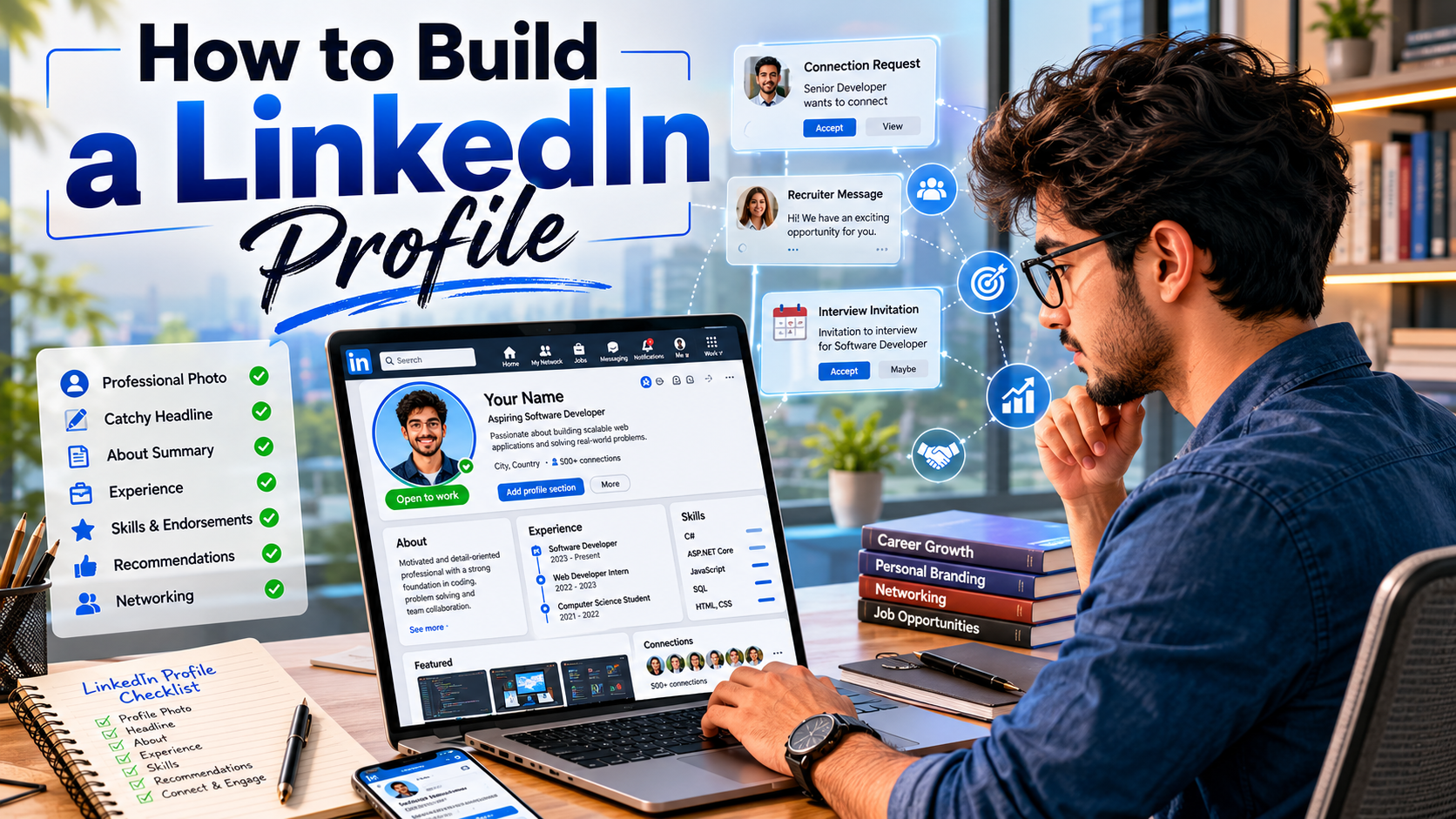
How to Build a LinkedIn Profile: The Ultimate Guide

In today’s digital economy, your professional network has become a valuable career asset. Learning how to build a LinkedIn profile is no longer optional for job seekers. It is a key part of career growth and personal branding.
A strong online presence can improve your visibility to employers. Whether you are a college student seeking your first internship or a professional changing industries, your profile serves as a digital portfolio. It highlights your skills, experience, and achievements around the clock.
A well-optimized profile can create new opportunities. It can help you discover industry trends, connect with professionals, and build relationships with mentors. These connections can support your long-term career development.
This guide explains the essential steps for creating an effective LinkedIn profile. You will learn how to choose the right profile photo and write a compelling summary. You will also discover ways to improve your profile’s visibility and credibility.
By the end of this article, you will have a practical roadmap for building a professional online presence. A strong profile can attract recruiters, hiring managers, and potential business partners. It can also increase your chances of receiving valuable career opportunities.
Why a Strong LinkedIn Presence Matters Today
The job market has changed significantly in recent years. Many employers now use digital platforms to find and evaluate candidates. Recruiters no longer depend only on paper resumes. Instead, they use search tools and hiring platforms to discover qualified professionals online. If your profile is incomplete or outdated, you may miss valuable opportunities.
A strong LinkedIn profile increases your visibility. It helps recruiters find you when searching for candidates with specific skills and experience.
A complete profile also builds credibility. People often search online before making professional connections. An updated profile creates a positive first impression and helps establish trust.
LinkedIn allows you to showcase achievements, skills, and industry knowledge. It also demonstrates your involvement in your profession and professional community.
A strong presence can make networking easier. It helps you stand out from other candidates and improves your professional reputation. When new opportunities arise, a well-maintained profile can place you in a stronger position for consideration.
Step-by-Step: How to Build a LinkedIn Profile
Creating an impactful digital presence requires a strategic and highly intentional approach. You cannot simply copy and paste bullet points from your old resume and expect to see massive career results. Let us break down the crucial steps needed to optimize your personal page for maximum search visibility and professional engagement.
1. Choose the Perfect Profile and Background Photo
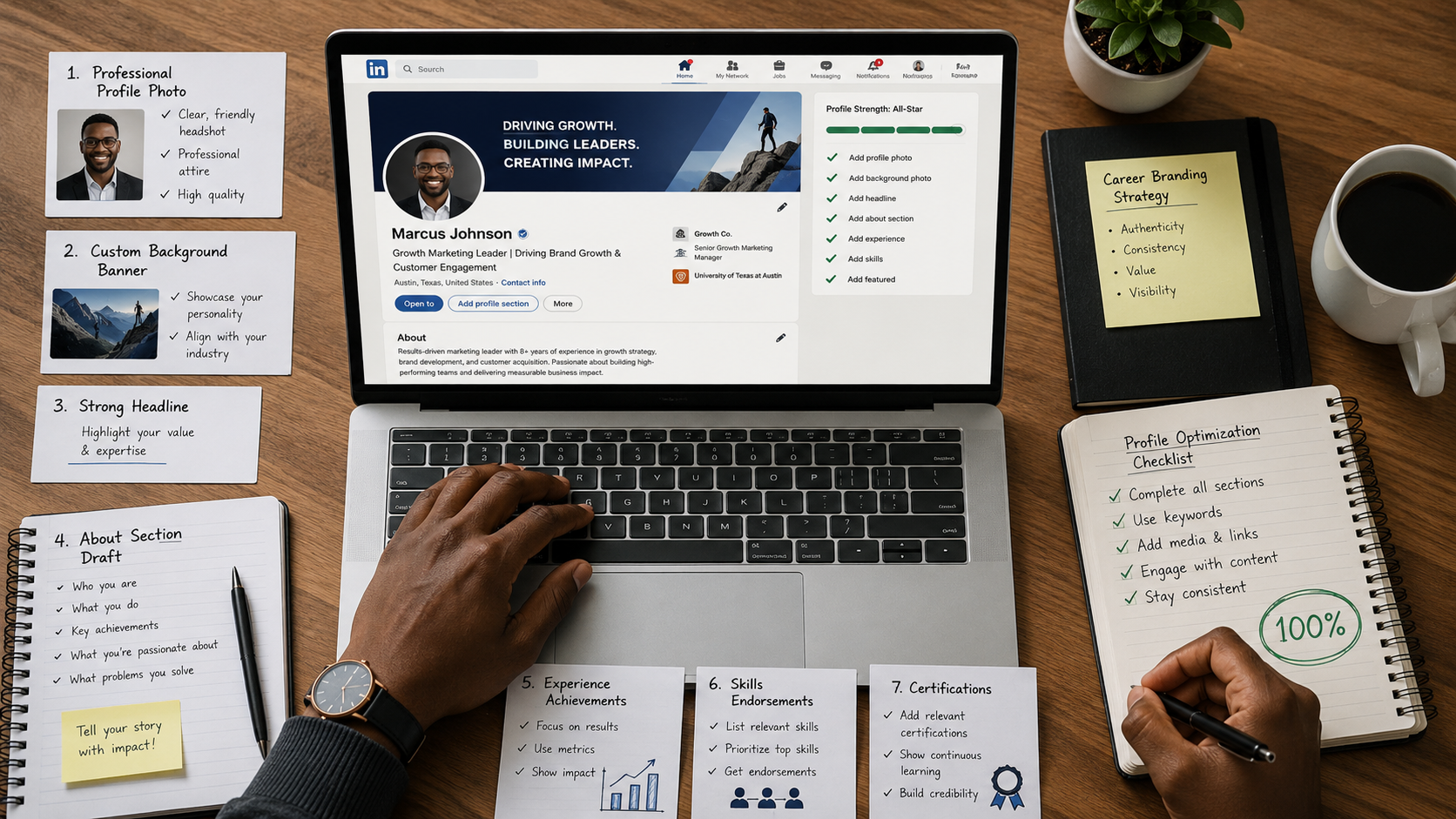
Your profile photo represents your digital first impression, and it needs to communicate competence, warmth, and professionalism instantly. Choose a high-resolution image where your face takes up about 60% of the frame, ensuring the lighting is bright and clear. Smile naturally with your eyes, look directly at the camera, and wear attire that perfectly matches your specific industry standards.
Similarly, do not neglect your background banner image, as the default gray graphic looks unfinished and uninspiring to visiting recruiters. Upload a custom banner that visually reflects your profession, such as a clean abstract geometric design, a high-quality shot of you speaking at an industry event, or a graphic representing your everyday workspace or tools. This extra visual element immediately frames your page and shows visitors that you pay close attention to detail.
2. Craft a Compelling Headline
Your headline is arguably the most critical piece of real estate on your entire page because it follows your name everywhere across the platform. Most beginners make the mistake of simply listing their current job title or student status, but you can achieve much better results with a bit of creativity.
Instead of just writing “Student at XYZ University,” expand that line to explicitly showcase your unique value proposition. For example, use a proven formula like: [Job Title/Major] | [Specific Skillset] | [How You Add Value to a Company]. A strong, optimized example looks like: Computer Science Student | Python & Java Developer | Passionate about building scalable web applications for startups. This descriptive structure immediately tells hiring managers what you do, what tools you master, and exactly how you can help their team succeed from day one.
3. Write an Engaging Summary
The “About” section is your golden opportunity to tell your personal career story and express your professional identity. Avoid writing a dry, third-person biography that feels overly formal, detached, and robotic to read. Instead, write your summary in the first person using “I” statements to keep the tone conversational, human, and genuinely engaging.
Pro Tip: Start with a powerful hook that explains your core professional passion or the specific problem you love solving. Follow up by highlighting your key skills, major career achievements, and what you are looking to achieve next in your journey.
Keep your paragraphs short, around two to four lines each, to ensure high readability on both desktop and mobile screens. End your summary with a clear, welcoming call to action, such as inviting people to connect with you or providing your professional email address for direct business inquiries.
How to Build a LinkedIn Profile: Optimizing Your Experience and Skills Sections
Once you set up the visual assets and introductory elements, you must carefully build out the core structural sections of your profile. This is the place where you prove your capabilities with concrete, undeniable evidence.
Showcasing Your Experience Effectively
When listing your work, internship, or volunteer history, focus heavily on the direct impact you made rather than just listing your daily duties. Use strong action verbs like managed, developed, increased, or optimized at the beginning of every single bullet point.
Whenever possible, quantify your professional results with real numbers, percentages, or dollar amounts to build trust. For instance, write “Increased corporate social media engagement by 25% over six months” instead of simply writing “Managed the company social media accounts.” This data-driven approach proves to potential employers that you deliver measurable results and understand how your daily work connects to broader business goals.
Selecting the Right Skills
The platform allows you to display dozens of distinct skills on your profile, but quality always triumphs over quantity. Choose a strategic mix of hard technical skills, like data analysis or software coding, and soft interpersonal skills, like cross-functional communication or agile project management.
To expand your competitive edge, understand the critical skills employers look for in graduates to ensure you align your profile with current entry-level corporate expectations. Keep your top three skills highly relevant to your target industry, as these are the specific ones visitors see first without clicking. Regularly update this section as you learn new digital tools, earn credentials, or take on new responsibilities at work. Having relevant skills listed also boosts your ranking in recruiter searches, making your profile far more discoverable for matching roles.
Frequently Asked Questions
What should a beginner put on LinkedIn?
A beginner should focus entirely on completing the foundational sections of their professional profile to establish a strong, reliable baseline of professional credibility. Start by uploading a clean, high-resolution, professional headshot and writing a highly descriptive headline that clearly states your current academic focus, college major, or target industry. Fill out the education section completely by including your university details, relevant coursework, honors, and major academic projects. In the experience section, you can confidently include part-time jobs, summer volunteer work, or university club leadership roles. Even if you completely lack formal corporate experience, these activities demonstrate vital soft skills like leadership, teamwork, time management, and reliability to potential employers. You should also outline any technical proficiencies, languages spoken, or workshops attended. This ensures your initial presence looks robust, polished, and fully functional, signaling to talent acquisition teams that you take your professional career journey seriously.
How do I make my LinkedIn profile stand out with no experience?
When learning how to build a LinkedIn profile, it is important to focus on your strengths rather than your lack of work experience. A well-structured profile can still attract recruiters and hiring managers. One of the best strategies for how to build a LinkedIn profile with no experience is to highlight your skills, education, and personal projects. Include relevant coursework, certifications, and technical abilities that demonstrate your knowledge. The “About” section is another important area when considering how to build a LinkedIn profile that stands out. Use this section to explain your career goals, interests, and willingness to learn new skills. If you are researching how to build a LinkedIn profile as a student or beginner, showcase academic projects, internships, volunteer work, or freelance assignments. These experiences can demonstrate practical skills and problem-solving abilities.
Another key part of how to build a LinkedIn profile is earning industry-recognized certifications. Displaying certifications can strengthen your credibility and show commitment to professional development.
Understanding how to build a LinkedIn profile also includes gathering recommendations from professors, mentors, or project teammates. Positive recommendations provide social proof and help build trust with recruiters.
By following these steps, you can learn how to build a LinkedIn profile that highlights your potential, showcases your abilities, and increases your visibility to employers even without formal work experience.
How long should my LinkedIn summary be?
Your summary should ideally be between 200 and 300 words long to balance contextual depth with high reader engagement. While the platform allows up to 2,600 characters, brevity ensures that busy corporate recruiters actually read your content from start to finish. The first three lines of your personal summary are the most critical because users must click the “See more” button to read anything else. Ensure those opening lines are highly engaging, packed with relevant industry keywords, and clearly state your core professional identity. Break the rest of the text into short, digestible paragraphs or use clean bullet points to highlight your key skills, making the entire section highly scannable for the reader. Conclude your summary with an open invitation for networking or professional collaboration, providing an explicit call to action that outlines exactly why and how other industry professionals should contact you.
Is a premium LinkedIn account necessary for beginners?
No, a premium subscription is not necessary for beginners. The free version offers all the essential tools needed to get started. You can build a professional profile, connect with industry experts, and apply for jobs without paying for a subscription. These features are enough for most people in the early stages of their careers. Premium features provide extra benefits. These include viewing more profile visitor details and messaging people outside your network. While useful, they are not required for career growth.
Focus first on optimizing your profile. Build meaningful connections and engage with industry content regularly. These activities often provide more value than premium features.
You can also increase visibility by sharing relevant articles and posting thoughtful comments. This helps you grow your network without additional costs.
Consider a premium subscription later if you are conducting an intensive job search or need advanced networking tools.
How often should I update my profile?
Review and update your profile at least once every few months. You should also make changes whenever you reach a major professional milestone.
Update your profile immediately after starting a new job. Add any new certifications, completed projects, or technical skills as soon as possible. This helps recruiters see your most current qualifications. Regular updates keep your profile fresh and relevant. They also improve your visibility in recruiter searches.
Profile updates may trigger notifications within your network. This can increase awareness of your achievements and create opportunities for collaborations, referrals, and career growth.
An actively maintained profile signals professionalism and engagement. It shows that you take your personal brand seriously. As a result, you may receive more inbound inquiries from recruiters and hiring managers.
Conclusion
Learning how to build a LinkedIn profile is one of the most valuable, long-term investments you can make for your professional future. According to global employment trends highlighted by the World Bank, digital literacy and active participation in professional networking platforms are vital drivers of modern workforce mobility and career progression. By implementing the step-by-step strategies outlined in this guide, you successfully transform your profile from a static, boring resume into a dynamic career asset that works continuously on your behalf.
Always focus on clean visuals, a highly descriptive headline, and telling a compelling, authentic story within your summary section. Keep optimizing your skills and experience sections with quantifiable metrics to remain highly competitive in your field. Commit to optimizing your profile today, consistently connect with your industry peers, and unlock exciting new professional opportunities that can elevate your career trajectory for years to come.