
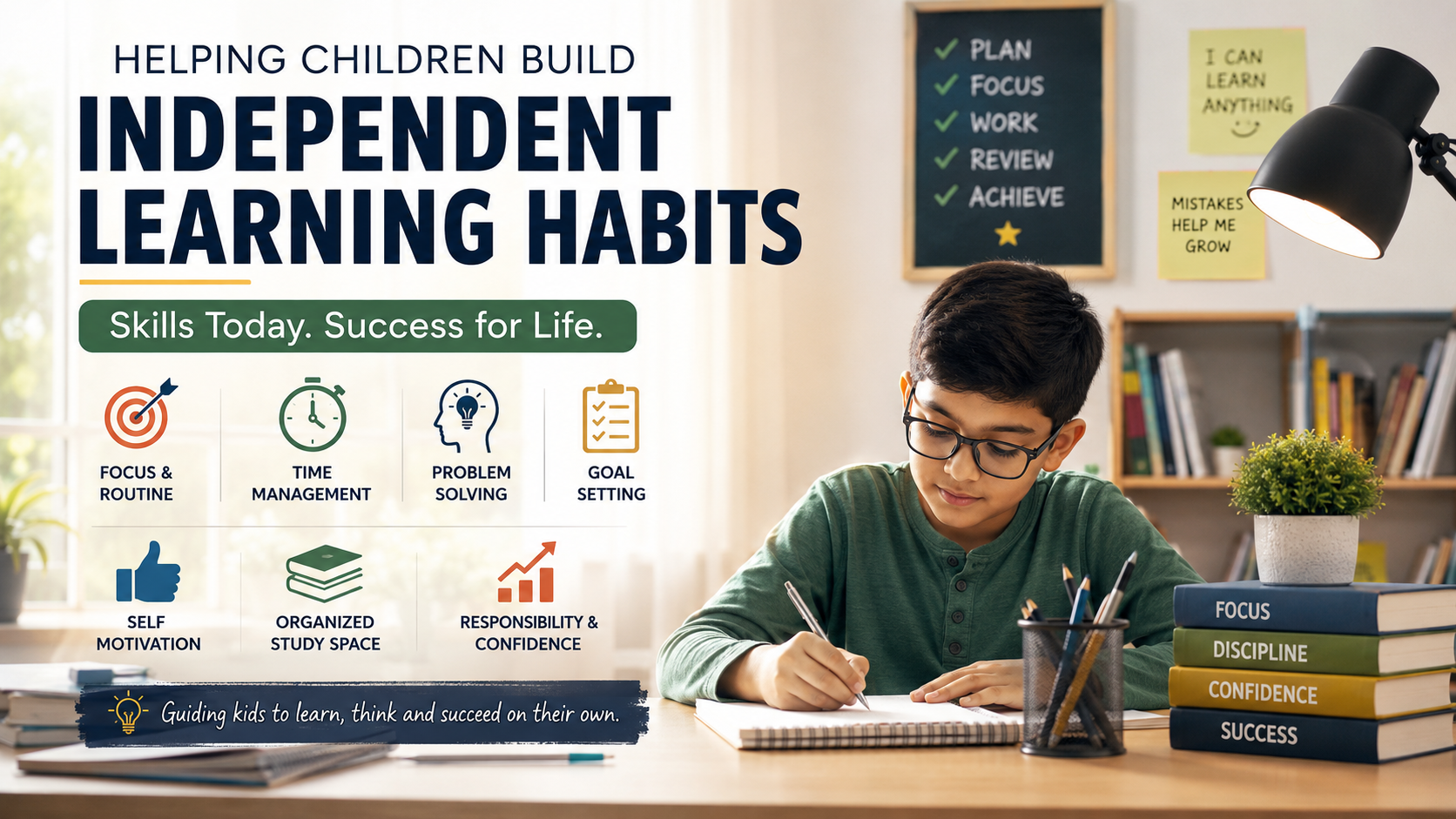
Helping Children Build Independent Learning Habits
Independent Learning Habits and Why They Matter for Kids
When parents foster independent learning habits, they give their children a gift for life. Kids who manage their own study routines become confident and resourceful adults. According to research from the U.S. Department of Education, early study routines directly improve academic performance and problem-solving skills. Fostering self-reliance does not mean leaving your child to work entirely alone. Instead, it means providing the right structure, guidance, and continuous encouragement. As a result, kids feel fully capable of tackling difficult tasks on their own.
Developing these skills early prevents academic burnout. It also reduces daily battles over homework. When children constantly rely on parental help, they miss out on building intrinsic motivation. By focusing on skill building rather than giving quick answers, you teach your child how to handle obstacles. They learn to analyze information critically and take pride in their work. Over time, these daily routines turn into a lifelong passion for learning.
Setting Up a Study Space for Independent Learning Habits
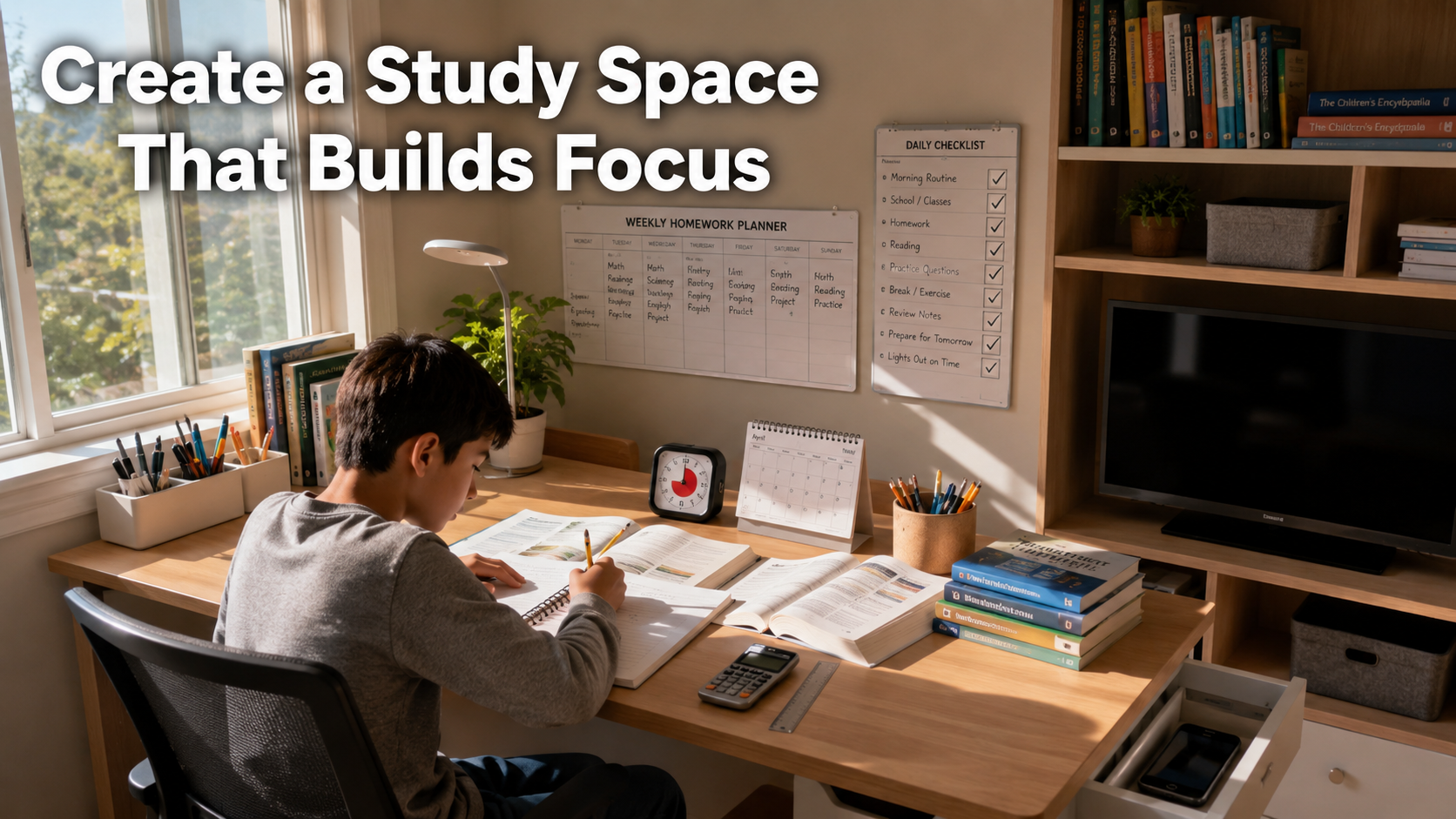
A child’s physical surroundings deeply affect their focus and study efficiency. Chaotic spaces force the brain to waste energy filtering out noise. Designing an organized learning area signals to your child that it is time to focus and work productively.

Designating a Dedicated Quiet Zone for Daily Homework
Choose a quiet spot in your home strictly for learning activities. This space needs proper lighting, a supportive chair, and a flat writing surface. Keep all essential supplies within easy reach, including pencils, notebooks, and reference books. Having materials ready eliminates frequent interruptions and keeps your child engaged in their tasks.
Removing Distractions to Build Better Focus Skills
Turn off televisions and store non-essential electronic devices in another room during study hours. If your child uses a laptop for schoolwork, install website blockers to restrict social media and games. A quiet, simple space lowers cognitive overload. It helps your child focus deeply and finish assignments with fewer errors.
Routines and Time Management for Self-Directed Learners
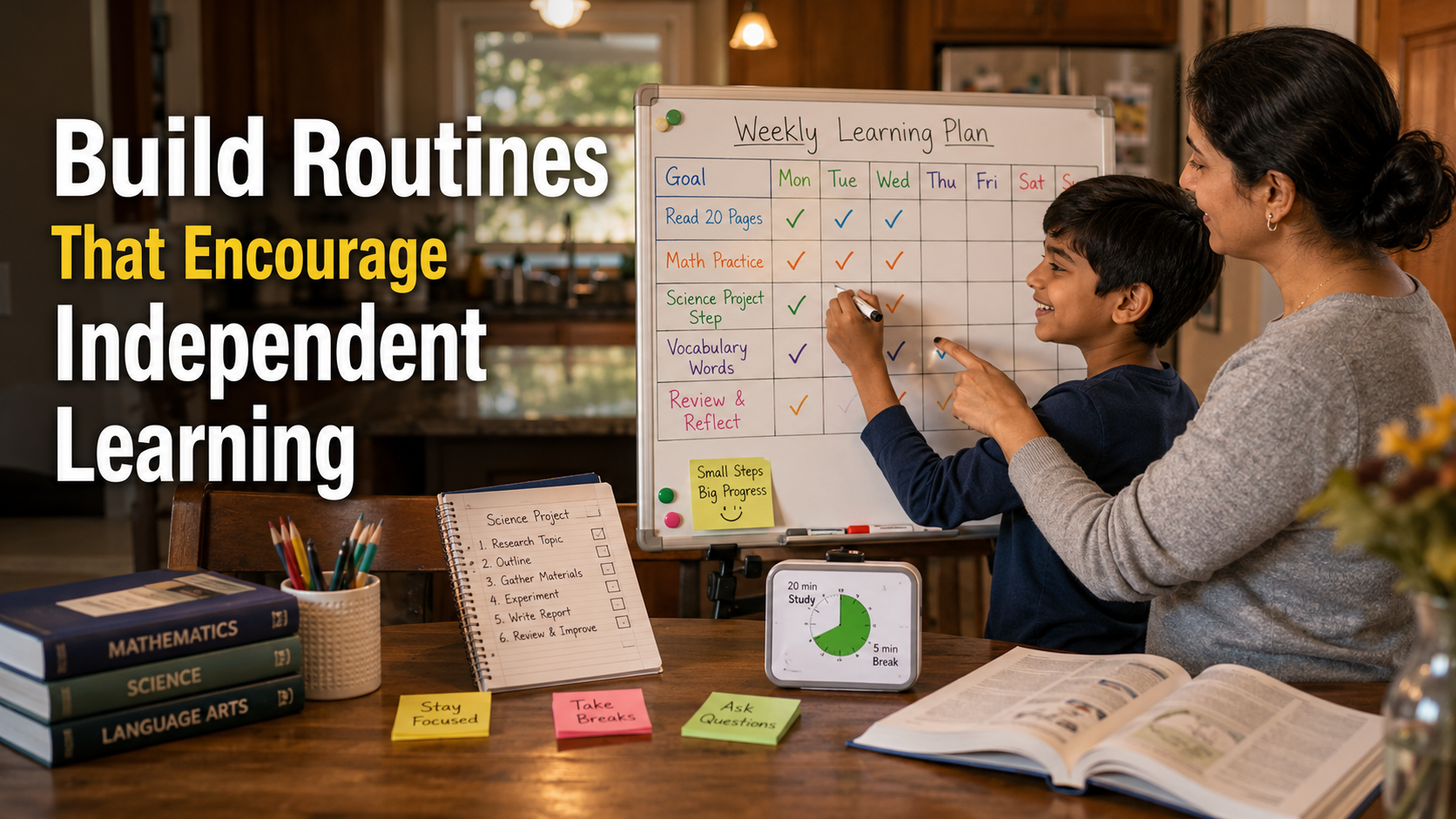
Children thrive in structured environments with clear expectations and daily schedules. A consistent routine stops daily arguments about when and where homework happens.
Breaking Large Assignments into Manageable Steps
Large assignments often intimidate young learners and trigger procrastination. Show your child how to break big projects into small, clear steps. For instance, do not just list “finish history project.” Instead, outline specific sub-tasks like these:
-
Read textbook pages 12 through 18.
-
Outline three key historical events.
-
Draft the introductory paragraph.
Using Timers to Build Strong Study Habits
Visual timers and methods like the Pomodoro Technique work wonders for focus. Ask your child to work uninterrupted for 20 minutes, then take a 5-minute break. Knowing a break is coming makes long sessions feel manageable. Over time, this practice builds mental stamina and improves time estimation skills.
Guiding Problem-Solving to Strengthen Independent Study Skills
When your child hits a difficult problem, you might want to give them the answer. However, helping too quickly prevents them from developing strong critical thinking skills.
Pro-Tip for Parents: Instead of giving answers, ask guiding questions: “What part of the problem do you understand?” or “Where should we look in the textbook for a hint?”
Teaching the “Three Before Me” Rule for Homework
Use the “Three Before Me” rule to encourage active problem-solving before calling for help. Before asking an adult, your child must check three resources. They can review textbook examples, re-read class notes, or try a draft on scratch paper. This habit stops instant dependency and teaches kids to find answers on their own.
Praising Effort to Encourage Autonomous Learning
Praise your child’s effort and strategies rather than their test scores or natural intelligence. Celebrate when they stick with a hard math problem or look up new vocabulary words. Emphasizing effort builds a growth mindset. It teaches children that mistakes are simply natural steps toward success.
Fostering Motivation and Goal-Setting for Long-Term Success
Children show far higher motivation when they control their own learning process. Inviting them to set academic targets turns schoolwork into a rewarding personal journey.
Helping Kids Set Achievable Weekly Goals
Sit down together every Sunday evening to set two or three simple goals for the coming week. Let your child choose their targets, such as reading two book chapters or practicing spelling words daily. Writing goals on a shared whiteboard creates clear accountability and gives your child pride as they complete each task.
Using Natural Consequences to Teach Responsibility
It is natural to want to shield kids from disappointment, but rescuing them constantly prevents growth. If your child neglects an assignment, let them experience the mild consequence at school. A lower mark teaches time management far better than constant parental nagging. Use these moments as gentle teaching opportunities to plan better next time.
Frequently Asked Questions
How can I encourage my child to study without constantly nagging them?
Encouraging a child to study without constant supervision requires shifting from parental enforcement to self-regulated habits. Start by establishing a predictable daily routine together rather than imposing strict rules. Let your child choose the order of their assignments and decide when to take short breaks. Visual checklists work well because kids love physically checking off completed tasks. When children feel ownership over their schedule, pushback decreases quickly. Replace verbal reminders with visual cues, such as setting a desk timer or pointing to a colorful chart. Always praise their initiative when they start studying without prompting, which reinforces positive habits naturally. Over time, this consistent environment helps kids view studying as a normal, self-directed activity rather than a source of conflict.
At what age should children start developing independent learning habits?
Children can start building basic self-directed habits as early as preschool or kindergarten, around ages four to six. At this stage, independence looks like gathering coloring materials, cleaning up workspaces, or choosing storybooks. As children enter upper elementary school around ages eight or nine, they can manage short study blocks with minimal adult supervision. The goal during these years is to offer age-appropriate autonomy while keeping clear, supportive boundaries. Gradually increase their responsibilities as they demonstrate better emotional maturity and focus. Expecting full autonomy too early causes anxiety, while delaying it fosters dependency. By matching your expectations to their developmental stage, you ensure kids feel supported as they build lifelong, self-directed learning skills.
What should I do when my child refuses to complete their homework independently?
When a child refuses to do homework independently, look beyond the behavior to find the root cause. Refusal usually stems from frustration, fear of mistakes, or feeling overwhelmed by a complex task. Sit with your child for the first five minutes to review instructions, clarify concepts, and break the work into small steps. Once they gain momentum, step away for a short interval—like five minutes—promising to return and check their progress. Gradually extend the time you spend away as their confidence grows. This step-by-step approach builds self-reliance while reassuring your child that support remains nearby if they hit a real roadblock.
How do visual schedules help children form better study routines?
Visual schedules work effectively because they turn abstract concepts like time management into concrete representations. When children see daily tasks laid out clearly on a board, their anxiety about expectations drops significantly. They no longer need to guess what comes next or rely entirely on verbal instructions from parents. Visual systems also offer a satisfying sense of accomplishment as children mark off finished tasks, triggering a positive feedback loop. Over time, checking the schedule becomes an automatic daily habit. This empowers kids to start studying independently without constant parental reminders. Furthermore, visual routines reduce power struggles by positioning the schedule—rather than the parent—as the neutral authority directing daily activities.
How much homework help is too much help from parents?
Parental assistance becomes counterproductive when you actively solve problems, dictate answers, or finish school projects for your child. Guidance should always focus on explaining instructions, discussing core concepts, and demonstrating problem-solving methods—never on giving direct answers. If your child repeatedly seeks validation before writing down every response, they have developed an unhealthy reliance on your presence. Step back gently by answering questions with open-ended prompts that encourage critical thinking. Ask them where they might look in their notes for a clue. Allowing your child to make minor mistakes on homework is essential, as uncorrected errors give teachers accurate feedback and teach kids that mistakes are natural parts of learning.
Conclusion
Building independent learning habits requires continuous patience, structured routines, and a willingness to step back as your child grows. By creating an organized workspace, teaching time-management skills, and guiding problem-solving, you empower your child to own their education. True independence does not happen overnight. It develops through small daily efforts, steady encouragement, and learning to navigate occasional academic setbacks. Celebrate your child’s hard work, nurture their natural curiosity, and give them space to figure things out.
As your child transitions into a self-reliant student, your role steadily evolves from a daily instructor into an encouraging mentor. This shift strengthens their internal motivation and reinforces their self-worth beyond academic metrics. Applying a comprehensive support learning at home guide can help you maintain these habits effectively over time. When children realize that their successes stem directly from their own dedication, their confidence expands into every area of life. With your steady guidance, your child will cultivate the resilience, focus, and self-directed study skills needed to thrive for years to come.