
Active Recall vs Passive Learning: Which Is Better?

Have you ever spent hours reading a textbook, highlighting key terms, and reviewing your notes? Then you sit down for an exam and realize your mind has gone completely blank. If so, you are not alone. This common experience is one reason why the debate between active recall and passive learning has become so important for students, professionals, and lifelong learners.
Many people assume that spending more time studying leads to better grades and deeper understanding. However, learning science suggests otherwise. Research in cognitive psychology, including findings from the American Psychological Association , shows that success depends less on how long you study and more on how you engage with the material. In this article, we will explain why some study methods produce poor results while others improve retention and understanding.
Understanding the difference between active recall and passive learning can change the way you study. Passive techniques often feel easy and comfortable, but they are not always effective. Studies from Harvard’s learning research resources highlight that active retrieval practices significantly improve long-term memory. Active learning methods challenge your brain to retrieve information and build stronger memories. By the end of this guide, you will know how to study more efficiently, save time, and remember information for longer.
The Basics of the Active Recall vs Passive Learning Debate
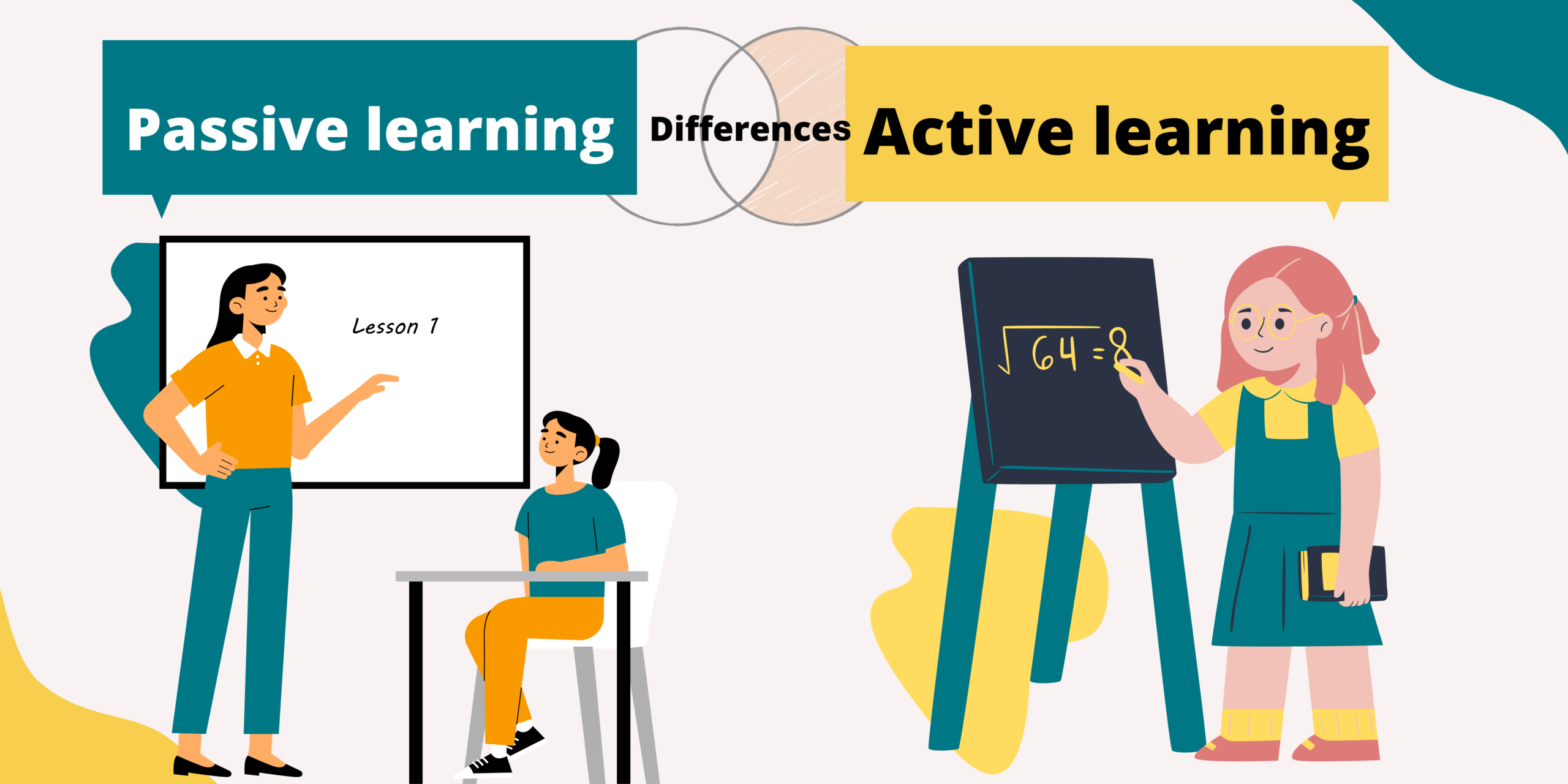
To truly improve how we study, we must first look at the core differences between taking in information and actively using it. The battle of active recall vs passive learning comes down to cognitive engagement. Are you simply letting data pass through your short-term memory, or are you forcing your brain to catalog and retrieve it?
What is Passive Learning and Why Does It Fall Short?
Passive learning is exactly what it sounds like: absorbing information without actively interacting with it or challenging your brain to retrieve it. When you engage in this type of studying, you are essentially letting the material wash over you.
Common examples of passive techniques include rereading chapters, watching lecture videos without taking notes, and highlighting text. It feels incredibly productive because you are spending time with the material. Furthermore, when you reread a passage, your brain recognizes the words, creating an illusion of competence.
However, recognition is not the same as retention. Just because you understand a concept while looking at the answer does not mean you can recreate that answer from scratch. This is the ultimate trap of passive learning methods. They require very little cognitive effort, making them easy to do for hours, but they yield very poor long-term memory results.
The Power of Active Recall Studying
On the other side of the spectrum is active recall. This technique involves deliberately stimulating your memory to retrieve a piece of information without looking at your notes. Instead of putting information into your brain, you are practicing pulling it out.
When you use flashcards, take practice tests, or try to teach a concept to a friend, you are engaging in active recall studying. This method forces your brain to work hard. The very act of struggling to remember something actually strengthens the neural pathways associated with that memory.
Moreover, this approach provides immediate feedback. If you try to answer a question and fail, you instantly know exactly where your knowledge gaps are. This allows you to target your weak areas efficiently, rather than wasting time reviewing things you already know well.
Active Recall vs Passive Learning: Why Active Methods Outperform
The superiority of active over passive methods is deeply rooted in cognitive psychology. Every time you successfully retrieve a memory, you tell your brain that this specific piece of information is important and needs to be stored securely.
Interestingly, this concept extends beyond just passing school exams; it is vital for global workforce readiness. According to reports by the World Bank regarding human capital development, the ability to rapidly acquire, retain, and apply new skills is critical for navigating the modern, fast-paced economy. Lifelong learning requires highly efficient, active study methods, not just passive reading.
Therefore, when you practice pulling facts from your memory, you are building robust cognitive infrastructure. Passive reading simply does not trigger this same level of neurological engagement. While passive learning is great for initially introducing yourself to a topic, it should never be your primary tool for long-term retention.
How to Switch from Passive Learning to Active Recall
Transitioning to a highly effective study routine takes a bit of planning and discipline. The first step is to stop treating your textbook like a novel. Instead of just reading chapter after chapter in a passive state, stop at the end of every page, close the book, and summarize what you just read out loud.
Another fantastic strategy is to generate your own questions. As you sit in a lecture or read an article, write down questions rather than statements. Later, try to use active recall to answer those questions without looking at the source material.
Finally, incorporate practice testing into your weekly routine. Do not wait until the night before the exam to test your knowledge. Use flashcard apps, find past papers, and consistently challenge your brain to retrieve data. It will feel much harder at first, but the time you save in the long run will be well worth the effort.
Frequently Asked Questions (FAQ)
Is passive learning completely useless in your study routine?
Passive learning is not entirely useless, but it is often deeply misunderstood and misused by learners. It actually serves a very specific and necessary purpose at the very beginning of the learning journey. When you are exposed to a completely brand-new topic, you need to gather context, which is where passive methods like listening to a lecture, watching an educational video, or reading a textbook chapter come into play. You cannot actively recall information that you have never seen before.
However, the problem arises when students rely exclusively on these methods to prepare for exams. Once you have a basic grasp of the material, continuing to passively review it yields diminishing returns. Your brain quickly adapts to the familiarity of the text, tricking you into thinking you have mastered the subject. Therefore, you should view passive methods as the introduction to your study session, not the main event. Use it to build a foundation, and then quickly transition into active recall to actually lock that information into your long-term memory.
What are the best active recall tools to replace passive review?
There are several highly effective tools designed specifically to facilitate active recall, ranging from simple analog methods to advanced software. The most classic and accessible tool is the traditional paper flashcard. By writing a question on one side and the answer on the back, you immediately force your brain to retrieve information before flipping the card over.
For those who prefer digital solutions, spaced repetition software (SRS) like Anki is widely considered the gold standard. Anki not only allows you to create digital flashcards but also uses an algorithm to show you those cards just as you are about to forget them. Other excellent digital tools include Quizlet, which offers varied testing modes, and Notion, where you can use toggle features to hide answers beneath questions.
Additionally, a simple blank sheet of paper can be a powerful tool. A technique known as “blurting” involves writing down everything you can possibly remember about a topic onto a blank page, and then checking your notes to see what you missed. This requires no special software and provides an immediate, clear map of your current knowledge gaps compared to passive highlighting.
How often should I practice active recall vs passive reading?
The frequency of your active recall practice is heavily dependent on a concept known as the “forgetting curve,” which dictates how quickly we lose information over time. Ideally, you should not cram all your active retrieval sessions into one day. Instead, you need to space them out to maximize retention.
A highly effective schedule is to read your material passively once, practice active recall immediately after learning the new concept, and then again 24 hours later. After that first successful retrieval, you can space the sessions further apart. You might review the material again three days later, then a week later, and then a month later. This process of gradually increasing the intervals between testing is called spaced repetition, and it works perfectly in tandem with active retrieval.
If you are preparing for a major exam, making active recall a daily habit is incredibly beneficial. Even just dedicating 20 to 30 minutes a day to testing yourself on older material ensures that nothing slips through the cracks. Consistency in self-testing is far more important than the overall duration of a single passive reading session.
Can active recall studying cause burnout?
Yes, active recall can contribute to study burnout if it is not managed correctly. This method requires significantly more cognitive effort than simply reading a book. That makes it naturally more exhausting. You are essentially giving your brain a workout. Just like physical exercise, it requires proper rest for recovery.
To prevent burnout, you should use structured breaks in your study routine. The Pomodoro Technique is a helpful method. It involves studying for 25 minutes and then taking a 5-minute break. During these breaks, step away from your desk. Stretch your body or drink water. This gives your mind time to reset.
It is also important to be realistic about your limits. You may be able to read passively for hours. However, intensive self-testing may only be sustainable for a shorter time. Pay attention to your energy levels. Prioritize sleep and recovery. In the end, the quality of active studying matters more than the quantity of passive review.
Why does active recall feel harder than passive learning?
Active recall feels harder because it is harder. That struggle is exactly why it works so well. When you reread a text, your brain uses recognition memory. This type of memory requires very little energy. The information is already in front of you. Your brain only needs to confirm that it has seen it before.
In contrast, active retrieval is more demanding. You must search your mental storage for the correct information. Then you must reconstruct it without external cues. This process takes more mental energy and focus. Psychologists call this effect “desirable difficulty.” The more effort your brain uses to retrieve a memory, the stronger that memory becomes over time.
It is normal to feel frustrated when you cannot recall an answer immediately. Many students think this means they are not smart enough. Others assume the study method is not working. In reality, this mental effort is part of learning. It is the process of memory formation happening in real time. Embracing the difficulty in active recall vs passive learning is key to long-term academic growth.
Conclusion
Navigating the landscape of education and skill-building can feel overwhelming, but understanding the stark difference between active recall vs passive learning offers a clear path forward. It is easy to fall into the trap of passive strategies because they feel safe, productive, and comfortable. Rereading and highlighting will always require less effort, but they will never provide the deep, lasting comprehension you need to truly master a subject.
By making the deliberate choice to challenge your brain, you take control of your learning process. Embracing techniques like practice testing, flashcards, and the Feynman technique will undoubtedly feel more difficult at first. However, that friction is the ultimate sign of intellectual growth. Every time you force yourself to remember a difficult concept, you are building stronger neural pathways and improving long-term performance.
If you want to explore more practical learning strategies, you can also read our guide on learning English as a second language smart tips: https://theperfectblogger.com/learning-english-as-a-second-language-smart-tips/
Ultimately, your time is your most valuable asset. Stop wasting hours on passive learning methods that only create the illusion of competence. Shift your focus toward active engagement, embrace the mental struggle, and watch as your retention, grades, and overall understanding improve significantly.