Google Pixel vs. Samsung Galaxy: Which Is Better for Night Photography?
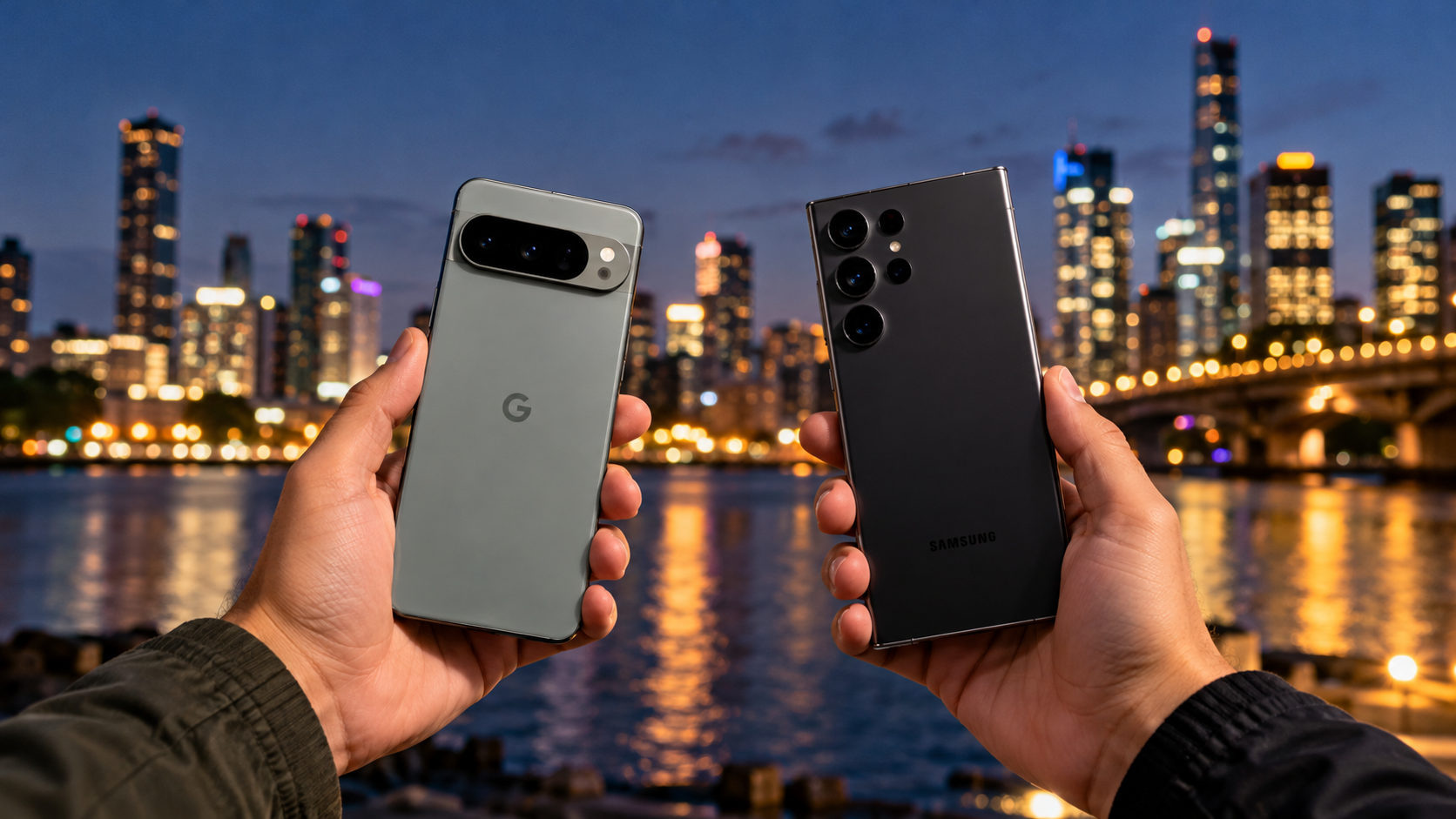
Choosing a smartphone for nighttime photography can be challenging. Many buyers compare Google Pixel vs Samsung Galaxy night photography before upgrading their devices. Both brands offer advanced camera systems designed to capture detailed images in challenging lighting conditions.
Modern smartphones use computational photography to brighten dark scenes and reduce image noise. These technologies combine camera hardware with intelligent software processing. They help capture better photos during evening outings, concerts, and nighttime adventures.
However, Google and Samsung approach photography differently. Google Pixel phones focus on computational photography and consistent image processing. Samsung Galaxy phones offer versatile camera systems, including dedicated zoom lenses on selected models.
The best choice depends on your photography style, budget, and preferred features. This guide compares their low-light performance, camera technology, and everyday usability. It also explains the disadvantages of each brand to help you make an informed decision.
For technical insights into computational photography, visit Google Research.
Which Phone Has the Better Camera, Google Pixel or Samsung?
The better camera depends on the specific phones you compare and your photography preferences. Google Pixel devices are known for computational photography and balanced image processing. They often produce natural-looking skin tones, controlled highlights, and detailed images in difficult lighting.
Samsung Galaxy phones offer considerable camera versatility, particularly across their flagship lineup. Depending on the model, they include high-resolution sensors, ultrawide cameras, and dedicated optical zoom lenses. Samsung’s image processing can produce vibrant colors and strong contrast.
For everyday photography, Pixel phones can deliver reliable results with minimal adjustments. Samsung phones may appeal to users who want greater zoom flexibility and additional camera controls.
When comparing Google Pixel vs Samsung Galaxy night photography, consider more than overall brightness. Look at facial details, shadow quality, color accuracy, and motion blur. A brighter image is not necessarily a better image.
Neither brand wins in every situation. The specific model, lighting conditions, and camera settings can significantly affect the final result.
Software Processing and Real-World Image Quality
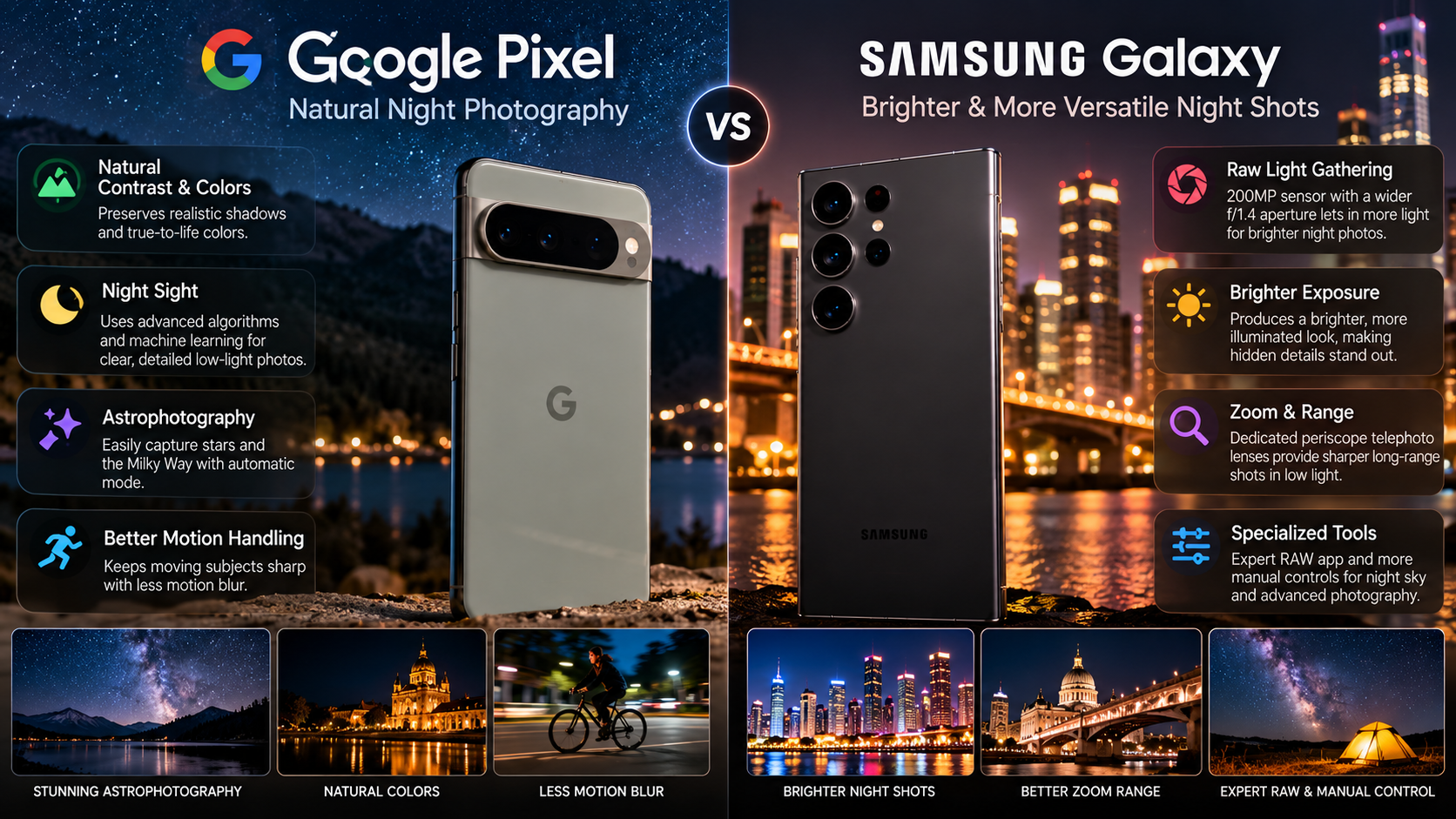
Google uses computational photography to combine image information and improve exposure, detail, and noise reduction. This processing can reveal details in darker areas while maintaining balanced colors. Understanding how these features work is easier with a guide to AI camera technology in smartphones.
Samsung also combines camera hardware with intelligent image processing. Features such as scene optimization and multi-frame processing can improve brightness, contrast, and sharpness.
These approaches can produce different results under identical lighting conditions. Pixel images may appeal to photographers who prefer balanced colors and natural-looking scenes. Samsung images may suit users who enjoy more vibrant colors and dramatic contrast.
However, these differences vary between models and camera settings. Moving subjects, bright streetlights, and reflections can affect both systems.
For a meaningful comparison, examine photographs taken under similar conditions. Check whether faces retain natural details and whether bright lights lose important information. Also inspect dark areas for noise and artificial sharpening.
Real-world samples provide a more useful comparison than specifications alone. They reveal how each phone handles the lighting conditions you encounter most often.
What Samsung Phone Has the Best Camera for Night Photography?
Samsung’s Galaxy Ultra lineup is designed for users who want advanced smartphone photography features. These flagship devices typically combine a main camera with additional lenses for ultrawide photography and zoom. However, camera specifications and capabilities vary by generation.
The best Samsung phone for night photography depends on its sensor, lens aperture, stabilization, and image processing. A capable main camera can capture detailed cityscapes and nighttime portraits. Dedicated zoom cameras can also help photograph distant subjects without relying entirely on digital cropping.
Samsung uses computational photography to improve exposure and reduce visible noise. These features can make nighttime images brighter and more detailed. However, extremely dark conditions can still reduce sharpness and color accuracy.
If nighttime photography is your priority, compare the latest available Galaxy Ultra model with similarly priced Pixel devices. Examine real-world photographs rather than relying solely on megapixel counts.
A phone with more camera features may offer greater flexibility. However, those features do not automatically guarantee better low-light photographs.
Advanced Sensor Technology and Low-Light Capabilities
Camera hardware plays an important role in nighttime photography. Larger sensors can generally collect more light under comparable conditions. Wider apertures also allow more light to reach the sensor.
Samsung combines camera hardware with computational processing to improve exposure and reduce noise. Multi-frame techniques can combine information from several exposures to create a brighter final image. Optical image stabilization can also help reduce camera shake when photographing stationary subjects.
These features are useful for capturing city streets, illuminated buildings, and nighttime landscapes. Dedicated zoom lenses can provide additional framing options when photographing distant subjects.
However, low-light photography still has limitations. Longer exposures can blur moving people, while aggressive noise reduction may soften fine textures. Bright signs and streetlights can also lose detail when exposure is difficult to balance.
For astrophotography, keeping the phone stable can improve results. A tripod is particularly useful when capturing stars or other stationary nighttime scenes.
When comparing Samsung models, evaluate detail, noise, and highlight control alongside overall brightness.
Which Is Better, the Google Pixel or the Samsung Galaxy?
Choosing between Google Pixel and Samsung Galaxy involves more than camera performance. Both brands offer capable smartphones, but their software experiences and hardware features differ.
Google Pixel phones provide a clean Android interface and close integration with Google’s services. Their camera software emphasizes computational photography and convenient automatic shooting. Software support periods depend on the specific model.
Samsung Galaxy phones offer extensive customization and additional productivity features. Compatible devices may include Samsung DeX, advanced multitasking tools, and S Pen support. Their camera systems can also provide greater flexibility through dedicated zoom lenses and multiple shooting modes.
For photography, Pixel may suit users who prioritize straightforward shooting and balanced image processing. Galaxy may appeal to those who value zoom capabilities and additional camera controls.
When comparing Google Pixel vs Samsung Galaxy night photography, consider how each phone performs in your preferred shooting conditions. Also compare battery life, processing performance, display quality, and pricing.
The better overall smartphone is the one that meets your needs beyond photography. Comparing specific models will help you avoid paying for features you rarely use. If you’re considering Google’s next flagship, explore what to expect from the Pixel 11 before making your decision.
Ecosystem Integration and Everyday Usability
Your smartphone’s ecosystem can influence how easily it fits into your daily routine. Google Pixel phones integrate closely with Google Photos, Gmail, Google Drive, and other Google services. If you use Google Photos to back up your pictures, comparing iCloud Photos vs Google Photos can help you understand the differences between their storage and photo-management features.
Samsung Galaxy phones also support Google’s services while offering additional Samsung features. Depending on the model, these include Samsung DeX, Galaxy Buds integration, and tools for connecting with compatible Windows PCs.
Both brands support common Android features, including cloud backups and app synchronization. However, certain functions depend on the device, software version, and accessories you own.
For example, Samsung DeX provides a desktop-style experience on compatible devices. Pixel phones emphasize Google’s software integration and a streamlined Android experience.
Consider which devices and services you already use before making a decision. A small camera advantage may matter less if another phone fits your everyday workflow better.
Ultimately, ecosystem compatibility, software support, and convenience should complement your camera comparison. Choose a device that works well with your existing technology and daily habits.
Is Google Pixel Good for Photography?
Yes, Google Pixel phones can be excellent choices for smartphone photography. Their computational photography systems help improve exposure, color balance, and image detail. This makes them useful for everyday pictures in changing lighting conditions.
Pixel cameras are particularly known for features that simplify photography. Night Sight helps capture brighter images in low light, while Portrait mode creates background blur around suitable subjects. Real Tone is designed to represent a wide range of skin tones more accurately.
These features can help users capture portraits, street scenes, and nighttime photographs without adjusting every setting manually. Image processing also helps balance bright lights with darker surroundings.
However, results depend on the model, lighting conditions, and subject movement. Extremely dark scenes can still lack fine detail, and fast-moving subjects may appear blurred. Digital zoom can also reduce detail compared with optical zoom.
For users who value convenient point-and-shoot photography, Pixel phones offer a compelling combination of hardware and software. Comparing real-world samples is the best way to determine whether a particular model meets your expectations.
Computational Photography and Night Sight Excellence
Google’s Night Sight feature is designed to improve photographs taken in dim lighting. It uses computational photography to combine image information and brighten scenes while managing noise and contrast.
This can help reveal details in nighttime street scenes, indoor environments, and illuminated landscapes. Depending on the device, Night Sight may also support specialized astrophotography modes for photographing the night sky.
The camera can use multiple frames to improve the final image. Image processing helps manage exposure, color, and sharpness. Optical image stabilization and motion-aware processing can also contribute to clearer handheld photographs on supported models.
However, Night Sight cannot eliminate every limitation of low-light photography. Moving people may appear blurred, and extremely dark scenes may still lack fine detail. Bright lights can also lose detail when exposure is difficult to balance.
For stationary subjects, keeping the phone steady can improve results. A tripod may help with longer exposures and astrophotography.
Night Sight is a useful feature for Pixel users, but its effectiveness varies by device and shooting conditions. Testing photographs in your usual lighting environment will help you judge its practical benefits.
What Is the Disadvantage of Google Pixel?
Google Pixel phones have several potential disadvantages worth considering before buying. Their strengths in computational photography do not guarantee the best performance in every category.
Some Pixel models offer less zoom flexibility than competing Galaxy Ultra devices. Battery life, charging speeds, thermal performance, and gaming capabilities also vary between models. Buyers should compare independent tests and review Google Pixel battery life compared with other flagship phones instead of assuming every Pixel has the same limitations.
Google’s Tensor processors support machine learning and on-device AI features. They handle everyday tasks well on many models, but some generations may trail competing flagship chips in demanding gaming or graphics benchmarks.
Repair options and customer support availability can also depend on your location. Before purchasing, check local service coverage, replacement-part availability, and warranty terms.
These drawbacks may not matter to every buyer. Someone who prioritizes photography and Google’s software experience may accept these trade-offs. However, users focused on gaming, battery life, or extensive optical zoom should compare alternatives carefully.
Understanding these limitations helps you make a balanced decision rather than choosing a phone based on camera reputation alone.
Hardware Performance and Processing Limitations
Google’s Tensor processors support features such as computational photography, speech processing, and on-device AI tasks. Their performance varies by generation, so comparisons should focus on specific devices rather than the entire Pixel lineup.
For everyday activities, including messaging, browsing, navigation, and photography, many Pixel phones provide responsive performance. However, demanding games and extended video recording place greater pressure on the processor.
Depending on the device and workload, sustained performance may decrease as the phone manages heat. Battery consumption can also rise during intensive tasks, particularly when recording high-resolution video or using demanding applications.
Other factors matter when evaluating hardware. Battery capacity, display efficiency, software optimization, and charging speed all influence the overall experience.
If performance is a priority, compare independent benchmark results, sustained gaming tests, and battery assessments. Also check the phone’s storage options, software support period, and local repair availability.
For photography-focused users, processor benchmarks alone do not tell the whole story. Real-world camera samples and low-light tests provide more relevant evidence when choosing between Pixel and Galaxy devices.
Final Verdict: Which Phone Should You Choose?
Google Pixel and Samsung Galaxy phones both offer useful advantages for nighttime photography. Your decision should depend on the specific models and the features you value most.
Pixel phones may suit users who want straightforward photography, computational image processing, and natural-looking results. Samsung Galaxy Ultra phones may appeal to photographers who need additional zoom flexibility and versatile camera hardware.
Before purchasing, compare photographs taken in similar lighting conditions. Check how each phone handles faces, moving subjects, bright lights, and dark backgrounds. Also consider battery life, software support, and overall price.
Ultimately, Google Pixel vs Samsung Galaxy night photography is not a comparison with one universal winner. Different models can produce different results, even within the same brand.
Choose the phone that performs best in the situations you photograph most often. Real-world camera samples will help you make a more confident decision.