

Savings Account Handled After You Die: What to Know
Losing a loved one brings immense emotional strain, but practical financial matters quickly follow. Families often struggle to understand how a savings account handled after you die is resolved under banking and estate rules. Many people assume a relative can simply step in, write checks, or withdraw cash for family expenses. However, banks follow strict procedures to protect account holders, beneficiaries, and estates. Rules can also vary by state and by the account agreement.
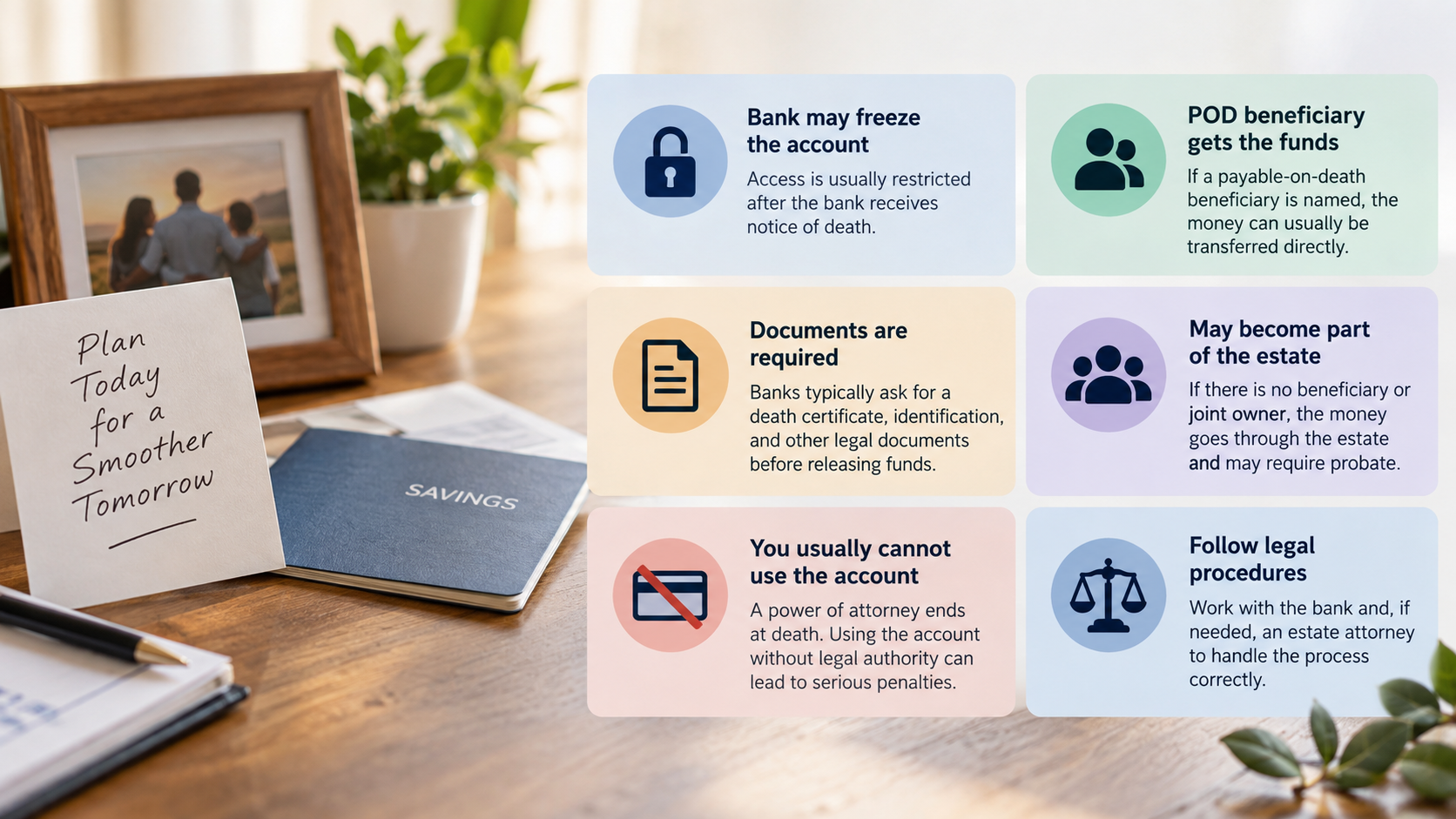
Once a bank receives formal notice of an account holder’s death, access to an individual account may be restricted. The exact process depends on whether the account has a beneficiary, joint owner, trust arrangement, or other instructions. Institutions may require a death certificate and additional legal documents before releasing funds. The Federal Deposit Insurance Corporation (FDIC) provides information about deposit insurance and how bank accounts are protected.
Understanding these procedures can help surviving relatives avoid unauthorized transactions and estate disputes. Financial institutions generally require formal documentation before releasing funds to an estate representative or eligible beneficiary. Knowing the process can make this difficult transition more manageable.
What happens to money in a savings account when you die?
When an account holder dies, what happens to the money depends largely on the account’s ownership and beneficiary instructions. A bank may restrict access to a sole-owner account after receiving notice of the death. If the account has a valid payable-on-death (POD) beneficiary, the balance may generally pass directly to the named beneficiary after the required documentation is provided. This transfer can avoid probate for that account. Choosing appropriate places to hold money is also important, so consider these best places to keep your savings safely.
If there is no beneficiary or surviving joint owner, the money typically becomes part of the deceased person’s estate. The executor or court-appointed administrator may then need to provide documents such as the death certificate and letters showing legal authority to act for the estate.
State law determines how estate assets are handled. The personal representative may need to pay valid debts and distribute remaining assets according to the will or applicable inheritance laws. The bank’s procedures also depend on the account agreement and applicable regulations.
The Role of Payable-on-Death Designations
A payable-on-death designation can provide a straightforward way to transfer eligible bank funds after the owner’s death. The account owner names a beneficiary while alive, and the beneficiary generally receives the remaining balance after the bank verifies the death and required documentation. This arrangement can allow the funds to pass outside the probate process.
The beneficiary usually needs to provide documentation such as a certified death certificate and acceptable identification. The bank may also require additional forms before releasing the money. Requirements differ among financial institutions and jurisdictions.
POD designations can be useful because they clearly identify who should receive the account balance. They may also help beneficiaries avoid delays associated with ordinary probate administration. However, a POD designation does not automatically override every legal claim against an estate.
Account owners should review beneficiary information regularly, especially after marriage, divorce, births, or deaths in the family. Keeping beneficiary details current can reduce confusion later. It is also important to understand how the designation interacts with a will, trust, and state law.
Can I use my father’s bank account after his death?
Generally, you cannot use your father’s sole bank account after his death simply because you are his child. Any power of attorney he gave you during his lifetime generally ends when he dies. That means you normally cannot continue using his debit card, checks, or online banking credentials after his death. For broader guidance on account access and related banking matters, see banking tips and tricks.
Using the account without legal authority can create serious problems, even if your intention is to pay legitimate expenses. The estate’s authorized representative should normally handle funeral costs, household bills, and other estate expenses according to applicable state procedures.
The situation can be different if you were a joint account owner. Depending on the account agreement and state law, a surviving joint owner may have rights to the remaining funds. However, joint ownership does not always produce identical results in every jurisdiction. Couples who share finances may also benefit from understanding why couples who share bank accounts stay together longer.
If you are responsible for handling your father’s estate, contact the bank and ask which documents it requires. The institution may request a certified death certificate, court-issued authority, identification, and other estate documents. Following the bank’s process helps protect both the estate and surviving family members.
Legal Penalties for Accessing Deceased Accounts
Using a deceased parent’s bank credentials without legal authority can create significant financial and legal consequences. The seriousness depends on the circumstances, the amount involved, and applicable state law. A bank may reject unauthorized transactions, close access, or investigate withdrawals made after the account holder’s death.
Other heirs or the estate’s creditors may also challenge transactions that reduced the estate’s assets. If money was withdrawn improperly, an executor or beneficiary could seek repayment through the appropriate legal process.
These risks exist even when someone believes the money should eventually belong to them. A person’s expectation of inheritance does not automatically provide immediate authority to access an account. Avoiding common saving mistakes can also help prevent unnecessary financial complications.
The safer approach is to notify the bank about the death and follow its estate procedures. If you are the executor or administrator, provide the documents requested by the financial institution. If another person is the authorized beneficiary or joint owner, the bank can explain what documentation that person needs.
When substantial money or competing inheritance claims are involved, obtaining advice from an estate attorney can help prevent costly mistakes. State-specific rules matter, so avoid relying solely on general online guidance.
Can I use my mom’s bank account after she dies?
You generally cannot use your mother’s individual bank account after her death unless you have a separate legal right to the funds. Being her child does not automatically make you an authorized account user. Likewise, knowing her password or having permission to use her account while she was alive does not normally continue to provide authority after death.
If your mother named you as a joint owner, the account may be handled differently. Depending on the account agreement and state law, a surviving joint owner may receive rights to the account balance. A payable-on-death beneficiary may also receive funds directly after satisfying the bank’s documentation requirements.
If neither arrangement applies, the account may become part of your mother’s estate. The executor or administrator can then work with the bank to collect and distribute the funds according to the applicable estate process.
Some states also provide simplified procedures for qualifying estates. These may allow eligible heirs to claim certain assets without going through full probate. Requirements and asset limits vary considerably by state.
Before withdrawing money, contact the bank and determine your legal status. This step can prevent unauthorized transactions and reduce disputes among family members.
Utilizing Small Estate Affidavits for Quick Settlement
A small estate affidavit can provide a simplified method for transferring certain assets when an estate falls below the applicable state threshold. However, the process is not available everywhere, and eligibility requirements differ significantly between states.
Where permitted, an eligible heir or successor may submit the affidavit along with supporting documents. These documents can include the death certificate, identification, proof of relationship, and information about the deceased person’s assets. The financial institution reviews the documents before deciding whether it can release the funds.
Small estate procedures can reduce the time and expense associated with full probate administration. They may be particularly useful when the estate is modest and there are no complicated ownership disputes.
However, an affidavit does not automatically give someone unrestricted access to every account. The account’s ownership structure, beneficiary designation, outstanding debts, and state law can still affect the outcome.
Before relying on this process, check the requirements in the state where the estate is being administered. The bank may also have its own forms and verification procedures. When significant assets or competing claims exist, professional legal guidance can help determine whether a small estate affidavit is appropriate.
What happens to my money in my mom’s bank account if she dies?
If you deposited your own money into your mother’s individual bank account, recovering those funds can become complicated after her death. The bank may treat the account as belonging to the named account holder unless the account documents establish another ownership arrangement. Simply stating that some of the money was yours may not be enough. Understanding assets and liabilities can also help clarify how different financial interests may be treated.
The exact legal outcome depends on the account agreement, the source of the deposits, state law, and the evidence available. If you can demonstrate that specific funds belonged to you, you may have a basis for making a claim against the estate.
Useful evidence can include bank statements, deposit records, cancelled checks, payroll records, wire-transfer receipts, and written agreements. These records can help establish where the money came from and why it was deposited into the account.
You should raise the issue with the estate’s executor or administrator rather than withdrawing the money yourself. If the representative disputes your claim, the probate court may need to determine ownership.
Because commingled funds can be difficult to trace, maintaining separate accounts for your own money is generally simpler. Clear records can make ownership easier to establish if a family member later dies. Building good financial habits that build wealth can also encourage clearer and more consistent money management.
Proving Ownership of Commingled Personal Funds
Recovering personal money from a deceased person’s account usually depends on your ability to establish a clear documentary trail. The stronger the records connecting your money to specific deposits, the easier it may be to support your claim. However, no single document guarantees that a court will recognize the funds as yours.
Useful evidence may include:
- Bank statements showing deposits and transfers.
- Payroll records showing the source of your income.
- Cancelled checks or electronic payment records.
- Wire-transfer confirmations and deposit receipts.
- Written agreements explaining why money was placed in the account.
- Messages or other records showing the intended ownership of the funds.
Submit relevant evidence to the executor or administrator handling the estate. If the estate representative rejects your claim, you may need to present the evidence through the appropriate probate procedure.
Acting quickly can matter because the estate administrator may use estate assets to pay valid debts and expenses. However, you should not remove money yourself simply because you believe it belongs to you. Unauthorized withdrawals can create additional disputes.
For significant amounts, consider consulting an estate attorney in the relevant state. State law determines how courts ultimately resolve ownership disputes and creditor claims.
Frequently Asked Questions
How long does a bank freeze an account after someone dies?
How a savings account handled after you die depends on local laws, account ownership, and beneficiary arrangements. Banks generally restrict individual accounts until authorized representatives provide required documentation.
Does a savings account automatically go to a surviving spouse?
How a savings account handled after you die depends on whether the spouse is a joint owner or named beneficiary. Otherwise, the balance may pass through probate according to applicable inheritance laws.
What happens to an unclaimed bank account after death?
Understanding how a savings account handled after you die works is important because applicable unclaimed-property or escheatment laws may eventually transfer unclaimed funds to the government.
Can a bank take money from a deceased person’s account for debts?
When considering how a savings account handled after you die, outstanding debts can affect the remaining balance. Depending on local law and the bank’s rights, certain debts may be recovered before beneficiaries receive funds.
Conclusion
Navigating how a savings account handled after you die is settled requires strict adherence to banking regulations and local probate rules. While the urge to cover urgent household expenses using existing debit cards or checkbooks is understandable, unauthorized withdrawals invite serious legal trouble. An individual account freezes upon the owner’s death, shielding assets until a court-appointed executor, small-estate affiant, or designated beneficiary completes official verification.
If you commingled personal funds in a parent’s account, prepare paper records immediately to validate your ownership through the probate court. To prevent these complications for your own family, review your savings accounts today. Add payable-on-death beneficiaries or establish joint ownership where appropriate. Taking proactive estate planning steps ensures your hard-earned assets transfer quickly, safely, and without unnecessary legal burdens for your loved ones.