
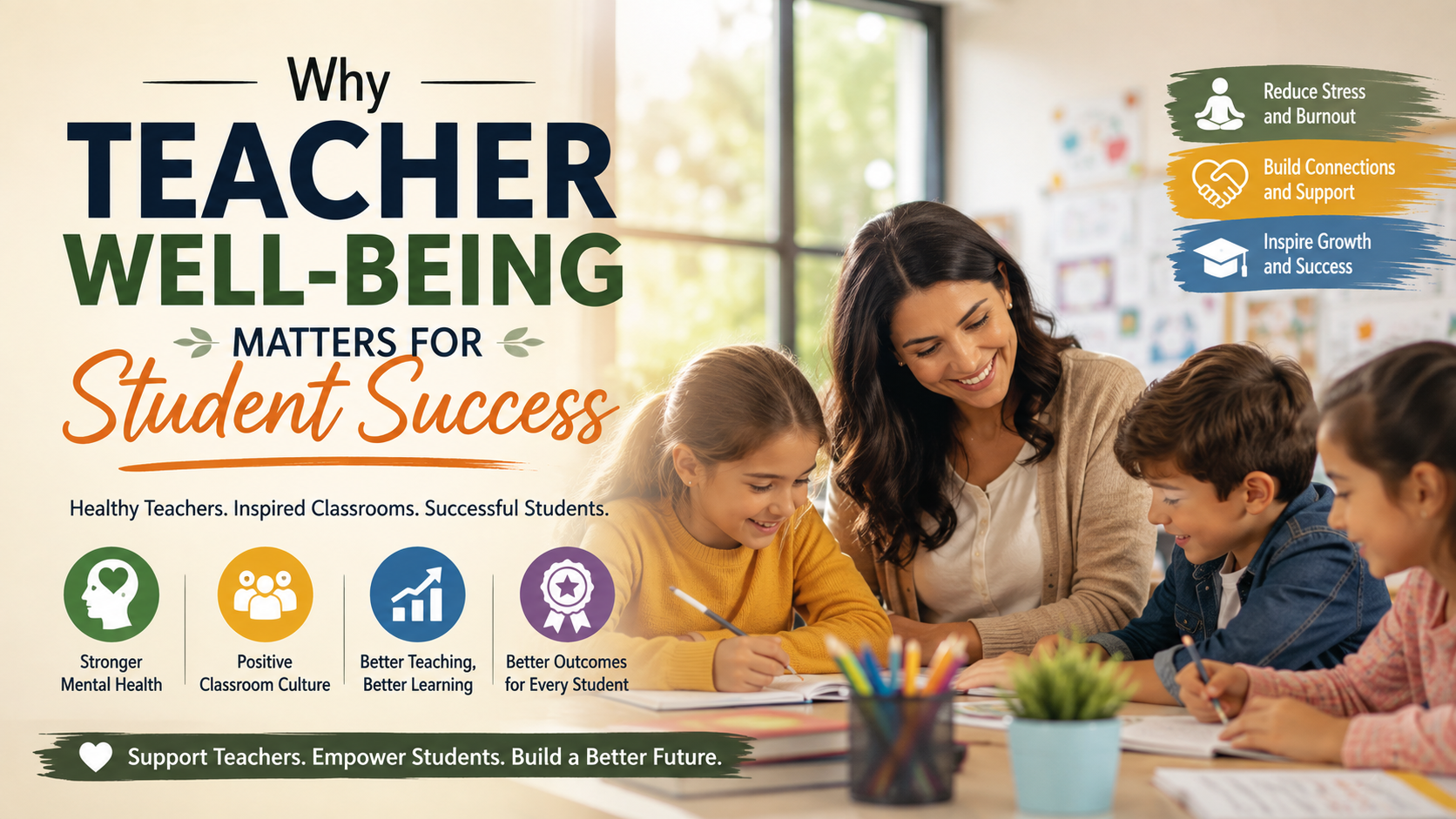
Why Teacher Well-being Matters for Student Success
When educators walk into a classroom carrying heavy emotional burdens, the entire learning atmosphere shifts. Teacher well-being is not just a personal luxury; it serves as the invisible foundation of any successful educational ecosystem. Without adequate mental and emotional support, instructors struggle to maintain the patience and focus required to guide young minds effectively. According to research published by the World Health Organization, mental health in professional environments directly dictates productivity, resilience, and interpersonal relationship quality. This article explores why teacher well-being is important, how instructors help students achieve success, why teachers are uniquely important for learners, methods to support student achievement, and the direct impact of teacher mental health on students.

Why Is Teacher Wellbeing Important?
Teacher wellbeing is vital because an educator’s emotional state can shape the overall classroom climate. When teachers feel supported, energized, and mentally balanced, they have more emotional capacity to manage challenges and build positive relationships with students. This creates a stronger foundation for effective teaching and learning.
By contrast, teacher burnout can cause emotional exhaustion, reduced motivation, and detachment. These effects can make classroom management harder and weaken connections with learners. Supporting teacher wellbeing helps educators remain engaged throughout the school year.
Healthy teachers can also create safe, welcoming classrooms where students feel valued and understood. This positive environment can encourage participation, confidence, and academic growth. Schools that prioritize educator wellness may also reduce chronic workplace stress and staff turnover.
Teacher wellbeing is therefore more than an individual concern. It supports classroom stability, student development, staff relationships, and the wider school community. Investing in teacher health can create lasting benefits for both educators and learners.
The Ripple Effect of Educator Health on School Culture
A healthy educator can influence the wider school culture through everyday interactions and professional behavior. Understanding different education systems around the world can also help schools reflect on how learning environments are designed. When teachers manage stress effectively and practice healthy self-care, they demonstrate positive emotional habits that students can observe and learn from. This makes teacher wellbeing an important part of a healthy educational environment.
Educators who feel supported are also more likely to communicate openly with colleagues. They can share teaching strategies, discuss challenges, and provide practical support when difficulties arise. This collaborative approach can strengthen professional relationships across the school.
Positive educator health can also influence how schools respond to pressure. Teachers with better emotional resources may handle classroom challenges more constructively. They can contribute to a calmer and more respectful learning environment.
Schools can support this process through manageable workloads, professional development, supportive leadership, and opportunities for staff connection. These measures help create a culture where educators feel valued rather than isolated.
Ultimately, educator mental health affects more than individual teachers. It can shape teamwork, classroom relationships, student experiences, and the overall atmosphere of the school.
How Can Teachers Help Students Achieve Success?
Teachers help students achieve success by creating structured learning experiences, providing useful feedback, and encouraging intrinsic motivation. Effective educators understand that students have different abilities, learning needs, interests, and challenges. They can adjust instruction to help learners understand important concepts without lowering expectations.
Teachers also play an important role in developing skills beyond academic knowledge. Through classroom discussions, projects, and practical activities, educators can strengthen critical thinking, communication, creativity, and problem-solving abilities. These skills can prepare students for future academic and professional challenges.
Recognizing progress is equally important. Celebrating small achievements can increase student confidence and encourage continued effort. At the same time, identifying learning gaps early allows teachers to provide targeted support before problems become more difficult.
Consistent guidance helps students turn broad educational goals into manageable steps. Teachers can establish clear expectations, monitor progress, and explain how students can improve.
When students receive both academic guidance and encouragement, they are more likely to develop confidence and ownership of their learning. This combination makes teachers central to long-term student success.
Creating Personalized Pathways for Every Learner
Students do not learn in exactly the same way or at the same pace. Creating personalized learning pathways allows teachers to respond to these differences while maintaining clear academic expectations. This approach can make classroom instruction more inclusive and effective.
Educators can use assessments, classroom observations, and student feedback to identify individual learning needs. They can then adjust activities, explanations, resources, or levels of difficulty accordingly. These strategies are often described as differentiated instruction.
Advanced learners may benefit from more challenging tasks that encourage deeper thinking. Students who need additional support may require guided practice, smaller learning steps, or targeted interventions. The goal is not to create completely separate lessons for every student. Instead, teachers adapt important parts of instruction where necessary.
Personalized support can also improve student confidence. Learners are more likely to participate when lessons match their current abilities and provide achievable challenges.
By recognizing individual strengths and learning gaps, teachers can help more students make meaningful progress. This customized approach supports academic achievement, engagement, confidence, and long-term learning development.
Why Is a Teacher Important for Students?
A teacher can serve as an anchor, mentor, and guide during a child’s important developmental years. Educators do more than deliver academic content. They can provide consistency, encouragement, emotional support, and structure within the school environment.
Teachers also help students develop important personal qualities. Through everyday classroom interactions, they can encourage empathy, responsibility, curiosity, communication, and respect for others. These lessons can influence how students approach relationships and challenges beyond school.
A dedicated teacher may also recognize abilities that students have not yet identified themselves. Encouraging a student’s strengths can help build confidence and motivate them to explore new opportunities. Positive teacher-student relationships can therefore have an influence that extends beyond individual lessons.
Teachers can also help students understand that mistakes are part of learning. Constructive feedback gives learners opportunities to improve without viewing failure as a permanent limitation.
The importance of teachers therefore extends beyond academic instruction. Teachers support student development by combining knowledge, guidance, encouragement, and consistent expectations. Their influence can help students become more confident, capable, and motivated learners.
Fostering Emotional Security in the Classroom
A classroom should provide students with enough emotional security to ask questions, make mistakes, and participate without unnecessary fear. Teachers play an important role in creating this environment through respectful communication, active listening, fair treatment, and consistent expectations.
Students are more likely to engage when they believe their teacher will respond to mistakes constructively. Instead of embarrassing learners for incorrect answers, educators can use errors as opportunities for explanation and improvement. This approach can make classroom participation feel safer.
Consistency also matters. Clear routines and predictable expectations can reduce uncertainty and help students understand what is expected of them. Teachers can reinforce this security by treating students fairly and responding calmly to challenging situations.
An emotionally supportive classroom does not mean removing academic standards. Students still need appropriate challenges and accountability. The difference is that they receive these expectations within a respectful environment.
Strong teacher-student relationships can therefore support both emotional wellbeing and learning. When students feel respected and secure, they may become more willing to participate, take intellectual risks, and develop confidence in their abilities.
How Can Teachers Support Student Success?
Teachers support student success by establishing clear expectations, maintaining communication, and providing consistent academic and emotional encouragement. Structured classroom routines can help students understand responsibilities, manage their time, and stay focused on important learning goals.
Regular feedback is another important part of effective teaching. Instead of relying only on grades, teachers can explain what a student did well and identify specific areas for improvement. Actionable feedback gives learners a clearer path toward better performance.
Teachers can also monitor student progress and respond when difficulties appear. Early support can prevent small learning gaps from becoming larger academic problems. Depending on the situation, this may involve additional practice, adjusted instruction, or collaboration with other school professionals.
Family communication can strengthen these efforts. Parents and caregivers often provide valuable information about a student’s needs, behavior, and progress outside school. Open communication helps educators and families work toward consistent expectations.
Ultimately, supporting student success requires more than delivering lessons. Teachers guide students through academic challenges while helping them develop responsibility, confidence, organization, and independent learning habits.
Building Strong Partnerships With Families
Effective education becomes stronger when teachers and families communicate regularly. Students receive support from both environments, so consistent expectations can make academic and behavioral development easier to manage.
Teachers can build these partnerships through regular updates, parent-teacher meetings, progress discussions, and useful learning resources. Communication does not need to focus only on problems. Sharing positive progress can also strengthen trust between educators and families.
Families can provide information that teachers may not see in the classroom. They may notice changes in motivation, study habits, confidence, or behavior at home. Teachers can use this information to understand students more fully and adjust their approach when appropriate.
At the same time, educators can help families understand academic expectations and suggest practical ways to support learning at home. Clear communication prevents misunderstandings and encourages shared responsibility.
Strong family-school partnerships can also help students receive consistent messages about effort, accountability, attendance, and perseverance. When adults work together, students are less likely to receive conflicting expectations.
A collaborative relationship does not require families and teachers to agree on everything. It requires respectful communication and a shared commitment to the student’s development and long-term success.
How Does Teacher Mental Health Impact Students?
Teacher mental health can influence student wellbeing, classroom relationships, and learning conditions. Educators experiencing persistent stress, anxiety, or emotional exhaustion may have less capacity to manage classroom demands. This can affect communication, patience, engagement, and classroom management.
Students can also respond to the emotional atmosphere around them. When a classroom feels tense or unpredictable, some learners may become distracted, anxious, withdrawn, or disruptive. However, these outcomes are not automatic, and teacher mental health is only one factor affecting student behavior and achievement.
By contrast, emotionally healthy teachers may be better positioned to provide calm, consistent support. Their ability to regulate their own emotions can help create a more stable classroom environment. This can support positive interactions and productive learning.
Schools should therefore treat teacher mental health as part of overall educational wellbeing. Support can include reasonable workloads, access to professional resources, supportive leadership, and opportunities to discuss workplace challenges.
Improving educator wellbeing does not guarantee higher grades or eliminate classroom problems. However, supporting teachers can strengthen the conditions in which effective teaching, healthy relationships, and student wellbeing can develop.
Understanding Emotional Contagion in the Classroom
Emotional contagion describes the tendency for people to unconsciously respond to and mirror emotions expressed by others. In classrooms, this concept can help explain why an educator’s emotional state may influence the atmosphere experienced by students.
Teachers interact with students for many hours each week. Their tone of voice, facial expressions, reactions, and communication style can therefore affect classroom dynamics. A visibly frustrated educator may contribute to tension, while a calm and supportive teacher can help create a more settled environment.
However, emotional contagion should not be treated as a simple cause-and-effect relationship. Student emotions are influenced by many factors, including family circumstances, peer relationships, academic pressure, personality, and individual experiences.
Teachers cannot be expected to remain positive at all times. Teacher wellbeing is not about hiding difficult emotions. Instead, it involves having healthy ways to recognize stress, regulate emotions, and seek support when needed.
Understanding emotional contagion can help schools recognize why educator wellbeing matters. Supporting teachers can contribute to healthier classroom relationships while giving students a more stable environment for learning, participation, and social development.
FAQ SECTION
What are the main signs of teacher burnout?
Teacher burnout typically manifests as chronic emotional exhaustion, depersonalization or cynicism toward students, and a sharp decline in personal accomplishment. Educators experiencing burnout often feel constantly overwhelmed, suffer from physical symptoms like headaches or insomnia, and dread going to work each day. Recognizing these early warning signs allows schools to intervene and provide necessary mental health resources.
How does administrative support affect teacher well-being?
Administrative support serves as a critical protective factor against educator burnout. When school leaders listen to teacher concerns, provide adequate resources, and protect instructional time, staff members feel valued and respected. Strong leadership builds a collaborative culture where teachers can focus on instruction rather than administrative burdens, greatly enhancing overall job satisfaction and retention rates.
Can student behavior impact a teacher’s mental health?
Persistent behavioral challenges in the classroom can significantly erode an educator’s mental health over time. Managing frequent disruptions drains emotional reserves and increases daily stress levels. Providing teachers with behavioral management training and robust multi-tiered systems of support helps mitigate this strain, ensuring educators maintain their well-being while managing diverse classrooms.
What self-care strategies work best for busy educators?
Effective self-care for educators involves setting clear boundaries between work and personal life, practicing mindfulness, and engaging in regular physical exercise. Establishing a reliable peer support network also helps teachers process daily stressors. Prioritizing adequate sleep and nutrition ensures instructors have the sustained physical and mental energy required for demanding teaching roles.
Conclusion
Teacher well-being remains the invisible engine driving student achievement, emotional stability, and school culture. When educators are mentally healthy and supported, they can foster safe, engaging environments where learners truly flourish. Ignoring instructor mental health leads directly to burnout, diminished classroom quality, and struggling students. Prioritizing teacher well-being is an essential investment in the future of education. Educational leaders, policymakers, and communities must unite to provide the resources, respect, and mental health support our teachers deserve, ensuring both educators and students succeed together.