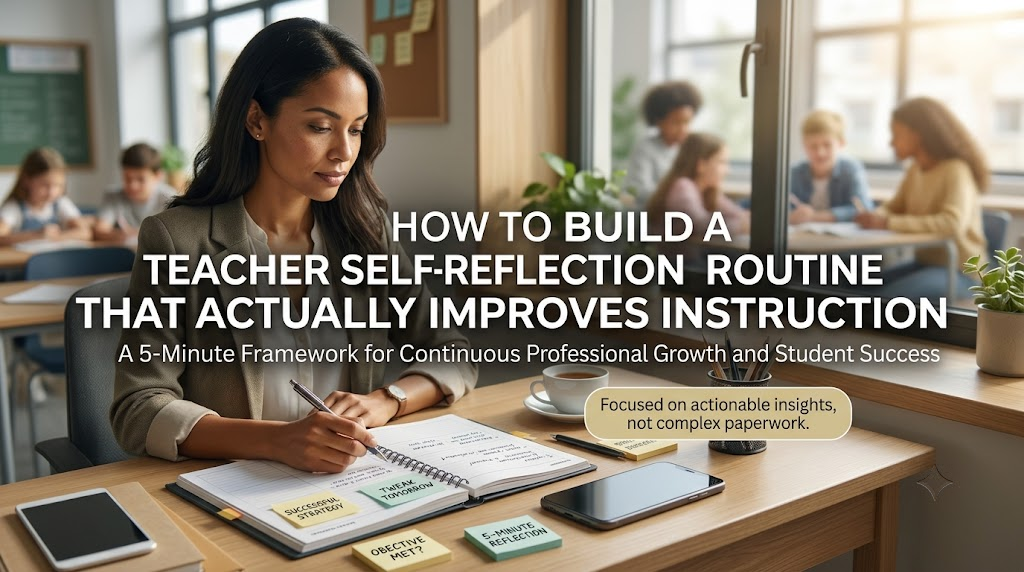
How to Build a Teacher Self-Reflection Routine That Actually Improves Instruction
Teaching is an extraordinarily fast-paced profession. Educators rarely get a quiet moment to digest how a lesson unfolded. Most teachers race from one class to the next without stopping. They manage administrative demands, grade papers, and handle student behavior. Consequently, they seldom evaluate what actually worked. Building a sustainable teacher self-reflection routine breaks this exhausting cycle. It provides an intentional pause to analyze your practice. You can then make deliberate adjustments that directly boost student learning. According to research from the U.S. Department of Education, continuous professional reflection directly improves teaching practices and student outcomes.
Without a structured reflection habit, daily teaching becomes a survival exercise. You might repeat ineffective strategies simply because you lack the time to pause and re-evaluate. Reflection fundamentally changes this dynamic. It turns everyday classroom experiences into meaningful growth opportunities. You will recognize instructional patterns, adjust lesson pacing, refine questioning techniques, and support struggling students before they fall behind.
Establishing a teacher self-reflection routine does not require hours of extra work. In fact, a five-minute micro-reflection process yields powerful long-term results without causing burnout. This guide breaks down practical steps to help you build a reflective practice that improves instruction.
How to Support Teachers to Improve Their Practice Through Self-Reflection
Supporting teachers to improve their practice through self-reflection begins with creating a school culture built on trust, openness, and continuous learning. Educators are more willing to reflect honestly when they know the goal is professional growth rather than evaluation or criticism. School leaders and instructional coaches should provide dedicated time for reflection, constructive feedback, and opportunities for meaningful collaboration.
Administrators can strengthen this culture by modeling their own learning journey. Sharing professional challenges and growth goals encourages teachers to do the same without fear of judgment. Providing structured reflection prompts, lesson review templates, and coaching conversations also makes the process more practical and consistent.
Teachers benefit most when reflection becomes part of their routine instead of an occasional activity. Reviewing classroom experiences, student engagement, and instructional decisions helps identify strengths and areas for improvement. Over time, this habit builds confidence, sharpens teaching strategies, and improves student outcomes. When schools support reflective practice collectively, self-reflection becomes a shared commitment to educational excellence rather than an individual responsibility.
Providing Collaborative Coaching Circles
Collaborative coaching circles create safe spaces where teachers can reflect together, exchange ideas, and learn from one another. Small peer groups encourage educators to discuss classroom experiences, instructional successes, and ongoing challenges in a supportive environment.
These discussions promote accountability without creating pressure. Teachers gain valuable insights by observing colleagues, sharing feedback, and exploring different teaching approaches. Exposure to diverse perspectives often reveals practical solutions that may not emerge through individual reflection alone.
Regular coaching meetings also strengthen professional relationships and reduce feelings of isolation. As trust develops, educators become more comfortable discussing setbacks alongside achievements. This collaborative approach transforms teacher self-reflection into an ongoing community practice that supports continuous professional learning, stronger instructional strategies, and improved student success.
How to Improve Self-Reflection Skills?
Improving self-reflection skills takes consistent practice, patience, and a willingness to examine teaching objectively. Many educators struggle at first because they focus too heavily on mistakes or keep their reflections too general. A more effective approach is to concentrate on one specific area at a time, such as questioning techniques, student participation, lesson pacing, or classroom transitions.
Seeking feedback from mentors, instructional coaches, or trusted colleagues adds valuable perspectives that personal reflection alone may overlook. Observing experienced teachers can also introduce practical strategies worth adapting in your own classroom.
As reflective habits become more consistent, teachers naturally develop greater self-awareness and confidence. They begin making evidence-based instructional decisions instead of relying on assumptions. Over time, self-reflection evolves from a simple checklist into a powerful habit that supports continuous improvement, stronger teaching practices, and better learning experiences for every student.
Embracing Objective Data Over Emotion
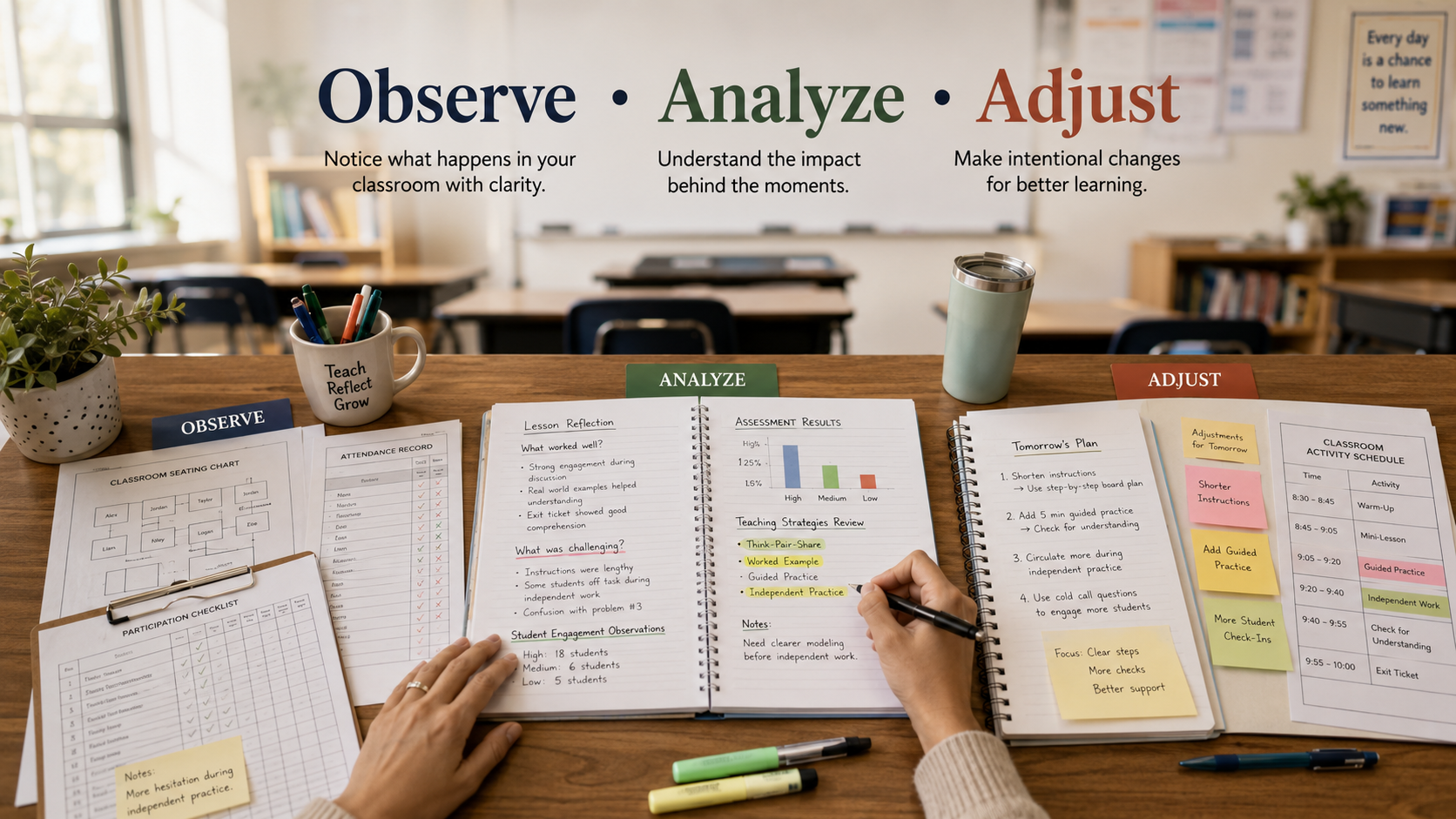
Objective evidence strengthens the quality of teacher reflection by reducing the influence of emotion. Instead of relying only on personal feelings, educators should review measurable classroom data whenever possible.
Useful evidence includes participation rates, formative assessment results, assignment completion, attendance patterns, and student feedback. These indicators help identify trends that may otherwise go unnoticed.
Using data keeps reflection balanced and constructive. Teachers can recognize genuine strengths while pinpointing areas that require improvement. This evidence-based approach builds confidence, supports better instructional decisions, and ensures professional growth is guided by observable classroom outcomes rather than temporary emotional reactions.
Frequently Asked Questions
What is the best time of day for a teacher self-reflection routine?
The best time for teacher self-reflection is immediately after the school day while classroom experiences remain fresh. Spending just 10 minutes reviewing lessons helps preserve important details before they are forgotten.
Some educators prefer reflecting in the morning while planning upcoming lessons, followed by a brief review at the end of the day. Both approaches can be effective if practiced consistently.
The most important factor is choosing a time that fits naturally into your routine. A consistent schedule makes reflection easier to maintain and turns it into a sustainable professional habit.
How often should teachers engage in self-reflection?
Teachers benefit most from combining brief daily reflections with a more detailed weekly review. Daily reflections capture immediate classroom experiences and require only a few minutes.
Weekly sessions provide time to analyze broader teaching patterns, assessment data, student progress, and instructional effectiveness. Looking at both short-term observations and long-term trends creates a more complete picture of classroom performance.
This balanced routine supports continuous professional growth without adding unnecessary pressure to an already demanding teaching schedule.
Can self-reflection help with classroom management issues?
Yes. Self-reflection is an effective way to improve classroom management because it helps teachers identify the underlying causes of student behavior rather than focusing only on the outcomes.
Reflective teachers evaluate lesson pacing, classroom routines, seating arrangements, transitions, communication, and engagement strategies. These observations often reveal practical adjustments that reduce disruptions and improve student participation.
Making small, intentional changes based on reflection creates a more positive classroom environment, strengthens teacher-student relationships, and supports better learning for the entire class.
Do I need special software to maintain a teaching journal?
No. You do not need specialized software to keep a teaching journal. A notebook, word processor, note-taking app, or cloud document can all support effective reflection.
The best tool is the one you will use consistently. Some teachers prefer digital journals because they are searchable and easy to organize. Others enjoy handwritten notes because they encourage deeper focus and fewer distractions.
Whichever format you choose, regular use matters far more than the technology itself. Consistent journaling helps teachers monitor progress, recognize patterns, and strengthen their reflective practice over time.
CONCLUSION
Building a practical teacher self-reflection routine is one of the most impactful steps you can take to foster long-term professional growth and elevate your daily teaching practice. Stepping away from burdensome administrative paperwork allows you to focus on quick, actionable insights. You transform routine classroom experiences into a powerful personal development engine. Taking a few minutes to observe student reactions, analyze your instructional delivery, and make targeted adjustments allows you to continuously refine your craft. Over time, these minor daily improvements accumulate into significant gains in lesson clarity, classroom management, and overall student achievement.
An effective reflection habit should feel light, manageable, and directly useful to your daily workflow. Use sticky notes on your desk, annotate your weekly lesson planner, or record quick voice notes on your commute home. This reflective process also plays a vital role in building a school culture where progress is valued and continuous learning becomes the norm for both teachers and students. The underlying goal remains the same: gather clear classroom evidence and apply small, thoughtful adjustments to tomorrow’s instruction. Sustainable growth is never about re-inventing your teaching style overnight. Instead, it is about making continuous, incremental progress through deliberate daily reflection.
Commit to starting small today. Pick a single class period tomorrow, observe how your students respond during independent work, and identify one straightforward change to implement in your next lesson. Establishing a teacher self-reflection routine now gives you full ownership over your professional development and creates a far more dynamic learning environment for your students.