
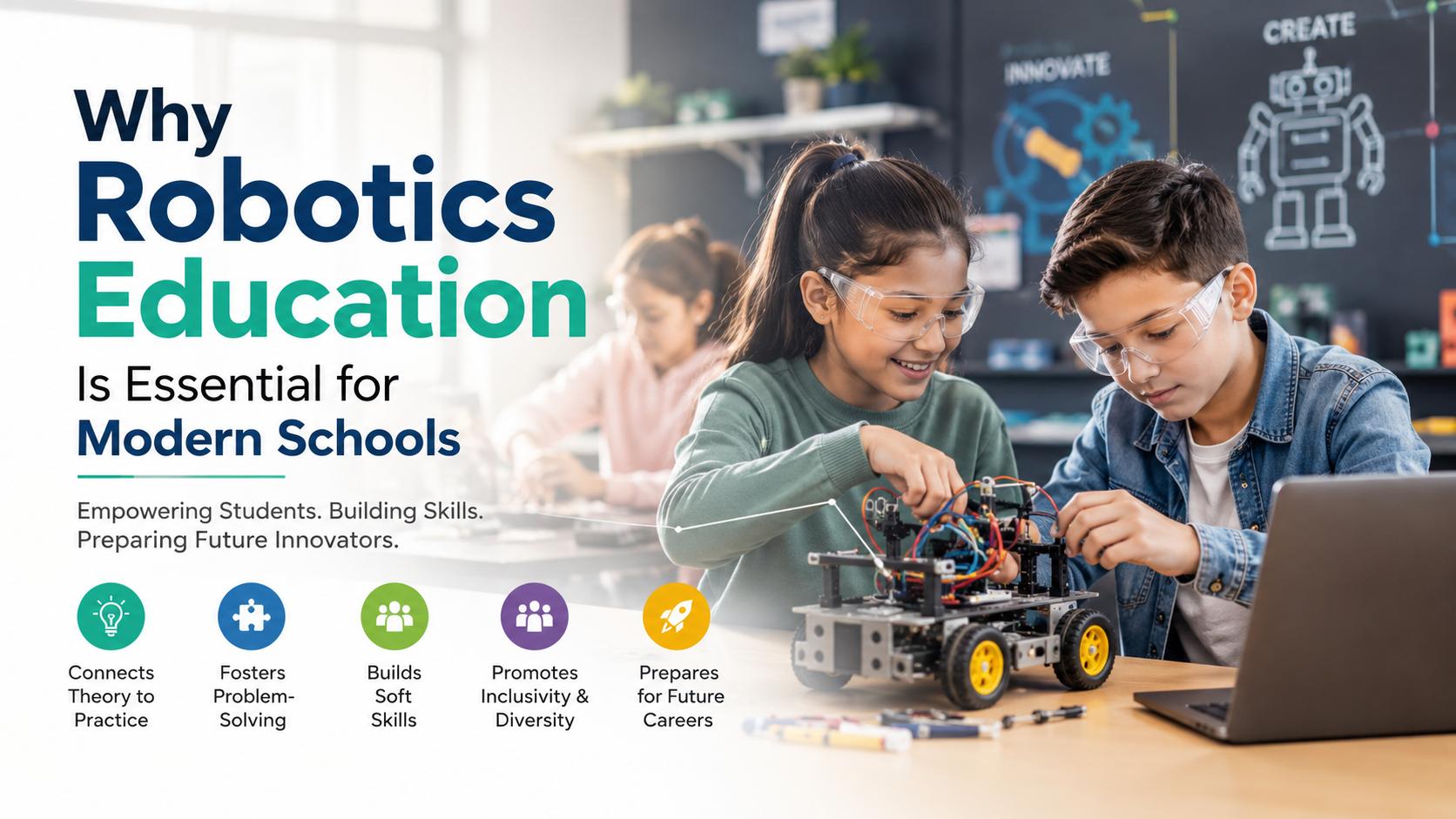
Why Robotics Education Is Essential for Modern Schools
The modern classroom is changing fast today. As a result, robotics education in modern schools is no longer an optional elective. Instead, it has become a core educational pillar. Furthermore, as automation and digital tools redefine the workplace, schools must prepare students effectively. They need both technical knowledge and creative skills to succeed. In addition, research from the IEEE Robotics and Automation Society shows clear benefits. Specifically, early exposure to technology improves problem-solving abilities and spatial reasoning significantly.
Furthermore, hands-on learning helps bridge the gap between classroom theory and real-world applications. Therefore, when students design and code physical machines, they learn how to think critically. Consequently, they also learn how to adapt quickly when things fail. Moreover, early technical training removes the fear surrounding complex STEM subjects. As a result, it makes science and math accessible to all learners. In this guide, we will explore why robotics education in modern schools is so vital today.
| Key Advantages of Classroom Robotics |
| Connects Theory to Practice |
| Fosters Problem-Solving |
| Builds Soft Skills |
| Promotes Inclusivity |
Why Is Robotics Important in School Education?
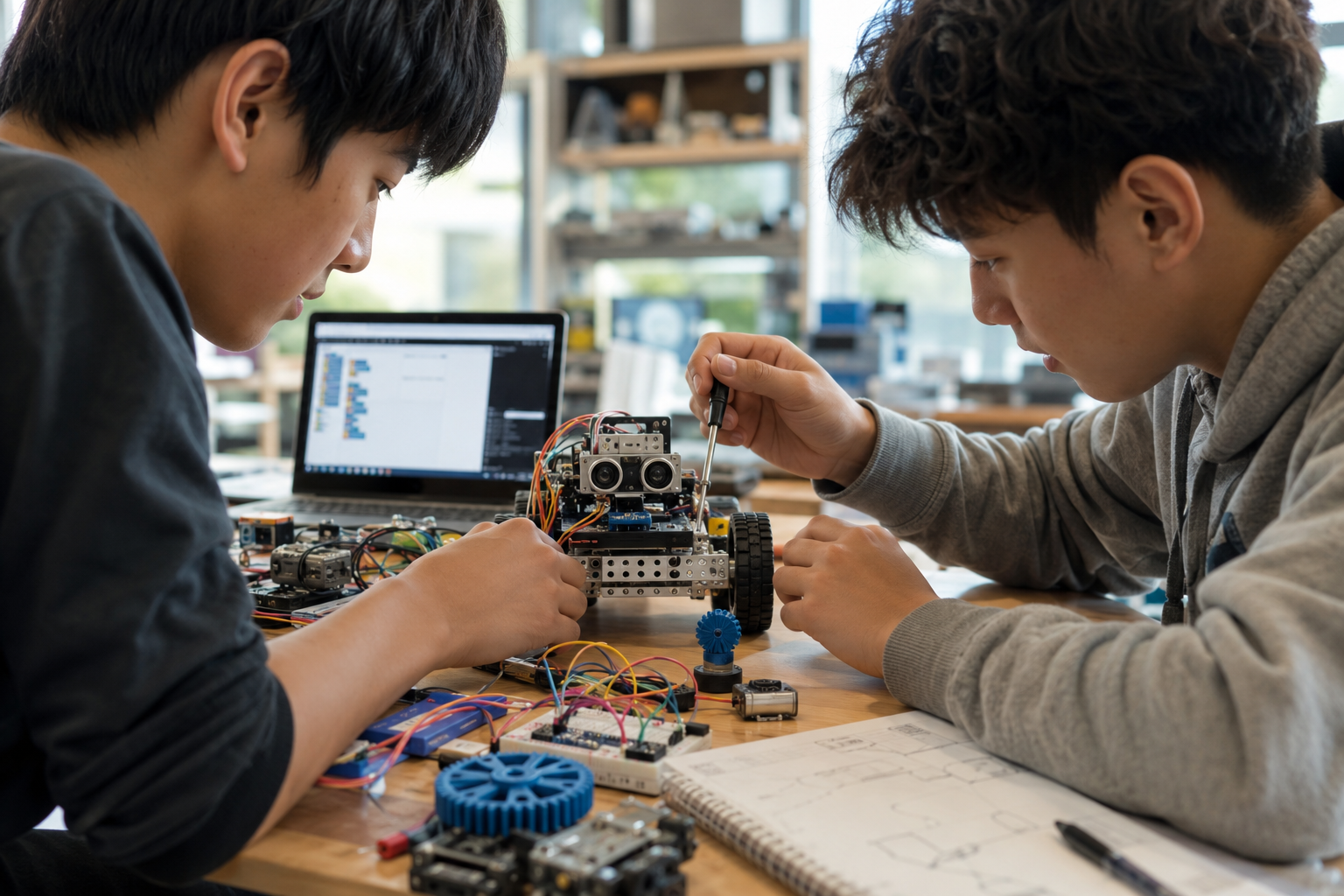
Robotics education plays a vital role in modern schools because it transforms abstract concepts into practical learning experiences. Instead of only reading about science, mathematics, or programming, students build, assemble, and program robots to perform real-world tasks. This hands-on approach makes learning more engaging while improving knowledge retention and conceptual understanding.
Working with robots also strengthens essential workplace skills. Students often collaborate in teams to design, test, and improve their projects. During this process, they learn how to divide responsibilities, communicate effectively, and solve disagreements constructively. These experiences reflect real professional environments where teamwork drives innovation.
Another important advantage is that robotics helps students view technology differently. Rather than becoming passive users, they learn how technology is created and improved. This confidence encourages curiosity, creativity, and lifelong learning. Early exposure also inspires more students to explore careers in science, technology, engineering, and mathematics (STEM), preparing them for future opportunities in an increasingly technology-driven world.
Fostering Critical Problem-Solving Skills
Hands-on robotics projects encourage students to think critically and solve problems systematically. When a robot fails to complete a task, students must identify whether the issue lies in the hardware, software, or design. They test ideas, make adjustments, and evaluate the results until the problem is resolved.
This continuous process develops analytical thinking, resilience, and patience. Students learn that mistakes are not failures but valuable learning opportunities. Over time, they become more confident in tackling complex challenges, making informed decisions, and applying logical thinking across many academic subjects and real-life situations.
Why Is Robotics Important Today?
Robotics education is more important than ever because automation and artificial intelligence (AI) are transforming industries worldwide. Many traditional jobs are changing, while new careers increasingly require technical knowledge and digital problem-solving skills. Introducing robotics in schools helps students prepare for these evolving workplace demands.
Building and programming robots also develops computational thinking, logical reasoning, and creativity. Students learn to break complex problems into manageable steps while designing innovative solutions for real-world challenges. These abilities remain valuable regardless of their future profession.
Beyond technical skills, robotics encourages adaptability. As technology continues to evolve, students who understand automation and intelligent systems are better prepared to learn new tools throughout their careers. By combining practical experience with critical thinking, robotics helps bridge the gap between traditional education and modern industry expectations, ensuring students graduate with relevant, future-ready skills.
Adapting to Rapid Technological Shifts
Modern industries increasingly rely on automated machines, smart sensors, and intelligent software. Introducing these technologies in school helps students understand how everyday automation works before entering higher education or the workforce.
This early familiarity reduces the learning curve for advanced technical subjects later in life. Students gain confidence using emerging technologies while developing adaptable thinking. As industries continue to evolve, these skills make future transitions into engineering, computer science, manufacturing, and other technology-focused careers much smoother.
Which Country Is No. 1 in Robotics?
Understanding global leaders in robotics helps demonstrate how technology can strengthen education systems. South Korea is widely recognized as the global leader in industrial robot density and advanced automation. The country has invested heavily in digital infrastructure, robotics research, and technology education, creating an environment where innovation begins in the classroom.
Many South Korean schools introduce robotics, programming, and AI concepts at an early age through practical learning activities. Students use advanced robotics kits to develop engineering, coding, and problem-solving skills from a young age. This educational approach supports a steady pipeline of highly skilled engineers and technology professionals.
Countries such as Japan, Germany, and the United States also rank among the world’s leading innovators in robotics. However, South Korea continues to lead through strong government support, industry partnerships, modern classroom resources, and ongoing teacher development. These successful models provide valuable lessons for schools worldwide seeking to expand robotics education.
Government Backing and Infrastructure
South Korea’s leadership is supported by long-term national investments in technology and education. Government initiatives provide schools with modern robotics equipment, updated software, and specialized teacher training.
Strong collaboration between educational institutions and industry ensures that classroom learning reflects real-world technological developments. This coordinated strategy allows students to gain practical experience while supporting the country’s continued leadership in robotics and automation.
What Are the 7 Biggest Challenges in Robotics?
Although robotics education offers significant benefits, schools often face several challenges when implementing these programs. The first obstacle is the high cost of robotics kits, sensors, computers, and maintenance. The second is the shortage of teachers with robotics, engineering, or programming experience. Third, many school curricula leave limited space for new technology subjects.
Additional challenges include maintaining robotics equipment, unequal funding between urban and rural schools, and large class sizes that limit individual guidance. Rapid technological change also requires schools to update hardware and software regularly, increasing long-term costs.
Overcoming these barriers requires collaboration between governments, schools, and industry partners. Affordable robotics kits, open-source software, teacher training, and targeted funding programs can significantly reduce implementation costs. With proper planning and investment, more schools can provide students with high-quality robotics education regardless of location or budget.
Budgetary Constraints and Resource Gaps
Limited funding remains one of the biggest barriers to expanding robotics education. Many schools struggle to purchase robotics kits, computers, replacement parts, and maintenance supplies.
As a result, multiple students often share limited equipment, reducing valuable hands-on learning time. Increased investment, educational grants, corporate partnerships, and affordable open-source robotics platforms can help schools provide broader access to practical robotics learning experiences.
Is Robotics Compulsory in CBSE Schools?
Robotics is not a compulsory standalone subject in all CBSE schools. However, the Central Board of Secondary Education (CBSE) encourages schools to include robotics, coding, and artificial intelligence as part of their skill-based education programs. These subjects support experiential learning and align with the goals of the National Education Policy (NEP), which promotes innovation, critical thinking, and STEM education.
Many CBSE schools have introduced robotics through elective courses, robotics clubs, innovation labs, and project-based learning activities. While students may not be required to take robotics as an examination subject, they often gain exposure through practical assignments and interdisciplinary projects.
The level of robotics education varies from one school to another based on available infrastructure, trained teachers, and curriculum choices. Even when robotics is optional, it helps students develop technical skills that are increasingly valuable in higher education and future careers.
Aligning with Skill-Based Education Guidelines
CBSE promotes skill-based education by encouraging schools to integrate practical and technology-driven learning into the curriculum. Robotics supports this objective by combining science, mathematics, engineering, coding, and problem-solving through hands-on activities. Instead of relying only on theoretical lessons, students learn by designing, building, and testing real-world projects.
Many schools include robotics in science exhibitions, coding classes, innovation labs, and extracurricular STEM programs. These activities strengthen collaboration, creativity, and analytical thinking while making classroom learning more engaging.
Project-based learning also allows students to apply academic concepts to practical situations. As they complete robotics projects, they improve communication, teamwork, and logical reasoning. This balanced approach helps schools meet modern educational standards while preparing students for emerging technologies and future career opportunities.
Application of Robotics in Education with Example
The application of robotics in education helps students understand complex scientific and engineering concepts through practical experience. Instead of learning only from textbooks, students interact with programmable robots that demonstrate how coding, electronics, and mechanical systems work together. This hands-on approach improves engagement and strengthens conceptual understanding.
A common classroom example involves building a line-following robot using a microcontroller, infrared sensors, and DC motors. Students write code that enables the robot to detect and follow a marked path automatically. During the project, they apply programming logic, mathematics, and physics while developing problem-solving skills.
Such activities make STEM subjects more interesting and encourage experimentation. Students also gain confidence by testing ideas, identifying errors, and improving their designs through repeated practice.
Fostering Computational Thinking Through Hands-On Projects
Hands-on robotics projects help students develop computational thinking, which is the ability to solve problems using logical and structured processes. Rather than memorizing information, students learn how to analyze challenges, break them into smaller tasks, and create step-by-step solutions.
While building and programming robots, students regularly test their code, troubleshoot hardware issues, and improve system performance. Debugging a faulty sensor or correcting programming errors strengthens analytical thinking and persistence. These experiences teach learners that mistakes are valuable opportunities for improvement.
The skills gained through robotics extend beyond STEM subjects. Critical thinking, creativity, teamwork, and effective communication are valuable across academic disciplines and future careers. By participating in practical robotics projects, students become better prepared for technology-driven learning environments and real-world problem-solving.
Frequently Asked Questions
What age is best to start learning robotics?
Children can begin learning basic robotics concepts as early as kindergarten using simple building blocks and screen-free coding toys. Around the age of eight, many students are ready for beginner programming and mechanical assembly because their logical reasoning and spatial awareness are more developed. Starting early builds confidence and makes advanced STEM subjects easier to learn later.
Do students need coding experience before robotics?
No. Previous coding experience is not required. Many beginner robotics kits use visual drag-and-drop programming instead of text-based coding. Students gradually learn programming concepts by watching their robots respond to the instructions they create, making coding more interactive and easier to understand.
How does robotics help non-STEM subjects?
Robotics supports much more than science and engineering. Students write project reports, create presentations, design robot appearances, and explain their solutions to others. These activities improve communication, creativity, teamwork, public speaking, and problem-solving while connecting technology with subjects like language arts, history, and design.
Are robotics programs expensive for schools?
Initial costs can be high because schools need robotics kits, computers, and supporting equipment. However, many affordable educational robotics platforms, open-source software options, grants, and educational discounts help reduce expenses. Schools can also introduce robotics gradually through phased investments, community partnerships, corporate sponsorships, and government funding programs.
CONCLUSION
In conclusion, integrating robotics education in modern schools is no longer a futuristic luxury. Instead, it is a vital evolution in how we educate and empower the next generation. Indeed, by combining academic subjects with practical application, these programs turn passive technology users into active creators, innovative thinkers, and confident problem-solvers. Furthermore, the modern world demands people who can adapt to rapid technological changes, and early technical training provides the exact foundation required to meet that challenge.
Throughout this guide, we explored how hands-on engineering frameworks build core technical skills, bridge abstract theory with practice, and foster a resilient debugging mindset. Furthermore, early access to technical learning breaks down historical demographic barriers. Consequently, it ensures students from all backgrounds build the confidence needed to thrive in modern industries. Therefore, from mastering math calculations to developing team leadership skills, the benefits of interactive STEM programs extend far beyond classroom walls.
As automation and artificial intelligence reshape global industries, educational institutions must keep pace by adopting tools that engage and inspire young minds. Ultimately, investing in technical programs gives students the adaptability, critical thinking capacity, and knowledge necessary to lead in an automated future. Therefore, school leaders, educators, and community members should review the key strategies schools need to get right and take decisive steps to bring robotics education in modern schools into their standard academic programs today.