

State Government Jobs Guide: Career Success in the Public Sector
Landing a stable, rewarding career often leads professionals straight toward public service. This comprehensive state government jobs guide helps you navigate the unique hiring processes of local agencies. While many job seekers focus exclusively on federal agencies or private corporations, state-level employment offers an incredible blend of local impact, robust benefits, and long-term stability. Navigating this vast landscape requires a clear understanding of civil service rules, exam structures, and specialized application portals.
Understanding how local hiring works is essential. State agencies operate entirely independently of federal systems like USAJOBS. To get started, candidates should explore resources like the U.S. government benefits and jobs portal. This portal provides a direct gateway to official state personnel departments. By learning how to match your skills against state civil service classifications, you can significantly increase your hiring potential.
This state government jobs guide breaks down everything you need to know to secure a state role. We cover the primary benefits of working at the state level, how to find official job openings, and tips for passing civil service examinations. Additionally, you will learn how to tailor your resume for automated applicant tracking systems. Whether you are a recent graduate or an experienced professional transitioning from the private sector, these insights will streamline your public sector job hunt.
Why Consider a Career in State Government?

Choosing public service at the state level provides unique professional advantages that private companies rarely match. Millions of public servants enjoy career paths that directly influence their local communities every day. Understanding these structural benefits is the first step in planning your career transition. State positions exist across diverse fields, including environmental protection, financial auditing, healthcare management, and infrastructure engineering. This variety ensures a viable path for almost every skillset.
Furthermore, state agencies operate based on legislative budgets rather than unpredictable market volatility. Consequently, state employees rarely face sudden layoffs due to corporate downsizing, stock market fluctuations, or shifting retail trends. This predictable environment allows for long-term career planning and unmatched peace of mind for you and your family. If you value knowing your job will be there tomorrow, the public sector remains one of the safest bets in the modern workforce.
Additionally, state employment is famous for its robust benefits packages that often outweigh the base salary numbers. Most agencies offer traditional pension plans, excellent health insurance coverage with low premiums, and generous paid time off. Many states still offer defined-benefit pension plans. These plans ensure guaranteed lifetime income during your retirement years. Premium costs for state employees remain heavily subsidized compared to private-sector plans, leaving more money in your paycheck. Standard 40-hour workweeks, strict overtime regulations, and observed holidays promote a healthy personal life. These policies allow you to enjoy your time away from the desk without burnout.
How to Find Authentic Public Sector Openings
Finding legitimate openings is a critical step in this state government jobs guide. Shunning third-party job boards will save you time. It also protects you from outdated listings or employment scams. Every state maintains a centralized human resources website where all active vacancies appear. For example, California uses CalCareers, while Texas utilizes the WorkInTexas portal. Always ensure the website URL ends in a .gov extension to verify its authenticity before submitting any personal documents.
Understanding civil service classifications is equally vital before you begin your search. Government jobs belong to specific classifications based on required experience, education, and duties. Reviewing these public classifications helps you determine your exact eligibility before spending hours filling out an application. Positions generally fall into competitive roles that require an exam or non-competitive roles filled through traditional interviews. Knowing which category your target job matches helps you plan your preparation timeline effectively.
Moreover, many state agencies offer automatic notification systems for job seekers. By creating an account on the state’s official talent portal, you can set up alerts for specific job families or departments. This proactive approach ensures you receive an email the moment a relevant opening goes live. Because government job postings often have strict, short closing windows, receiving these instant alerts gives you an advantage over candidates who check the boards manually.
Mastering the Application and Exam Process
Applying for public sector roles requires strict attention to detail and adherence to formatting guidelines. Unlike private companies that accept quick resumes, state agencies use highly structured evaluation methods. State recruiters use rigid checklists to screen applicants during the initial round. Your resume must explicitly echo the keywords found in the job posting’s “Minimum Qualifications” section. If a description requires “three years of budgetary analysis,” use that exact phrase in your work history. Do not use a creative synonym.
Many state roles require passing a civil service examination to prove your basic competency. These tests evaluate general skills like reading comprehension, data analysis, basic mathematics, and situational judgment. Fortunately, this state government jobs guide emphasizes preparation. Many state HR departments publish free study guides and practice tests on their official websites. Spending time with these resources ensures you understand the specific testing format, reducing anxiety on test day.
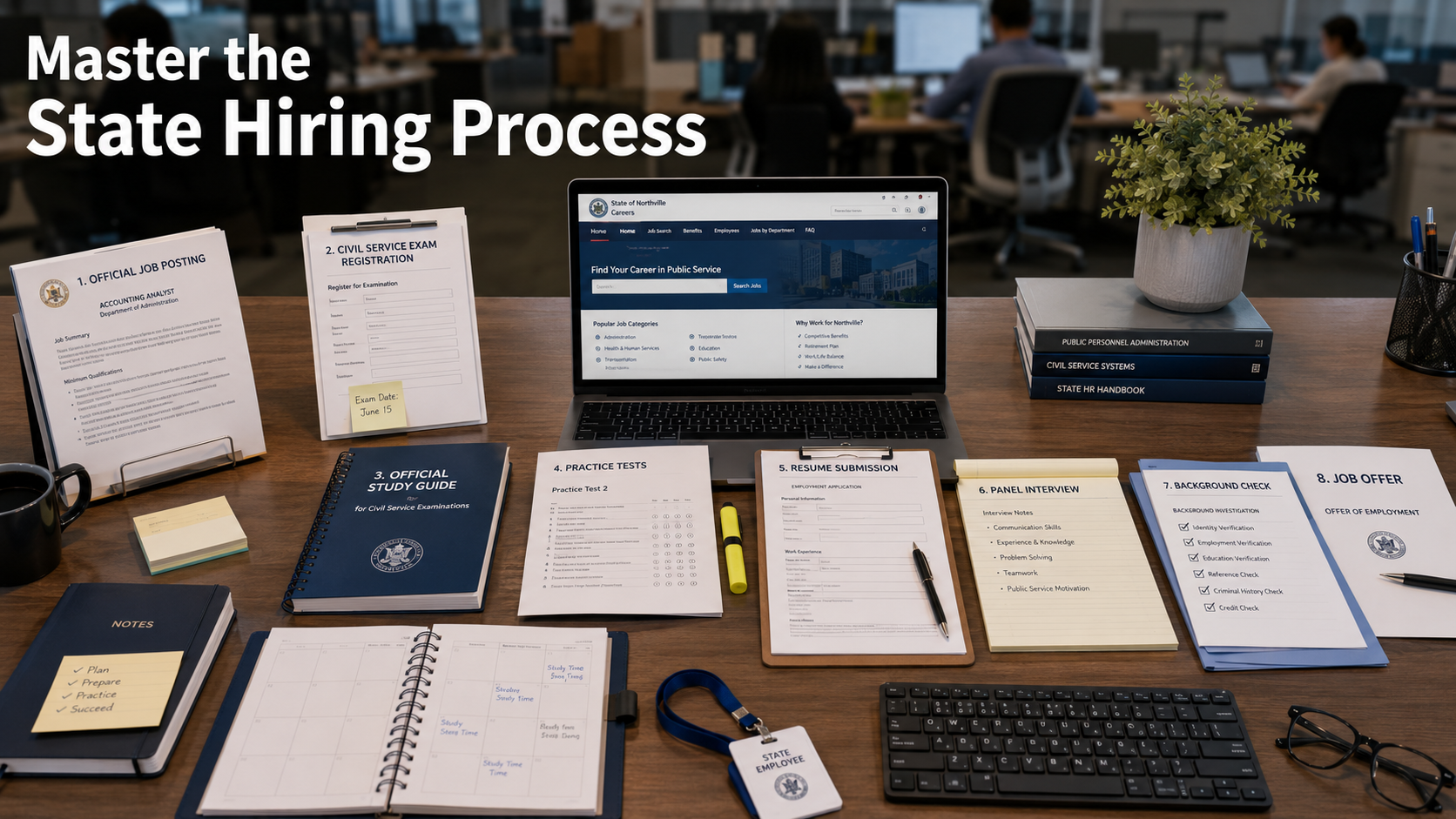
After HR scores the exams, candidates enter an eligibility list based on their performance. Agencies are often legally required to interview only the top candidates from this ranking system. Therefore, achieving a high score on the test is just as important as having a great resume. Understanding this structured merit system prevents surprises and helps you focus your energy on exam preparation.
Navigating the Interview and Background Check
Once your application passes the initial screening and testing phases, you will enter the final evaluation stages. Government interviews use highly structured Formats to ensure fairness and transparency for all applicants. State interviews typically feature a panel of three to five supervisors who ask predetermined questions. Every candidate receives the exact same questions. Panelists score responses using a standardized rubric. To excel in this environment, use the STAR method (Situation, Task, Action, Result) to provide factual answers that match their scorecard.
Following a successful interview, you will receive a conditional job offer. This offer remains contingent on passing a background check. Securing a state position routinely involves a comprehensive investigation due to the public trust involved. Depending on the department, this process may include criminal history verification, credit checks, professional reference validation, and fingerprinting. This thorough screening ensures that public funds and sensitive citizen data remain in safe hands.
Honesty is absolutely crucial during this final phase of the hiring process. Omitting past indiscretions, misrepresenting employment gaps, or inflating past job titles will trigger permanent disqualification. State investigators verify your background with extreme care. They compare your statements against official records. Being transparent about your history shows integrity, which remains the most valued trait in public service.
FAQ SECTION
How long does the state hiring process usually take from application to onboarding?
The state government hiring process typically takes between two and six months from the initial application deadline to your official first day on the job. Government agencies must adhere to strict civil service regulations, legal background verifications, and structured panel scoring systems to ensure complete transparency. These steps guarantee absolute fairness for all applicants but inherently slow down the timeline compared to the private sector. Human resource departments must meticulously score every assessment, verify veteran preferences, and clear multi-tiered administrative approvals before extending official offers. Candidates should remain patient, monitor their online application portal status weekly, and avoid quitting their current job until a formal, written final offer letter arrives. Using this waiting period to gather transcripts or professional references can accelerate the final onboarding steps once you receive that crucial selection notification.
Do all state government jobs require a written civil service examination?
No, not all state positions require a written civil service examination. While administrative, law enforcement, and clerical roles frequently demand structured testing, many professional, technical, and healthcare roles do not. These testing exemptions typically apply to non-competitive positions. For these roles, human resource specialists score applicants solely on their submitted education transcripts, professional certifications, work history, and interview performance. Always read the selection process section of the job posting carefully, as it explicitly states whether you need to register for a physical exam, complete an online assessment, or simply submit a standard application packet. Many agencies are actively moving away from traditional written exams for high-demand specialized fields, relying instead on comprehensive background evaluations and rigorous panel interviews to measure technical competence and cultural fit.
Can I apply for a state job if I currently live in a completely different state?
Yes, you can generally apply for state positions while residing elsewhere, but you must carefully check the specific residency requirements listed on the job posting. Some states give strict legal preference to local residents during the hiring process, or they may require you to establish legal residency within a specified period after accepting the job offer. Additionally, state agencies rarely reimburse travel expenses for out-of-state applicants traveling for interviews, so you should prepare to handle these logistics yourself or proactively request a virtual panel interview if the hiring agency allows it. Understanding these geographical conditions early prevents surprises and ensures you focus your job hunt on states that actively welcome out-of-state talent and offer realistic timelines for relocation.
What is the exact difference between competitive and non-competitive positions?
Competitive positions require applicants to pass a standardized civil service exam or objective evaluation process. This process places them on a formal hiring eligibility list ranked by score. The hiring agency is legally mandated to choose exclusively from the top-scoring candidates on this list, ensuring a strict merit-based selection. Conversely, non-competitive positions do not require a formal written examination. Instead, hiring managers select qualified candidates based on traditional job applications, comprehensive resumes, and structured interviews. Non-competitive roles are often specialized positions requiring specific professional licenses, such as attorneys, civil engineers, or medical doctors, where their advanced degrees and board certifications already prove their technical capability to perform public duties safely.
Are state government benefits truly better than private sector benefits packages?
State government benefits are frequently superior to private sector offerings regarding healthcare premiums, retirement security, and paid time off. While private corporations might offer higher starting base salaries, state agencies offset this with guaranteed pension plans, low-cost medical insurance, and strict adherence to a healthy work-life balance with ample holiday leave. Over a full career, the cumulative value of a state pension, comprehensive dental and vision care, and matching deferred compensation plans often provides greater total financial security than a volatile private-sector salary. Furthermore, public sector employees enjoy robust job protections and predictable salary step increases, making the total compensation package highly competitive when evaluated through a long-term financial lens.
CONCLUSION
Navigating the public sector hiring system requires patience, precision, and a highly strategic approach. As outlined throughout this state government jobs guide, securing a public career involves identifying official portals, decoding civil service classifications, and precisely aligning your resume with minimum qualifications. While the timeline from application to onboarding is often longer than what you experience in the private market, the long-term rewards are well worth the effort. State employment provides an unparalleled combination of job security, community impact, and robust retirement benefits that can anchor a lifelong career.
By treating the application process as a series of structured steps, you can eliminate the guesswork and position yourself as a top-tier candidate. Understanding the nuances of panel interviews and background checks prepares you to face the final hurdles with confidence and transparency. If you’re looking for a comprehensive roadmap to improve your preparation strategy, check out our Government Job Preparation Guide, which covers essential tips for exam preparation, application planning, and interview success. Public service allows you to use your professional talents to improve infrastructure, health, and safety within your region. Take the first step today by visiting your local state’s official personnel website, setting up an automated applicant profile, and reviewing the current civil service examination schedules for your specific field. Consistent preparation remains the ultimate key to transforming your public sector career aspirations into a secure, rewarding professional reality.