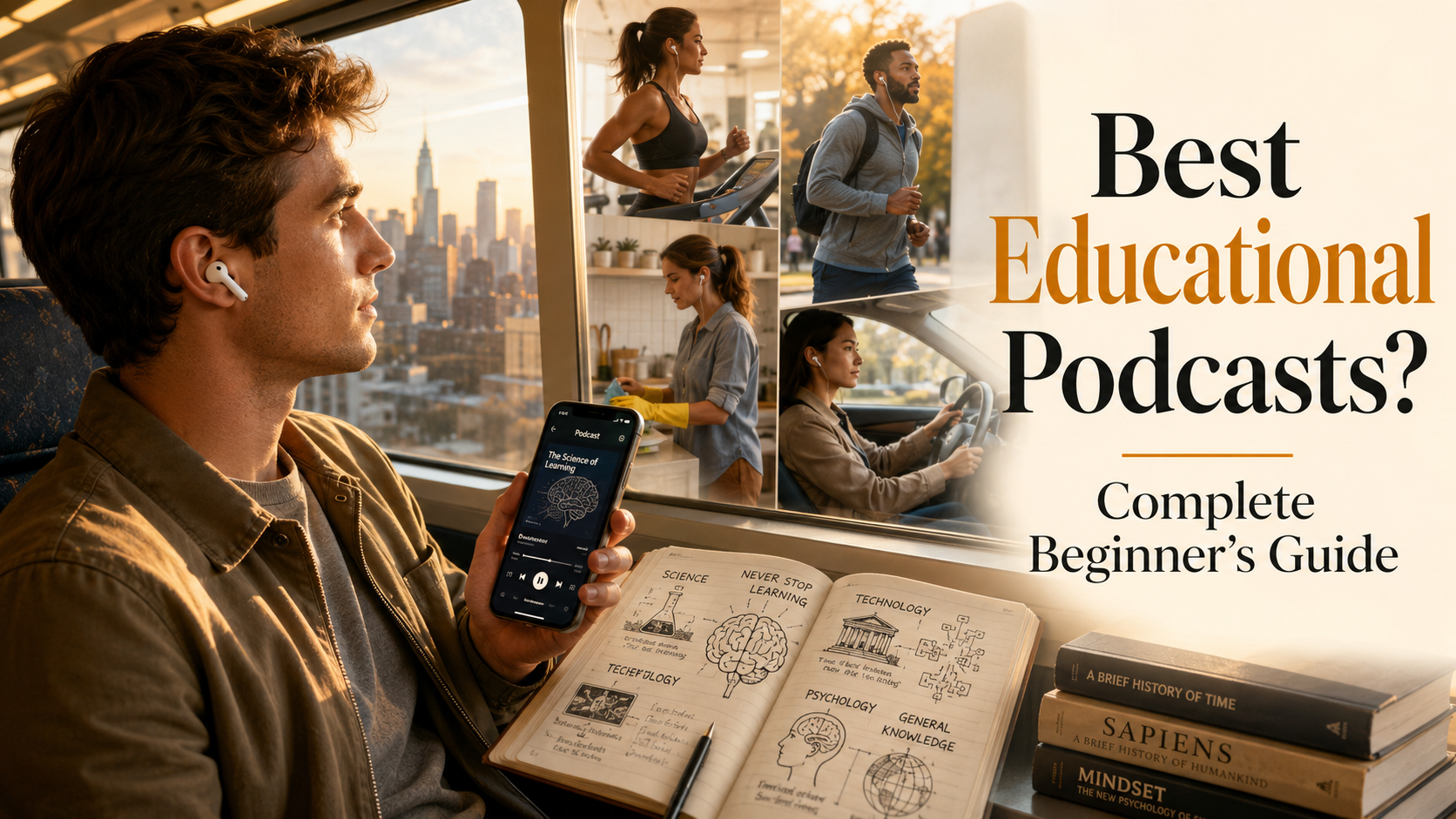
Best Educational Podcasts? Complete Beginner’s Guide
Audio learning has completely transformed how we consume knowledge, turning mundane daily routines into deeply enriching mental workouts. Whether you are folding laundry, sitting in gridlock traffic, or working out, finding the best educational podcasts can instantly turn your dead time into an intellectual asset. According to comprehensive data on digital media trends published by the Pew Research Center, a significant majority of podcast listeners tune in primarily to learn something new, establishing audio platforms as the modern frontier for accessible, lifelong education.
If you are new to this world, diving into thousands of available shows can feel overwhelming. This guide is designed to cut through the noise and help you discover the Best Educational Podcasts available today. It provides a structured look at top-tier educational shows that offer real depth without putting you to sleep. We will break down exactly where to start, how to listen efficiently, and which Best Educational Podcasts match your specific intellectual interests and learning goals. If you’re also interested in learning how digital creators use modern technology to grow their audiences, check out our guide on creating viral Instagram Reels using AI tools.
Why Audio Learning is the Ultimate Brain Hack
The human brain is remarkably adept at processing information through narrative storytelling. For decades, traditional classrooms relied heavily on visual reading and rote memorization, which often left adult learners feeling disconnected. Audio learning breaks this barrier by reintroducing the ancient tradition of oral histories and conversational debates.
When you listen to an expert break down a complex system, your brain constructs mental models far more dynamically than it would by skimming a dry textbook page. Moreover, it allows for cognitive multitasking. You cannot safely read a book while driving a vehicle, but you can easily digest a detailed narrative about macroeconomics or deep-sea biology.
By engaging your auditory senses, you stimulate neural pathways that enhance creative visualization and long-term memory retrieval. Consequently, consistent listeners often report a much broader understanding of global affairs, scientific discoveries, and historical contexts than those who rely solely on social media snippets.
Best Educational Podcasts: The Ultimate Curated List
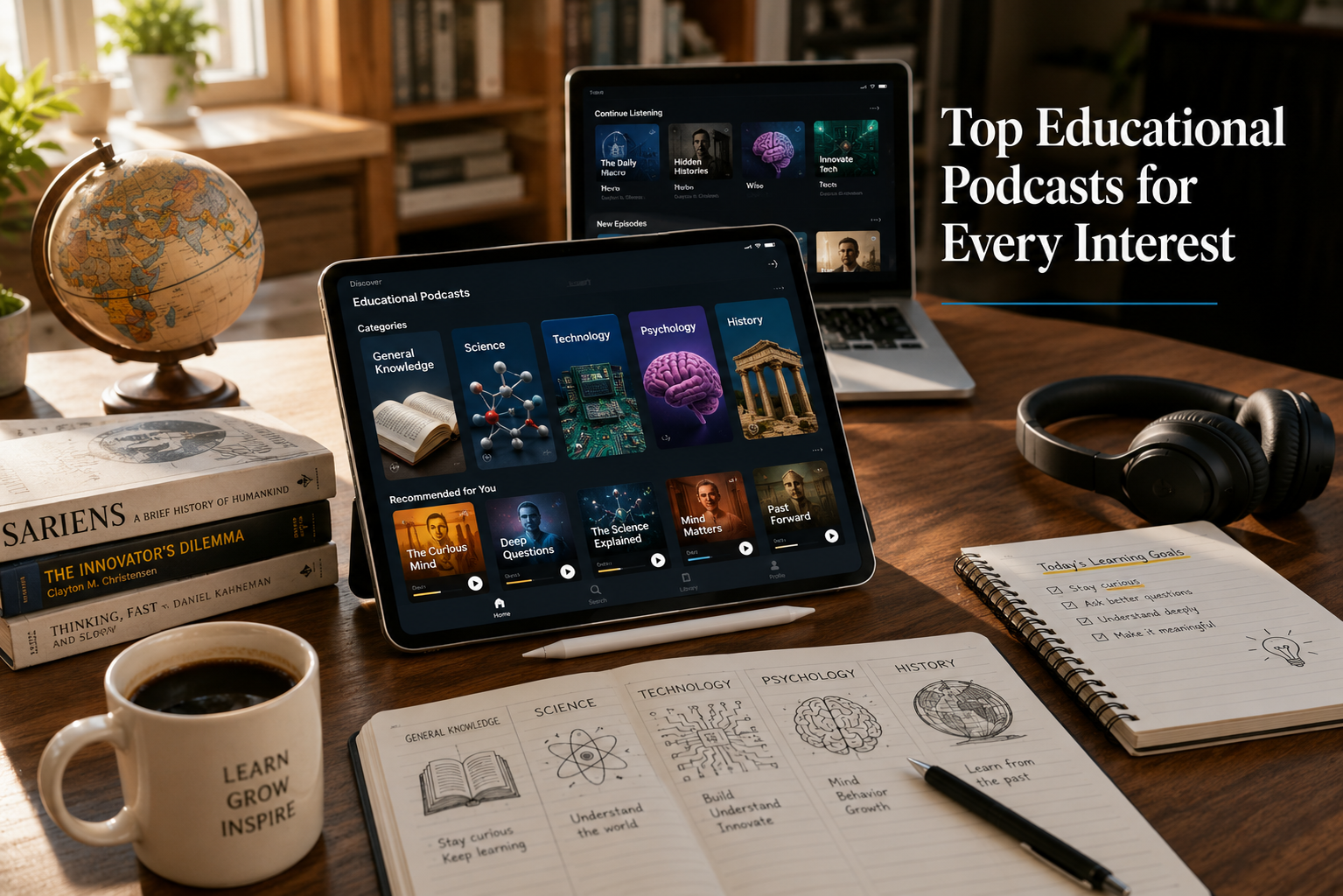
To help you navigate the vast audio landscape, we have categorized the absolute top performers in the space. These shows have earned global recognition for their rigorous research, exceptional production value, and unique ability to make dense subjects highly accessible.
Choosing a show requires balancing your personal interests with the time you have available. The right program should challenge your current understanding while remaining entirely entertaining. Below, you will find a thoroughly vetted selection of audio programs that consistently deliver elite-tier educational content without sacrificing listener enjoyment.
General Knowledge and Curiosity Shakers
If you want to know a little bit about everything, these foundational shows are perfect for expanding your conversational repertoire.
-
Stuff You Should Know: Hosted by Josh Clark and Chuck Bryant, this iconic show is the gold standard of casual learning. They dive into everything from how landfills work to the history of the Rosetta Stone, explaining the mechanics of our world with zero pretension.
-
TED Talks Daily: If you love the classic TED format but lack the time for long video sessions, this feed delivers daily, bite-sized ideas from the world’s leading minds on technology, psychology, and structural innovation.
By dipping your toes into these general interest feeds, you expose your mind to random disciplines you might never have explored otherwise. They serve as excellent intellectual springboards, often inspiring listeners to seek out specialized books or dedicated documentary series on specific, newly discovered subtopics.
Science, Tech, and Human Behavior
Understanding how our minds and the physical universe operate is essential for navigating modern life. These audio programs excel at making hard science feel like a thriller novel.
-
Radiolab: Renowned for its avant-garde sound design, this show investigates complex scientific and philosophical concepts through an intensely human lens. It makes abstract physics or molecular biology feel deeply personal.
-
Hidden Brain: Hosted by Shankar Vedantam, this masterclass in social psychology uses data and narrative to reveal the unconscious patterns that drive human behavior, choice, and relationship dynamics.
Listening to these scientific deep dives alters how you view everyday human interactions. You begin to notice cognitive biases in real-time, understand the technological infrastructure powering your city, and appreciate the immense evolutionary biological history behind your daily psychological habits and emotional responses.
History Reconsidered
Forget the dry dates and dead kings from high school history class. These shows treat the past as a living, breathing drama.
-
Hardcore History: Dan Carlin behaves less like a traditional professor and more like a war correspondent from a past era. His deep, multi-hour epics unpack the human cost and geopolitical stakes of major historical turning points.
-
Revisionist History: Malcolm Gladwell re-examines overlooked or misunderstood historical events, challenging whether our collective memory actually aligns with reality.
By re-evaluating the past through these nuanced narratives, you gain a clearer understanding of modern societal issues. History ceases to be a list of static events and becomes a fluid, continuous chain reaction that directly influences today’s political, economic, and cultural landscapes worldwide.
How to Choose the Right Show for Your Goals
Finding your perfect audio match requires a bit of strategy. Not every highly rated show will align with your personal learning style or daily routine. It is incredibly important to evaluate your routine honestly before subscribing to a dozen different feeds.
Many beginners make the mistake of choosing overly dense, academic lectures right away, which quickly leads to mental fatigue and abandonment of the habit entirely. Instead, look for a sustainable balance between lighthearted entertainment and factual substance to keep yourself coming back day after day.
Choosing Your Show
For Short Commutes or Daily Chores (15–30 Minute Episodes)
- TED Talks Daily – Quick insights from experts, innovators, and thought leaders.
- Stuff You Should Know – Easy-to-follow explanations of fascinating topics.
- Radiolab – Engaging stories that blend science, culture, and human experiences.
For Long Drives or Deep Dives (60+ Minute Episodes)
- Hardcore History – In-depth historical storytelling with extensive detail and analysis.
- Radiolab (Extended Episodes) – Some episodes explore complex topics in greater depth.
- Long-Form Educational Podcasts – Ideal for listeners who enjoy immersive learning sessions and detailed discussions.
Choose shorter shows when you have limited time. Save longer episodes for road trips, workouts, or dedicated learning sessions. This approach helps you stay consistent while getting the most value from the best educational podcasts.
Match the Length to Your Routine
If your daily commute is only fifteen minutes, queuing up a three-hour historical epic will leave you feeling fractured. Opt for short-form, daily micro-learning shows instead. Save the deep, cinematic audio documentaries for long weekend road trips or extended workout sessions.
Matching your runtime perfectly to your environment ensures you can finish thoughts in a single session. This completeness prevents the frustration of pausing a complex narrative right before the host delivers the crucial concluding thesis or scientific breakthrough.
Assess the Presenter’s Tone
Some listeners thrive on academic rigor, preferring structured lectures backed by heavy data. Others need humor, banter, and a relaxed atmosphere to retain information. Sample one or two episodes of a show to see if the host’s cadence and delivery style resonate with your ears.
If a host’s voice or presentation style irritates you, your brain will naturally resist absorbing the actual information being shared. Therefore, prioritize finding narrators whose natural conversational flow feels like an organic, welcoming extension of your own internal dialogue.
Smart Strategies for Maximum Knowledge Retention
Listening to great content is only half the battle; actually retaining that data is where the real value lies. If you listen passively, much of that newly acquired knowledge will evaporate within twenty-four hours. Active engagement is what transforms temporary auditory input into permanent mental architecture.
By introducing deliberate processing habits into your routine, you ensure that the time you spend listening compounds into genuine, long-term personal growth. Treat audio learning not just as background white noise, but as a genuine investment in your personal intellectual development.
Frequently Asked Questions
What are the best educational podcasts for complete beginners?
For absolute beginners, the ideal entry points are Stuff You Should Know and TED Talks Daily. These programs feature exceptionally clear formatting, friendly hosting styles, and topics that do not require prior technical knowledge. They focus heavily on engagement and casual storytelling, ensuring that new listeners never feel overwhelmed by esoteric academic jargon. Starting here allows you to build a consistent auditory learning habit before diving into more complex, niche, or long-form documentary series. Furthermore, their extensive back catalogs mean you can always find a topic that instantly matches your current mood or curiosity. Additionally, these shows excel at breaking down high-level, complex concepts into digestible, relatable narratives. This approach eliminates the intimidation factor often associated with self-education, establishing a welcoming foundation where any individual can confidently begin their personal intellectual journey without feeling lost or out of depth.
Are educational podcasts free to listen to?
Yes, the vast majority of educational podcasts are free to stream and download. Platforms such as Spotify, Apple Podcasts, YouTube Music, and Amazon Music offer free access to large podcast libraries. These services are usually supported by brief advertisements during episodes.
Some creators offer premium subscriptions or bonus content through platforms like Patreon. However, you can still access thousands of hours of expert-led educational content without spending money. This makes podcast learning one of the most cost-effective ways to educate yourself.
Many creators rely on sponsorships instead of paywalls. As a result, high-quality reporting, academic insights, and philosophical discussions remain freely available. Anyone with an internet connection and a smartphone can access this content. This has significantly expanded public access to knowledge and information.
How can I retain information better when listening?
Retention improves drastically when you shift from passive listening to active processing. To maximize your cognitive takeaway, avoid tasks that require heavy linguistic focus, like drafting emails or reading complex text while listening. Try taking brief notes on your smartphone when a host shares a powerful insight, or use the Feynman Technique by explaining the episode’s core concept to someone else later that day. Applying the information in conversation or writing it down signals your brain that the data is highly valuable, moving it from short-term memory to long-term storage and preventing the standard cognitive decay of information over time. Moreover, implementing visual tracking, such as creating quick mind-maps after listening, helps solidify structural details. Consistently engaging with the audio content through multi-sensory application guarantees that the insights you accumulate transform into permanent, readily accessible knowledge within your everyday life.
Can podcasts actually replace traditional reading?
While audio shows are magnificent for introducing new concepts, providing historical overviews, and sparking curiosity, they work best as a supplement to reading rather than a total replacement. Books allow for deep reflection, flipping back to re-analyze complex arguments, and examining visual charts at your own pace. Audio shows shine at maximizing your hidden pockets of downtime, making them the ultimate tool for broad intellectual discovery that can guide you toward what books you should purchase next. Combining both mediums creates a powerful, multi-sensory learning ecosystem that drastically enhances your overall comprehension and intellectual depth. While listening triggers different neurological pathways optimized for narrative and emotional resonance, physical texts provide structural and spatial memory cues that are critical for mastering dense technical material. Therefore, leveraging both tools strategically ensures a highly balanced, robust approach to comprehensive lifelong learning.
Which podcasts are best for learning science and history?
For science, Radiolab and Hidden Brain are popular choices. They combine scientific research with engaging storytelling, making complex topics easier to understand.
For history, Hardcore History offers detailed and immersive accounts of major historical events. The episodes are often lengthy and explore topics in considerable depth.
Revisionist History takes a different approach. It revisits overlooked events and ideas from the past. The show examines them through a modern analytical lens. These podcasts are widely respected for their research standards and strong production quality. They present complex information in a clear and engaging format. As a result, science and history feel more accessible to a broad audience.
Conclusion
Finding the best educational podcasts is a personal journey. It can completely transform your approach to lifelong learning. By replacing passive media consumption with expert-led audio content, you can turn your daily commute into a learning opportunity.
The modern podcast landscape offers remarkable variety. There is a quality show for almost every niche, interest, and learning style. As technology makes knowledge more accessible, audio learning continues to be a powerful tool for self-improvement.
Do not feel pressured to remember every fact, statistic, or date from an episode. Instead, focus on discovering new ideas and ways of thinking. Choose one show from our curated list today. Listen during your next commute, workout, or household task. Over time, your perspective will expand with each episode.
These small learning sessions add up. Weeks and months of consistent listening can build a strong foundation of knowledge across many subjects.